Summary
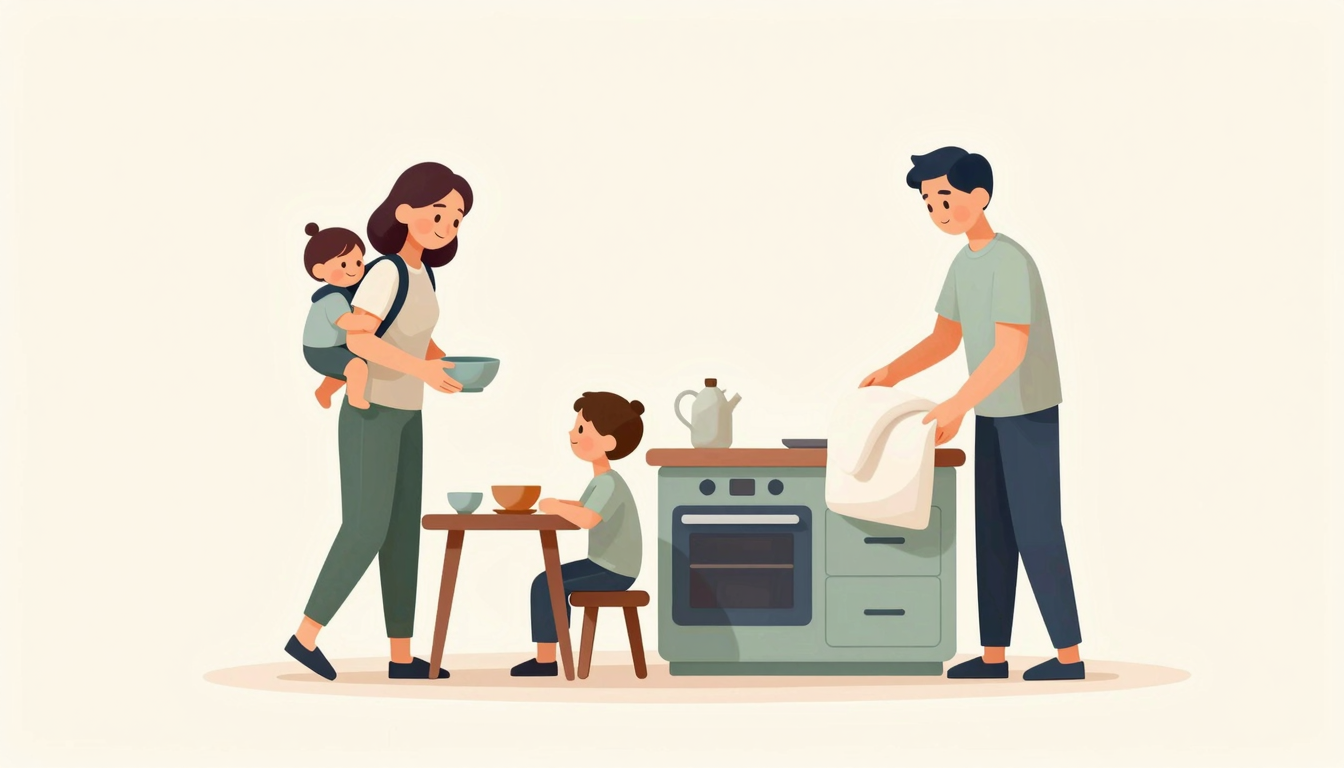
Breakfast, diapers, comforting children and remembering glasses all belong on Linna’s morning list. Seeing the full routine written down helps her notice what she could share or simplify.
At a glance
Writing down her eighteen regular morning tasks helped Linna, a mother of four in Japan, keep track of what came next and forget less. The checklist also revealed tasks she could share with her husband and ways she could sometimes simplify breakfast or get help feeding her youngest daughter.
When Linna, a mother of four in Japan, read an article on a Japanese website about managing time as a homemaker, one suggestion seemed impossible: prepare dinner in the morning. Getting the necessary tasks done before leaving home was already difficult enough. Where was she supposed to find time to cook another meal?
Commenters voiced similar frustration. One asked, “Has this editor ever raised children?” Another said that mornings felt too short even without cooking.
Linna began to wonder what made her own mornings so chaotic. What was taking up all that time? She wrote down her household tasks—kaji, the Japanese word for housework—to see what she was actually doing.
Her regular morning checklist had eighteen items:
- Prepare the eldest child’s water bottle.
- Fill in the communication notebooks for the second and third children.
- Change diapers for the second, third, and youngest children.
- Pour milk for the second and third children.
- Make breakfast.
- Wipe the table.
- Keep the children company while they eat.
- Vacuum.
- Put away the bedding.
- Feed her youngest daughter.
- Do her makeup.
- Load the dirty dishes into the dishwasher.
- Break up fights—twice.
- Comfort the children—three times.
- Get the trash ready to take out.
- Brush teeth.
- Remind the eldest to wear glasses.
- Leave home.
Breaking up fights and comforting children each had a place on her list, alongside the dishes, bedding, and breakfast. And the list could grow. If Linna accidentally falls asleep before finishing the evening preparations, two more jobs carry over to the morning: washing the twins’ straw cups for milk and packing nursery bags for three children. Each bag needs a towel, a cloth for wiping the child’s mouth, a change of clothes, and other necessities.
Other duties have fallen away or come around only seasonally. She used to put helmets on the twins, but they have recently stopped falling backward during tantrums, so those are no longer needed. Swimming bags for three children are required only during the three summer months.
Linna describes her morning housework as needing to fit between 6:40 and 8:20 a.m. Her youngest daughter wakes early and cries whenever she cannot see her, so Linna does most of the chores with the baby, weighing 7.5 kilograms (about 16.5 pounds), strapped to her back.
Even a straightforward entry such as breakfast involves more than preparing food. Making it is fairly simple—usually rice balls. Getting the children to eat takes longer. Her third child generally sits down and eats willingly, while her second often declares, “I’m full,” before taking a bite. Linna says both have recently learned how useful that phrase is: once they say it, she finds it hard to insist that they eat more.
On the morning she describes, quoting lines from a dinosaur-themed team show the children enjoy helped get her second child interested in eating. Even then, the two children took at least twenty minutes to finish breakfast. Her eldest eats well on his own when he likes the food, but he usually wakes after eight and still needs prompting.
Clinginess and arguments over toys take more time. With her youngest on her back and another child in her arms, Linna can get almost nothing else done. She usually turns to small snacks to ease these situations.
Bowel movements add considerably to the work, too. She accompanies her eldest to the bathroom and changes the other three children’s diapers. The three rounds of handwashing involved take more time still.
Usually, once her husband has taken the three boys out, Linna spends fifteen minutes changing clothes, doing her makeup, attending to the dishwasher, putting away the bedding, giving the floor a quick vacuum, and feeding her youngest daughter. She aims to leave home by 8:45 a.m.
Seeing the work written down helped Linna identify responsibilities she could share with her husband. He already takes out the trash and gets the children out the door as early as possible. Looking over the list, she identified at least two more things he could take on: putting away the bedding and reminding their eldest to wear his glasses.
The checklist has also helped with remembering what comes next. Keeping all eighteen tasks in her head sometimes left Linna momentarily unable to recall what she was supposed to do. She finds that having them written down helps her think more clearly and forget less.
With the routine laid out, she can also see where she could simplify it. Breakfast could sometimes be bread instead of rice balls. On some mornings, she could bring her youngest to work and ask her husband’s younger sister to help feed the baby food or formula.
For Linna, the checklist has made the work easier to keep track of and revealed room to share or simplify it. If that sounds useful, try writing down your own morning tasks and see what you notice.
Frequently asked questions
What did Linna include in her morning chore checklist?
Her eighteen regular items included preparing breakfast, changing diapers, loading the dishwasher, putting away bedding, comforting children, breaking up fights and reminding her eldest to wear glasses.
Which additional tasks did Linna think her husband could take on?
Linna identified putting away the bedding and reminding their eldest to wear glasses as two additional tasks her husband could take on. He already takes out the trash and gets the children out the door as early as possible.
Did making a checklist help Linna remember her tasks?
Linna reports that writing down the eighteen regular tasks helped her think more clearly and forget less about what she needed to do next.