Summary
A friend's achievement can make your own progress feel smaller. Explore how peer influence develops, when it can help, and four approaches to keeping your goals in view.
At a glance
Review situations where you felt pressured, practice a refusal that feels comfortable, and ask what you actually want before adopting someone else's goals. Recognizing your strengths and seeking support may also help you find your own pace. Peer pressure can sometimes encourage effort, so consider whether its influence supports your goals or pulls you away from them.
How Can I Take It Easy When Everyone Else Is Competing to Get Ahead?
Have you ever had a moment like this? After spending hours studying for a course in your major, you get a good grade and feel quietly pleased—until a friend sighs, “I studied so long for that course and still didn't get full marks.” Suddenly, your own result feels less satisfying.
Or perhaps it's the weekend, and you're about to unwind with a mobile game when a friend's message catches your eye: “Sticking with it really works! I finally got an 8.5 in IELTS reading today! It's only the first time, but I'm so happy!” You're happy for your friend. Yet the hand holding your phone is trembling a little, too. Have you noticed how peer pressure has already made it harder for you to relax?
Humans are social creatures. Our need for friendship and belonging draws us into relationships, where comparing ourselves with others is a familiar part of life. The pressure that arises from comparing ourselves with people of a similar age, social standing, or interests is called peer pressure. Adolescents are the age group most susceptible to its influence, but the pressure itself is often hard to see: it can quietly change our behavior before we recognize that it is there.
Why Peer Pressure Develops: Group Socialization Theory
As children grow into adolescents, the center of their lives gradually shifts from home to school, making close relationships with peers increasingly important. Most adolescents spend much of their time with companions, whether they are studying, enjoying activities after school, or sharing everyday routines such as meals. When schoolwork becomes troubling, they often prefer to confide in friends rather than parents or teachers. Peers therefore become their main social contacts. Over time, these relatively stable relationships form friendship circles with their own norms. To gain acceptance and avoid being ignored or excluded, members feel a need to speak and behave in similar ways.
When someone's thoughts or behavior differ from those of the group, the group's pull toward conformity creates peer pressure. Adolescents can feel compelled to accept their peers' influence in order to fit in. Although this process is especially visible during adolescence, peer pressure develops in much the same way among adults.
The Effects of Peer Pressure
Peer pressure usually brings its harmful effects to mind first. But it can also have a constructive side.
When Good Company Brings Out Your Best
The idea that good company can influence us for the better is illustrated by research on children's self-control. In a marshmallow experiment, children could choose to eat one marshmallow immediately or wait and receive two. Researchers assigned the children to two groups. One group was told that the other children in their group had eaten a marshmallow straight away; the other was told that their fellow group members had waited and received two. Children who believed their group members had waited were themselves willing to wait longer, showing greater self-control in that situation.
Academic life offers another setting in which peer pressure can be constructive. Braham and colleagues identified getting good grades as one of the three biggest sources of peer pressure. That finding points to the importance of academic expectations; it also suggests a way pressure might become useful. To some extent, feeling pressure from peers can encourage greater effort and help students achieve better grades. When your friends keep working hard and doing well, taking it easy can become much harder to justify to yourself.
When Peer Influence Pulls You in the Wrong Direction
The same desire to fit in can also draw people toward behavior they do not approve of. Sim and colleagues developed a questionnaire using hypothetical situations to measure susceptibility to peer pressure. One question asked respondents to imagine that only they and a friend remained at school after class. The friend wanted to write or draw on a wall with a marker. Although the respondent thought this was wrong, the friend urged them to join in. Would they write on the wall? The study found that 15-year-olds tended to report stronger peer pressure and greater willingness to comply, even though they personally disapproved of the behavior.
Research on other behaviors also points to harmful peer influence. One study found that peer pressure significantly predicted adolescent drinking and smoking, with a more pronounced relationship among female high-school students. This might seem to reinforce the traditional impression that women are more sensitive to interpersonal influence, although that is a tentative interpretation rather than a general finding about women.
There is a further distinction to consider: peer pressure seems to amplify involvement in behaviors such as drinking and smoking, rather than determine the age at which adolescents first take part. Having friends who smoke does not necessarily mean that a young nonsmoker will begin smoking. Once someone has started, however, spending time with heavier-smoking peers often encourages them to smoke more.
How to Handle Peer Pressure
Because peer pressure can affect both physical and mental well-being, finding ways to respond can give us some much-needed breathing room.
1. Look Back at the Situation and Practice Saying No
The Life Training Program (LTP), included in American psychology courses, developed a guide to handling negative peer pressure that asks students to recall their most recent experience of it and reflect on questions about the situation. Looking back matters because it can be difficult to understand an experience while we are caught up in it. Peer pressure may already be influencing us before we notice. Revisiting an episode creates some distance, allowing us to examine what happened more objectively and recognize the circumstances in which pressure arose. That can make similar situations easier to identify in everyday life.
You can also use this reflection to rehearse a response. If a blunt refusal feels uncomfortable, a tactful decline or a humorous reply can communicate your wishes while considering your friend's feelings. Working through a few familiar situations may help you find the courage to say no the next time you feel pressured.
2. Understand the Situation and Identify What You Need
When you feel peer pressure, pause and ask yourself: What do I actually want? Some forms of pressure are easy to recognize, such as repeated encouragement to drink. Are you having a drink because you enjoy its malty aroma and layers of flavor, or because you can no longer withstand your friends' repeated persuasion? Understanding your own wishes can help you make a choice that reflects them.
Other forms of pressure are less visible. Some people are comfortably taking things easy, others are immersed in competitions or working toward postgraduate admission without an entrance exam, and still others have already received offers from major companies. It is natural to envy their achievements, but your own goals deserve a hearing, too. If you want to build a promising career in research, why measure your progress against the corporate job offers appearing one after another in your social feed? Relying less on other people's measures of success and focusing on what you want to do can help ease pressure and anxiety.
3. Recognize Your Strengths and Build Self-Acceptance
Everyone has a distinctive kind of value. Imagine representing a person's abilities as a polygon: some people would have a strong, balanced hexagon, performing well across the board. Others might have exceptional talent in a few areas and more ordinary abilities elsewhere. Those strengths and limitations together make up who we are.
You do not have to outperform everyone in every area. In the Chinese story of Tian Ji's horse race, Tian Ji did not have the strongest horses; he knew how to make effective use of his advantages. The same principle can guide everyday life. Let your strengths anchor your sense of worth, accept your imperfections, and keep developing what you do well. With sustained effort, you may discover a stronger sense of your own capabilities and become less easily pulled along by someone else's pace.
4. Seek Support from Others
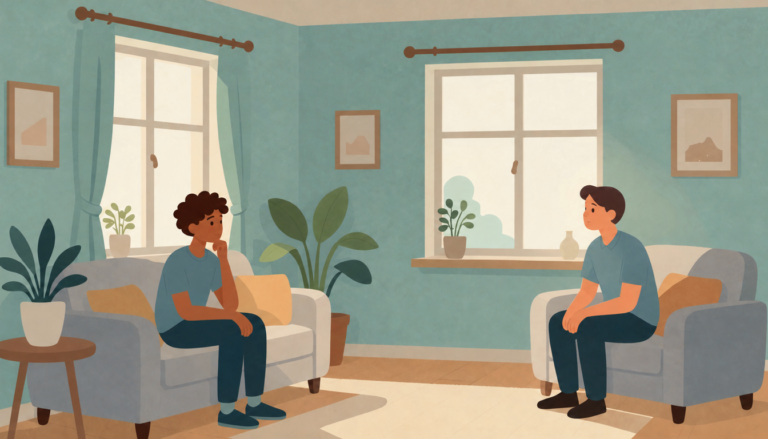
Sometimes our own position and perspective make it difficult to recognize peer pressure or put the previous three approaches into practice. When that happens, consider asking for help. People who are willing to listen can help you clarify your needs and identify your strengths; others often notice qualities we struggle to see in ourselves. Parents and teachers may draw on their experience to help you understand the heart of a problem. Classmates or a partner may offer a different combination: they know you well, yet can view your situation from the outside. Their perspective can help you recognize your particular advantages and develop a steadier sense of self when facing pressure from peers.
Try not to let the fear of troubling someone keep you from reaching out. Asking for support and talking things through may ease your stress and anxiety, and the conversation may bring you closer to each other.
Finding Your Own Pace
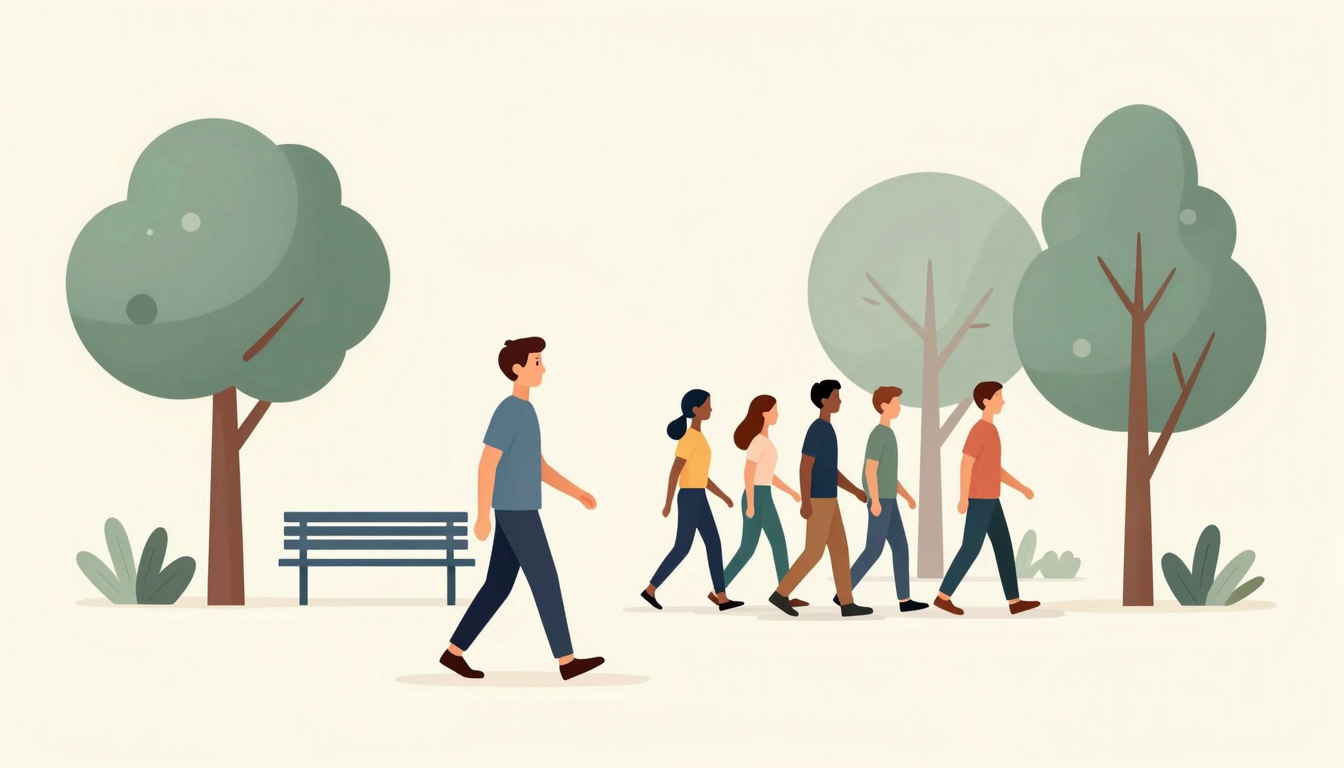
Life is something to experience, not simply a race to finish. Constantly checking whether you are moving faster or slower than everyone else can make you miss what is worth noticing along the way. Sometimes peer pressure offers a useful reminder or a push forward. More often, though, give yourself room to enjoy your own pace and keep the direction of your life in your own hands.
Frequently asked questions
Can peer pressure have positive effects?
Yes. In the marshmallow experiment described, children waited longer when told their group members had waited, showing greater self-control in that situation. Academic peer pressure may also encourage effort and better grades to some extent. These examples do not establish that all peer pressure is beneficial or that its effects last.
Does peer pressure affect adults?
Yes. Although the article emphasizes adolescents, it describes a similar process among adults: groups develop norms, and the desire to fit in can create pressure to conform.
How can I refuse peer pressure when a direct no feels uncomfortable?
Reflect on a previous situation and rehearse a response. If a blunt refusal feels uncomfortable, a tactful decline or a humorous reply can communicate your wishes while considering your friend's feelings.
What can help when friends' achievements make me feel behind?
Ask what you actually want and consider whether their achievements match your own goals. Recognizing your strengths, accepting imperfections, and seeking support may help reduce the pull of other people's pace.