Summary
From active games to quiet building, children enjoy different kinds of play. Recognizing those preferences can help families make space for relaxation and shared enjoyment.
At a glance
Play can help children manage anxiety and stress, while overscheduled activities can reduce opportunities to play. Families can observe which activities each child enjoys, match opportunities for relaxation to those preferences, and protect uninterrupted time for play alongside studying and other activities. Regular shared play can also support mental health and strengthen parent–child relationships.
Childhood Depression and Anxiety: A Less-Considered Role for Play
An Overlooked Capacity for Mental Health
Before considering how to alleviate psychological disorders, we need to ask what mental health means. Freud, the founder of psychoanalysis, identified three capacities closely connected with mental health and a happy life: work, love and play (Freud, 1957). From this perspective, psychological health involves being able to play as well as being able to work and love.
More recent definitions place greater emphasis on functioning. The World Health Organization's 2004 definition describes mental health in terms of recognizing one's abilities, coping with the normal stresses of life, working effectively and productively, and contributing to one's community. Set beside the earlier emphasis on work, love and play, this suggests that play may have faded from mainstream definitions of mental health.
Yet play has a vital role in psychological well-being. It helps people build hope and deal with anxiety and stress. The capacity to play is therefore both a sign of mental health and part of what sustains it.
Play is also an important tool in psychological work with children and adolescents. Counselors often use games to begin assessment and treatment, and brief games can introduce group counseling sessions while easing participants' anxiety. Research, including findings brought together in meta-analytic reviews, supports the significant benefits of play therapy for treating children's mental disorders and improving their mental health (Koukourikos, 2021).
Less Emphasis on Acquiring Knowledge, More Room for Play
Neuroscience offers further reasons to make room for play. Researchers describe its role in developing neural connections and brain function and reducing stress hormone levels (Pellis, 2009). Play circuits in the midbrain are considered crucial to connections in the cortex, the upper part of the brain (Panksepp, 2007). Insufficient play has been described as a cause of depression and disruption to social development, emotional development and learning (Burghardt, 2005). Brown (2009) expresses the stakes in a striking way: the opposite of play is depression, rather than work.
Children's schedules can leave little space for these benefits. The American Academy of Pediatrics (2007) identifies overscheduling—whether through academic activities or supposed free-time activities that do not suit a child's nature—as reducing playtime and increasing psychological problems. In a society that prizes rapid progress and places heavy demands on study and work, learning how to play may be an essential lesson that children and families have missed.
Children Who Know How to Play Can Be More Engaging—and More Likely to Thrive
Some scholars use the term Leisure Quotient, or LQ, to describe how well a person uses leisure time: in everyday language, whether they know how to enjoy themselves. Whereas IQ concerns intellectual ability and EQ concerns emotional ability, LQ focuses on using free time to enhance happiness and quality of life.
People described as having high LQ tend to find enjoyment despite the constraints of their surroundings. They can make ordinary life interesting for themselves and make time spent together enjoyable for others. They are also more likely to enter a state of flow, becoming absorbed in the present experience and their connections with other people. Flow, in turn, is an important route to happiness (Csikszentmihalyi, 1997).
Play also tends to be driven by intrinsic motivation: people take part because they find the activity rewarding. That motivation makes it easier to sustain enthusiasm and persevere over time, supporting the quality known as grit (Duckworth, 2009). The argument extends to achievement, with this persistence linked to a greater likelihood of doing well in education and a career (Credé, 2017).
Find Your Play Style: Everyone Has Their Own Preferences
So how do we learn to play well? A useful starting point is to understand what kind of play appeals to us. Each person has particular, sometimes unique preferences, and different things can bring out a playful state: an object, another person, an activity, or some combination of these. Two people can take part in exactly the same activity and have very different experiences—one may find it delightful while the other gets little enjoyment from it.
Brown (2009) attributes these preferences and triggers to the neural pathways we are born with and our early life experiences. If your child is under ten, this is an important opportunity to develop activities together that can become part of your family's way of playing.
Drawing on Brown's work (2009), the following eight categories offer a way to recognize different play preferences.
The athlete—Body Play: This person enjoys play centered on physical activity, such as dancing, running and ball games.
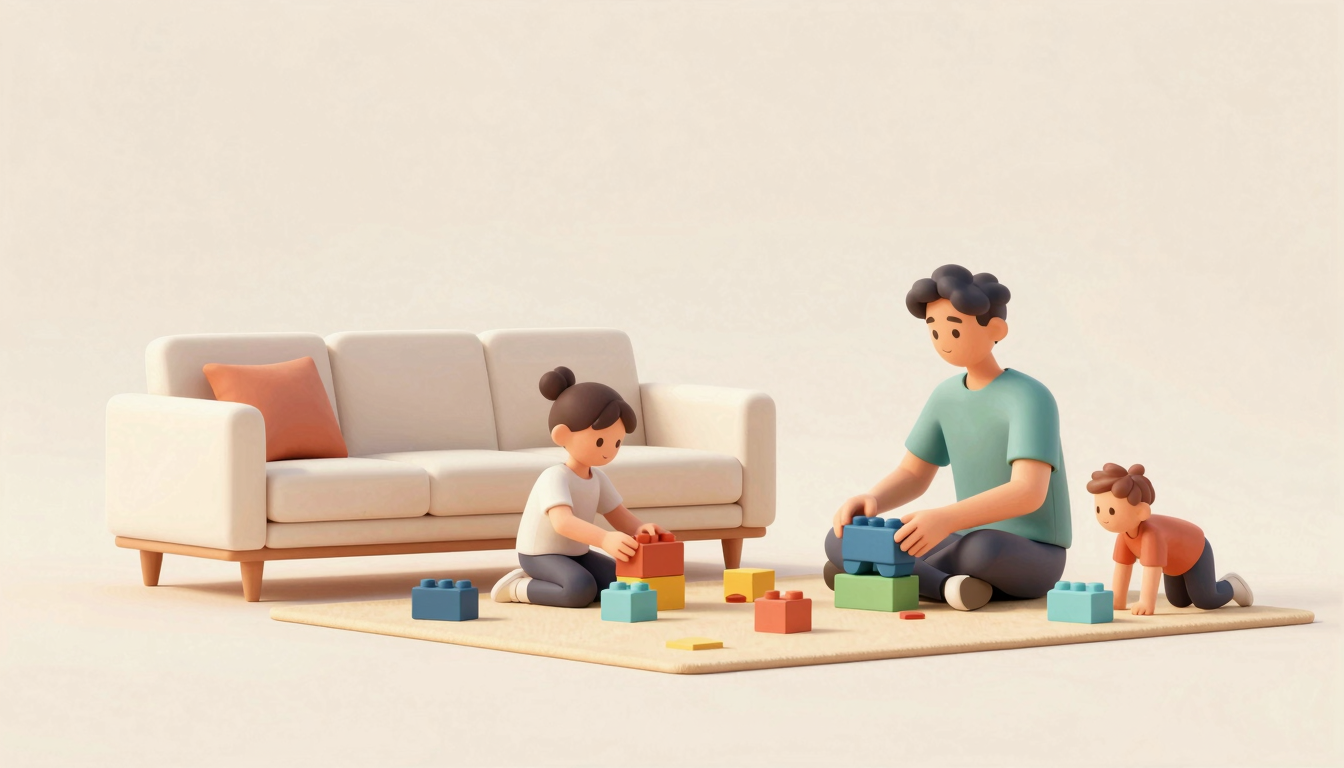
The creator—Object Play: This person enjoys playing with objects and materials, whether through toys, building blocks or drawing.
The socializer—Social Play: For this person, enjoyment comes readily through interaction with others, including role-playing, team games and playing house.
The dreamer—Imaginative and Pretend Play: This person loves using imagination and make-believe, perhaps by pretending to be a superhero or inventing stories.
The storyteller—Storytelling-Narrative Play: This person gravitates toward stories and dramatic expression, such as writing scripts or telling adventure stories.
The explorer—Transformative-Integrative and Creative Play: This person enjoys experimenting, exploring and innovating through activities such as scientific experiments and inventing things.
The competitor—Competitive Play: This person finds enjoyment in competition, particularly games with rules and goals, such as sports competitions, competitive board games and video games.
The builder—Constructive Play: This person enjoys making and assembling things, including building with blocks, completing puzzles and doing crafts.
A simple way to discover your preferences is through self-observation. Choose a quiet moment and recall childhood experiences in which you felt free, happy or absorbed in flow. What were you doing, and what helped bring about that feeling? Identify the central activities and the things that drew you into play, then consider which categories best describe them. Understanding your own play style, along with those of your children and other family members, can provide inspiration when nobody knows what to play.
When end-of-term exams approach and children face a heavy revision workload, this understanding has a practical use. Knowing a child's play preferences can help you find ways for them to relax and recharge quickly, making their study time more productive.
For a child drawn to body play, for example, exercise directly activates brain regions associated with learning, innovation, adaptability and resilience. You might therefore make time for some physical activity after school before moving on to studying and other activities. A child who prefers constructive play needs a different approach: quiet time alone to build something or do crafts offers the quickest way to relax and recharge.
The summer holiday that follows is an opportunity to give children uninterrupted blocks of time to explore and develop the activities they enjoy. Encourage them to follow their interests and deepen their engagement. Intrinsic motivation makes it easier to enter flow and remain involved over time.
The additional time parents and children spend together over summer also offers a chance to establish a family play routine of your own. Dedicated time for shared play can support each family member's mental health, strengthen the parent–child relationship and help you become playmates for life. You can begin today by setting aside a regular time for the whole family to play together.
Frequently asked questions
How can parents identify a child's play preferences?
Observe which activities and interactions bring the child enjoyment and absorption. The article describes eight categories of play preferences and recommends understanding each family member's preferences to find inspiration for activities.
What is Leisure Quotient?
Leisure Quotient, or LQ, describes how well a person uses leisure time to enhance happiness and quality of life. The article characterizes people with high LQ as tending to find enjoyment despite their surroundings and being more likely to experience flow.
How can play fit around exam preparation?
When children face a heavy revision workload, the article recommends matching relaxation to their play preferences. Physical activity before studying may suit children drawn to body play, while quiet building or crafts may suit those who prefer constructive play.
Does family play have to begin before age ten?
The article identifies childhood before age ten as an important opportunity to develop shared play activities. It does not establish an age after which families cannot develop a play routine.