Summary
The freedom to pause, revise and connect online can feel reassuring. Yet expectations around replies, likes and continued participation can turn that refuge into another setting for fear of judgment.
At a glance
Online communication can raise expectations of immediate replies, attention and approval. When those expectations go unmet, unanswered messages and missing likes can trigger self-doubt and fears of negative evaluation. These reactions share a concern with offline social anxiety: how other people judge us, even though silence does not prove disapproval.
A message marked “read” with no reply, or a post that receives no likes, can be surprisingly upsetting. That unease sits awkwardly beside one of the great attractions of online communication: it often feels easier than talking face to face.
Online socializing has worked its way into everyday life across generations. Sometimes it seems everyone has joined in, from the 80-year-old man at the village entrance to the baby still ruling the household in diapers. Typing a few words can feel much less demanding than opening your mouth to say them.
Research has reported lower anxiety when people express opinions and communicate online than when they interact face to face. Three features help explain that appeal: the possibility of anonymity, asynchronous communication that lets people respond in their own time, and the convenience of making contact.
Anonymity can make people less self-conscious and less guarded. Behind an online persona, a ridiculous comment may feel less exposing than it would in person. The person reading it may not know who you are, and your online self can feel separate from your everyday identity. Saying the wrong thing seems less likely to damage your reputation. There can even be the reassuring thought that the other person cannot reach across the screen and hit you. These perceived protections can make speaking up feel easier.
There is also room to pause. When a conversation does not require an immediate response, you have more time to decide how to present yourself and phrase what you mean. Even a simple “Hello” might spend half an hour being typed, deleted and revised. Until you press send, you can keep changing it.
Research cited in support of online communication's convenience also links it with frequent, substantial mutual self-disclosure. A conversation can happen almost anywhere, at almost any time, wandering from stolen takeout to linear algebra, from poetry to the philosophy of life. Imagine it is 3:30 a.m., the room is dark and your face is washed in the light of your phone. In that intimate exchange, the person on the other end may feel like the one who understands you best.
For people who find social contact frightening, this freedom can bring particular relief. Picture someone who trembles through encounters in person, takes a detour to avoid people and retreats into “It wasn't me—I didn't do anything.” In a WeChat group, that same person might be quick with a joke, always in the conversation and positively flourishing. The contrast is playful, but it captures how much easier expression can feel through a screen.
Social anxiety is a common, unpleasant experience described in psychological research. Speaking in public or talking with someone important whom you deeply respect can make even an ordinarily comfortable person nervous. High social anxiety involves excessive worry, tension and fear around social situations and interpersonal contact. For some people, even meeting another person's eyes feels unsettling.
Social compensation theory offers an explanation for why online contact may be especially appealing in these circumstances: people with high social anxiety may turn to online relationships to meet social needs left unmet offline. Compared with people who experience less social anxiety, they may be more inclined to rely on, or become absorbed in, the sense of safety online interaction provides. It can become a way to seek connection while avoiding face-to-face encounters in which they fear being judged negatively.
That refuge can become less reassuring when online and offline relationships overlap. Researchers have reported that, in certain social situations, the features that make online contact easier can become disadvantages, giving rise to anxiety over missing likes and unanswered messages.
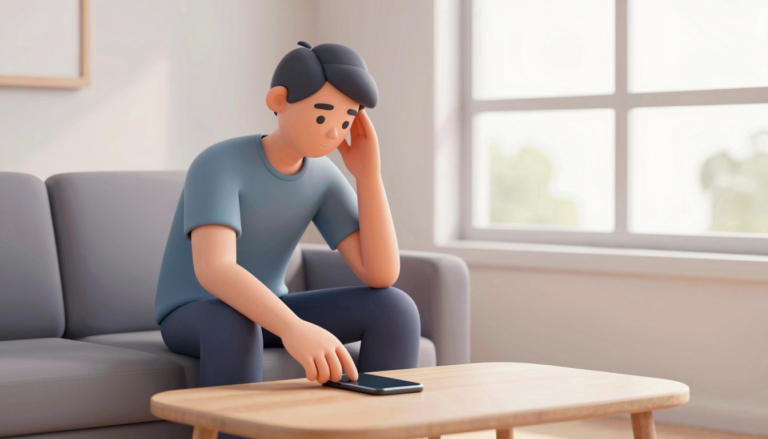
Imagine spending more than half an hour choosing and editing photos and composing the text for a WeChat Moments post. After publishing it, you wait another half-hour, opening the app every two minutes. Still no notifications. You reread the wording and scrutinize every picture, wondering what went wrong. As the unease builds, you finally delete the post you took such care to prepare.
Or suppose you are sending an academic supervisor an update on your recent work. You revise it four or five times, adjusting how you address them, the content, the tone—even the punctuation—before gathering the courage to press send. Soon afterward, your supervisor posts an announcement in the academic group chat, while your private message remains unanswered. Seeing them active elsewhere can leave you anxious, even though it tells you neither whether they have read your message nor why they have not replied.
Part of what makes these situations distressing is the expectation that online convenience creates. When communication is quick and easy, an immediate reply, attention or approval can start to feel like something to expect. Yet those expectations cannot always be met. Disappointment can turn inward: “Was my post so uninteresting that nobody wanted to like it?” “Does my boss think my work is so bad that they don't want to reply?” Waiting for a response becomes anxiety and self-rejection. These questions express the anxious person's fears; they do not establish why anyone stayed silent.
Seen this way, online and offline social anxiety share an underlying concern: excessive worry about how other people judge us. A post without likes or a message marked “read” but left unanswered can become a cue for feared disapproval. The absence of a response starts to feel like a judgment, even though it does not prove that anyone has judged us negatively.
Psychologists have described broader patterns of online social anxiety around establishing relationships, maintaining them and becoming excessively concerned with how interactions turn out. The first can make even joining a conversation feel fraught. Fear of negative comments may lead someone to repeatedly edit or delete posts, restrict who can see them, or set WeChat Moments to display only the most recent three days of updates.
Research suggests that users with high online social anxiety are more likely to “lurk,” limiting what they reveal about themselves and avoiding active conversation to reduce interpersonal tension. Someone might follow a group chat closely without saying anything, or type a message, revise it again and again, then abandon it without pressing send. Such behavior can reflect anxiety about making contact, though silence, deleted posts or privacy settings alone do not tell us what a particular person is feeling.
Even a routine acknowledgment in a work group can require careful timing. Imagine your boss posts an announcement. You want to slip your “Got it” into the middle of everyone else's replies, where it might pass unnoticed. Even if you see the announcement first, you cannot bring yourself to be the first to respond. You silently hope someone else will be brave enough to go ahead of you. If you are the last to notice it, another ordeal begins: you agonize over what to write, cringe with embarrassment and berate yourself for missing what felt like the perfect moment to reply. It can feel toe-curlingly awkward, frustrating enough to make you want to hit a wall.
Silence and those mechanical strings of “Got it” can conceal more discomfort than they reveal. Often, someone who stays quiet may not actually want to remain on the sidelines, and someone who echoes everyone else's acknowledgment may care far more than the flat wording suggests. Social anxiety can help explain both: a wish to participate tangled up with the fear of being noticed.
Once relationships exist, the pressure can shift toward demonstrating continued involvement. Social media's ongoing visibility can intensify conflicts that already exist offline and create new ones. Some users have described small disagreements growing on Facebook into conflicts that were difficult to repair. Even without an argument, the pressure to respond promptly to friends' updates can become uncomfortable.
Imagine working overtime day after day, with no time to pick up your phone and check social media. When you finally look, one friend has posted another romantic update, and another has shared a nine-photo grid of selfies. The posts are crowded with likes and playful comments, but you have left no trace. A sudden, overwhelming anxiety can arise from noticing your own absence: you missed the chance to take part.
Alongside the pressure to remain involved is the desire for reassurance that your presence is valued. A reported 2013 study by psychology researchers at a university in Berlin examined the relationship between Facebook use and the nucleus accumbens, a region of the brain. One reported finding linked social approval received while using Facebook with activity in that region and a temporary, hard-to-describe feeling of pleasure.
A separate strand of research discussed in connection with online anxiety concerns how recognition from others can reinforce our understanding of ourselves. People with low self-acceptance or a weak sense of identity may rely particularly heavily on continuing positive feedback to recognize their own worth. When reassurance is absent, they can begin to doubt themselves, depending on other people's approval to sustain their sense of who they are.
From the perspective developed here, the emotional rewards of likes and instant replies are fleeting and “not real.” Yet the craving for approval persists. Wanting that reassurance, despite how little lasting satisfaction it offers, becomes another source of anxiety.
The effort can also become exhausting. Research suggests that social overload—the excessive maintenance of interpersonal relationships—and maladaptive patterns of interaction associated with online social anxiety may contribute to social-media fatigue and poorer psychological well-being. One possible consequence is retreat: after experiencing anxiety online, people may become less willing to socialize and more inclined to withdraw into themselves.
Social anxiety can be armor we use to protect ourselves, but it can also become a wound we struggle to name or soothe. There are greetings we long to offer but never say, perceived misunderstandings we replay endlessly even though nobody else noticed them, and moments of intense regret when, despite carefully weighing every word, we still say something wrong. These experiences hurt. They should not become reasons to retreat from life beyond the screen.
In a world that changes quickly and surrounds us with more information than we can absorb, online socializing can look like an ideal refuge. Yet beneath its inviting surface are pressures and threats that may be harder to see. Moving our relationships online does not put us beyond their reach.
We are social beings, and avoiding interpersonal difficulties altogether is hardly possible. Encounters with different people will bring problems we cannot always control. We may fear being judged, the embarrassment of being ignored, or the hurt that can come with forming a connection. Perhaps living through these experiences can also reveal how much it matters to develop a resilient sense of self—a task that continues throughout life.
Try venturing out and talking with people. Allow yourself the chance to laugh with them and develop resilience through the difficulties of social life. Look within yourself for recognition, too: practice accepting yourself, giving yourself praise and appreciating who you are. Somewhere in that process, some of the anxiety may begin to ease.
Frequently asked questions
Does an unanswered message mean someone disapproves of me?
An unanswered message can trigger fear of disapproval, but it does not establish what the other person thinks or why they have not replied. Seeing someone active in a group chat also does not establish whether they read your private message.
Why can online communication feel easier than face-to-face interaction?
The possibility of anonymity, time to compose and revise messages, and convenient contact can make online expression feel easier. Social compensation theory suggests that people with high social anxiety may also seek online connection for social needs left unmet offline.
Does lurking in group chats always indicate social anxiety?
Lurking can reflect anxiety about making contact or being noticed. However, silence, deleted posts and privacy settings alone do not establish what a particular person is feeling.