The Quiet Omen / Psychology
Why a Room Feels Different After a Fight
The room may not be holding bad energy. It may be holding the part of the truth nobody has repaired yet.
- Published
- Read time
- 6 min
- Topics
- Psychology / Symbolic Life / Symbolic Places
- Sections
- 3
What this essay is really about
The room may not be holding bad energy. It may be holding the part of the truth nobody has repaired yet.
- The room may not be holding bad energy
- It may be holding the part of the truth nobody has repaired yet
You can walk back into the same room ten minutes after a fight and feel as if the furniture has been rearranged.
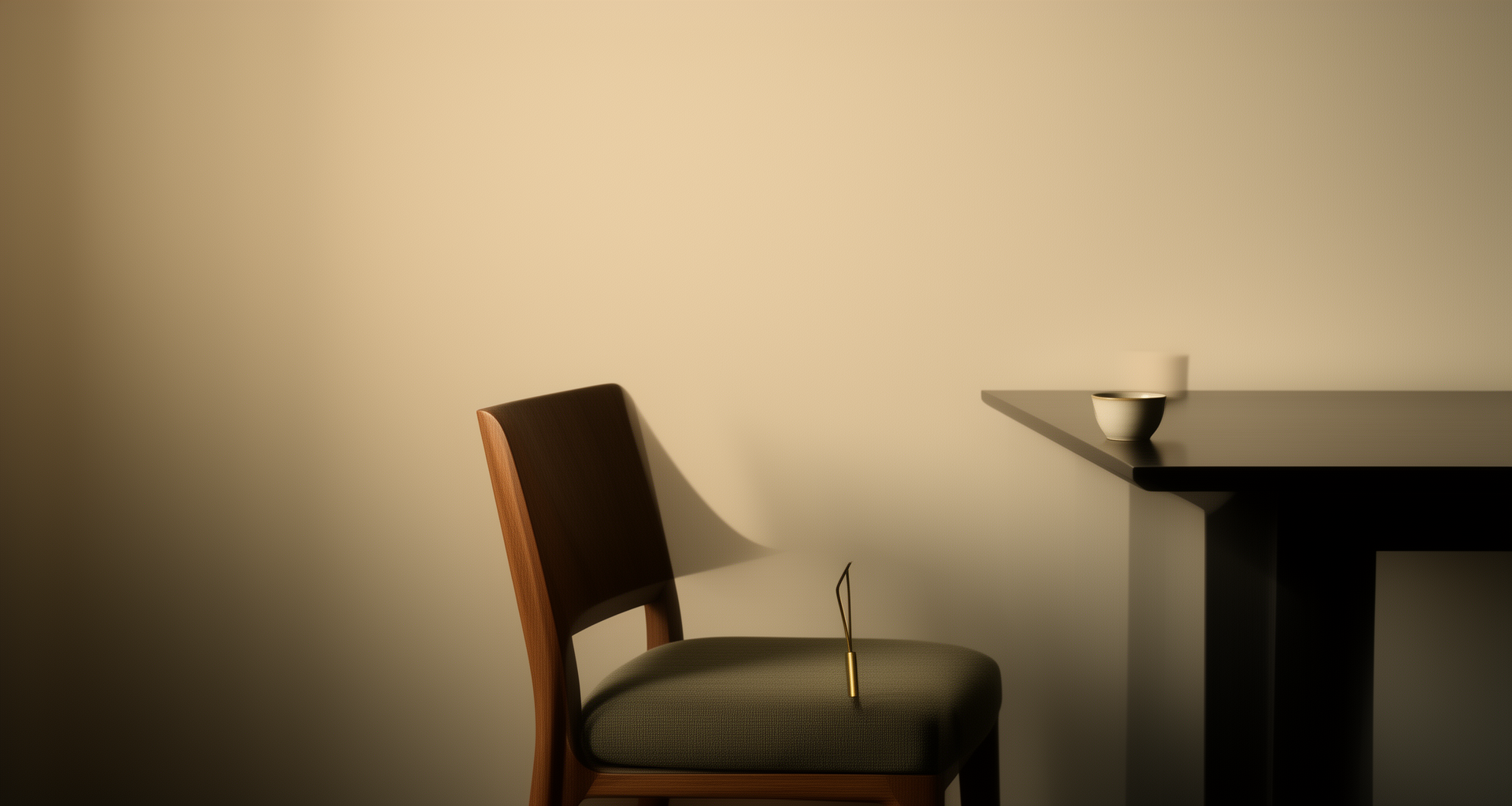
Nothing visible has changed. The chairs are where they were. The cup is still on the table. The lamp still gives the same light. But the room is no longer neutral.
It has a charge now.
You notice the silence first. It is not peaceful silence. It is the kind that seems to have edges. Someone has stopped talking too carefully. A door was closed a little too softly. The air feels aware of what just happened.
This is why people say a room has a bad energy after conflict.
The phrase can sound vague, even embarrassing, especially if you are trying to be reasonable. But the experience itself is common. After an argument, a room can feel colder, smaller, or heavier. You may avoid the chair where someone sat. You may open a window even when the air outside is not better.
On the surface, the obvious explanation is that you are upset.
That is true.
It is also incomplete.
A room can feel different after a fight because the room has become a witness.
Not in a supernatural courtroom sense. In a human sense. A place gathers association. The corner where someone said the sharp thing is no longer just a corner. The table where nobody looked up is no longer just a table. The hallway where the apology did not happen becomes part of the memory.
We do not experience space as empty geometry. We experience it as atmosphere.
This is why a childhood kitchen can feel warm decades later, why a hospital corridor can stay in the body, why a hotel room can feel lonely before anything lonely has occurred. Place is not passive to us. It becomes part of the emotional event.
After conflict, the room does not literally store the fight. But your nervous system stores the fight in relation to the room.
That distinction matters.
It keeps the experience meaningful without making it mystical in a cheap way. The room is not necessarily cursed. It is not necessarily contaminated. But it may have become symbolically marked. Something happened there, and your body has not yet been convinced that the happening is over.
This is the counterintuitive part: the room often feels strange not because the fight was too dramatic, but because the repair was too small.
A clean argument can pass through a room and leave very little behind. People say what is true. They hear each other badly, then better. The energy rises, then resolves. The space may feel tired afterward, but not haunted.
What lingers is usually not conflict itself.
What lingers is unfinishedness.
The sentence nobody answered. The apology that protected pride more than it restored trust. The joke used too quickly to cover discomfort. The decision to "move on" before anyone actually returned. The sense that everyone resumed ordinary behavior while something important was left standing in the middle of the floor.
That is when the room begins to feel wrong.
The wrongness is not always a warning about the other person. Sometimes it is a warning about the false peace you are being asked to accept.
This is why a room can feel different even after everyone is being polite again. Politeness can lower the volume without changing the weather. The words may have stopped, but the arrangement remains: one person careful, one person defended, one person performing calm, one person waiting for permission to be real.
The room feels charged because the truth has not found a place to sit down.
There is an old symbolic intelligence in this. Many traditions treat thresholds, hearths, tables, and beds as places that absorb the moral weather of a household. You do not have to believe every old practice literally to understand why people open windows, light candles, wash floors, change sheets, move objects, or step outside after a difficult exchange. These gestures are not only about cleaning physical space. They are ways of telling the body that an event has ended and a new state may begin.
Ritual gives atmosphere a boundary.
Modern people often dismiss that too quickly. We think either the room has magic energy or it has none. But there is a more useful middle ground: the room is part of the emotional memory system.
If you had the fight in the kitchen, the kitchen may briefly become the shape of the fight. If you were lying in bed when someone became cold, the bed may stop feeling like rest. If a message arrived while you were sitting in a particular chair, that chair may carry the first impact of the news.
The mind knows these are objects.
The body knows they were present.
Both are true.
This is why forcing yourself to "be normal" in the same space can feel so difficult. The demand is not only emotional. It is spatial. You are asking the body to re-enter a place that still has the feeling of the event attached to it.
Sometimes that attachment fades on its own. You make tea, sleep, talk about something ordinary, laugh once without forcing it, and the room slowly returns to itself. The charge dissolves because life reclaims the space.
But sometimes the room keeps its mood.
When it does, do not rush to make the space guilty. Ask what the room is helping you notice.
First: what part of the fight is still alive in the room?
Was it anger, fear, humiliation, grief, power, avoidance, shame, disappointment? Be specific. A room that feels heavy after grief is different from a room that feels sharp after contempt. A room that feels frozen after avoidance is different from a room that feels exposed after truth finally arrived.
Second: what changed in my behavior when I re-entered?
Did you lower your voice? Avoid a chair? clean compulsively? check your phone? keep the lights on? avoid eye contact? Your small movements often reveal the symbolic reading before your thoughts do.
Third: what would count as repair?
Not performance. Not pretending. Repair.
Sometimes repair is a conversation. Sometimes it is a sentence as plain as, "I did not like how that ended." Sometimes it is a real apology. Sometimes it is leaving the room for a while, taking a walk, and returning when the body is no longer braced. Sometimes it is rearranging the table, washing the cups, opening the curtains, and letting ordinary care make the room habitable again.
The useful question is not, "How do I remove the bad energy?"
The better question is, "What has not been allowed to finish here?"
That question does not turn every discomfort into a spiritual emergency. It also does not flatten the experience into nothing. It respects the intelligence of atmosphere.
A charged room can tell you that the social script has resumed before trust has. It can tell you that the apology did not reach the place the injury happened. It can tell you that you are safe now but still braced. It can tell you that something true entered the room and everyone is pretending it did not.
The omen is not the room.
The omen is what the room makes impossible to ignore.
This is why certain spaces change after certain conversations. Not forever, necessarily. But for a while, the place becomes a map of what occurred there. The chair becomes avoidance. The table becomes accusation. The doorway becomes escape. The bed becomes distance. The window becomes the wish to breathe somewhere else.
Then, if repair happens, the symbols soften.
The chair becomes a chair again.
The table becomes a table again.
The room returns, not because nothing happened, but because the happening has been integrated.
That is the quiet work people underestimate. Rooms do not only need cleaning after conflict. They need re-entry. They need a new action that tells the body the last scene is not the only scene that can happen there.
So if a room feels different after a fight, do not mock the feeling. Do not obey it blindly either. Treat it as atmosphere carrying information.
Ask what the space remembers.
Ask what remained unsaid.
Ask what small act of truth, care, or boundary would let the room become livable again.
The room may not be haunted by bad energy.
It may be haunted by the repair you have not made yet.