Summary
Stated partner preferences do not always predict attraction. Research on progression bias explores the pull toward romantic commitment while leaving room for the warmth of ordinary companionship.
At a glance
Progression bias is the tendency to favor decisions that move a romantic relationship toward commitment over decisions that prevent it from starting or bring it to an end. Researchers propose that it may help explain why people begin relationships readily, invest in them, and resist ending them despite imperfect compatibility. Proposed explanations include evolutionary conditions, early passion, and cultural pressure surrounding relationships and singlehood.
Why can a romantic relationship seem to begin so hastily, given everything two people face in deciding to be together? We hope to find someone compatible in the ways that matter to both of us: appearance, personality, past experiences, values, and family background. Alongside those relatively stable considerations is something more immediate—the sexual attraction we feel toward each other when we interact.
Becoming a couple brings another succession of decisions: when to introduce a partner to friends and family, how to spend nights together, whether to share a home, and whether to marry and spend the rest of our lives together. Making room for another person can bring considerable friction and conflict, even when we want that closeness.
With so much to navigate, why do many people prefer an imperfect relationship to being single? When disagreements arise, what draws them toward choices that keep the relationship going? Why tolerate difficulties, make allowances for a partner, and accommodate each other—and why can giving up feel so hard?
Psychologists propose a common factor behind these choices: progression bias. It is the tendency to favor decisions that move a romantic relationship toward commitment—pursuing someone, accepting a date, or investing time and resources—over decisions that prevent it from starting or bring it to an end, such as rejecting a suitor or breaking up. Understood this way, progression bias can act as both a catalyst for intimacy and a force that helps hold a relationship together.
Researchers studying progression bias challenge two accounts of how relationships develop. Some models drawn from research in Western contexts hold that people take a relationship further only when they perceive little risk of rejection. Progression-bias researchers argue that the tendency to move forward has a stronger influence on relationship advancement than perceived rejection risk does. They also challenge the view that commitment is the foundation for further development. In their account, progression bias operates across decisions about starting a relationship, investing in it, and ending it, exerting an influence greater than commitment itself.
Someone might later look at their relationship and wonder, “How did we start dating so hastily?” One possibility is that progression bias quietly drew both partners toward beginning the relationship. Research on partner selection offers a closer look at how that willingness to move forward might appear in practice.
How selective are we?
Literature often portrays finding a suitable partner as a once-in-a-lifetime encounter, and many people believe they choose carefully before entering a relationship. Yet research suggests we may be less selective than we imagine, relaxing our requirements when considering someone as a possible date.
Speed-dating research involving 10,000 instances of participation reported that 40% of people accepted a dating invitation when they received one. A separate speed-dating study of undergraduates found that participants’ ratings of their willingness to date were near the midpoint of the scale. These findings suggest a broader willingness to consider potential partners than the image of a rare, ideal match might imply.
Even a detailed account of what someone wants in a partner may not tell us whom they will find attractive. In subsequent speed-dating research, participants first completed a 30-minute questionnaire containing personality and partner-preference measures covering more than 100 traits. They described both their own characteristics and those they wanted in a partner. Yet machine-learning analysis of this extensive information failed to predict whom participants would find attractive and want to date in these studies. A stated preference for extraversion, for example, did not necessarily translate into choosing an extraverted partner.
The researchers suggested a likely explanation: people may approach partner selection by satisficing rather than optimizing. Instead of searching for someone who meets every expectation of an ideal partner, they may be more inclined to rule out people they find clearly unacceptable. Their choices could depend more on eliminating unsuitable candidates than on finding the best possible match.
The standards themselves may shift, too. In a study of single heterosexual participants, researchers found that an undesirable trait did not necessarily extinguish interest in a prospective date. Many participants instead adjusted their original standards to accommodate it.
Participants first completed questionnaires that included questions about their attitudes toward personality traits. Researchers then showed them a profile of a highly physically attractive person of the opposite sex, presented as someone they might date. The profile listed four personality traits. One was a trait the participant had previously judged undesirable and did not consider characteristic of themselves.
When participants rated the traits again after seeing the profile, they viewed that previously undesirable characteristic less negatively or considered it more characteristic of themselves. The romantic context mattered: in a comparison condition where the person was not presented as a prospective dating partner, researchers did not find this effect.
Follow-up research found that the effect was limited to mildly undesirable traits, such as poor planning or clumsiness. Within those limits, the findings suggest that people may come to accept a prospective partner’s less appealing characteristics and even incorporate them into their own self-concept.
What draws relationships forward?
Why can rejecting a prospective partner be difficult even when that person may not fit our standards or long-term goals? Researchers suggest that evolutionary mechanisms may explain part of progression bias: under some conditions in human history, being relatively less selective about a partner may have offered an advantage.
Finding an ideal partner would have been difficult for ancestors facing the demands of survival and passing on their genes. The evolutionary argument is that harsh environments, limited lifespans, and restricted contact between tribal groups could have made quick, relatively simple partner selection more advantageous than a more elaborate search. Under those conditions, accepting a potential partner more readily might have improved the chances of finding someone to begin with.
Separate research has linked imbalances in a society’s ratio of men to women with more frequent use of these quick, simple selection strategies when potential partners of one sex are scarce.
Once a prospective partner has been identified, the intense passion and infatuation common early in a relationship may also contribute to the pull to move forward. In this proposed biological account, attachment and sexual systems can strongly draw people toward psychological and physical closeness with that person. These motivations may encourage the investment of time and energy in a new relationship that can help a lasting attachment develop.
Culture may reinforce that pull. In many cultural settings, romantic bonds are given special importance over other social ties, and forming a lasting union, especially through marriage, is treated as a major life milestone. Relationship researchers call the belief that a committed relationship makes life more satisfying and meaningful an “ideology of marriage and family.” A separate research finding concerns how people weigh romantic risks: they generally find missing a romantic opportunity more regrettable than being rejected.
Within this belief system, being in a relationship can serve as a sign of success or maturity and bring a range of social benefits. Single people, meanwhile, can face stigma, including stereotypes that they are lonelier or less attractive. Fear of being single has long been common across many cultural contexts. That fear and the social pressure surrounding singlehood may help explain why people feel a need to pursue and maintain romantic relationships even when their romantic interest is not particularly strong.
Research on progression bias offers a fresh perspective on these choices, though its conclusions can feel emotionally cool. It can help us reflect more objectively on our own decisions, understand the decisions others make, and respect the possibilities beyond those choices.
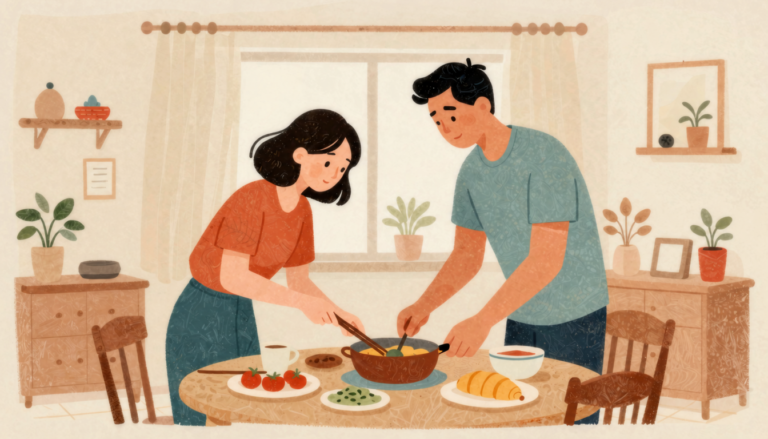
Science is one way of understanding the world. There is also the warmth of being with a particular person: an unforgettable moment of attraction, a close embrace, the quiet contentment of ordinary days spent together. In a short human life, these experiences are precious, even as we seek to understand what draws us toward them.