Summary
Pink, blue, dolls and racing become starting points for questioning the expectations children inherit—and the fixed templates that can limit anyone’s possibilities.
At a glance
Gender stereotypes assign behaviors, values and expectations to men and women according to biological sex. The article argues that culture shapes these expectations through family life, schools, media and other everyday encounters, beginning in childhood. They can constrain both women and men, limiting choices, self-belief and opportunities for individual expression.
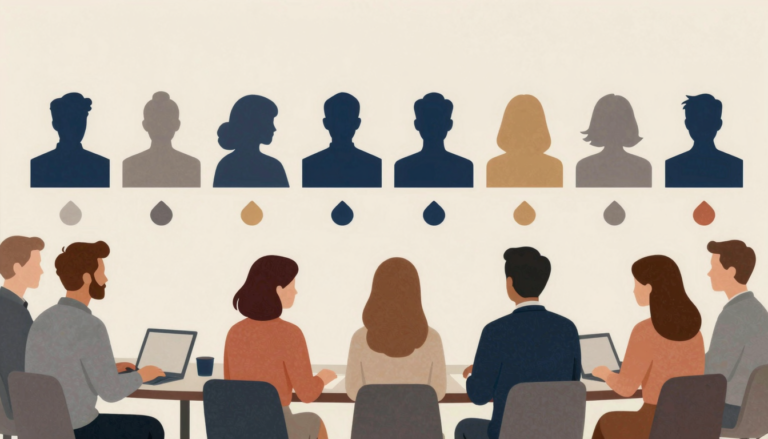
Who decides how men and women should look or behave? Even everyday color choices raise the question. Blue commonly represents males and pink females, as on some public restroom signs. The same convention is familiar in baby clothes: blue for boys, pink for girls. Why do we associate these colors with gender, and who decides which color belongs to whom?
The writer’s historical account traces gendered color conventions to the West, describing pink for girls and blue for boys as an arrangement with only about a century of history. In this account, the earlier associations ran the other way: pink was considered a boy’s color, blue a girl’s.
A 1918 commentary in the trade magazine Earnshaw’s Infants’ Department recommended pink for boys because its unnamed author considered it bold and strong. Blue, characterized by the commentator as calm and elegant, was judged more suitable for girls. The writer places the gradual mainstream adoption of today’s arrangement later, linking it to the popularity of pink headbands for newborn girls in the 1980s.
Why should pink suit girls and blue suit boys? Why should boys be expected to be bold and strong, while girls are expected to be calm and elegant? Whether we assign pink to girls and blue to boys or reverse the colors, could requiring either arrangement itself be a form of gender stereotyping?
The definition cited by the writer describes gender stereotypes as the behaviors, values, motivations and related expectations that a society or culture assigns to men and women on the basis of biological sex. The expectations about boldness and calmness illustrate this assignment. A separate cited explanation holds that such stereotypes reflect, to some extent, unreasonable arrangements of men’s and women’s social roles, along with the prejudice toward the other sex that those arrangements produce.
Across Eastern and Western societies, expectations that men should be strong and women weak, that men should hold superior positions while women remain subordinate, and that men should handle affairs outside the home while women manage domestic life have been passed down through generations. Despite contemporary ideals of liberation and gender equality, substantial prejudice persists. Our understanding of gender has not kept pace with social change.
The writer draws on another explanation to account for this persistence: rigidity is a defining feature of stereotypes. A group’s characteristics may change over time, yet people continue to attribute old characteristics to its members, overlooking what has changed. Gender expectations can survive in much the same way, preserving an old picture of how men and women are supposed to be even as their lives change.
These expectations begin taking shape early in life. In introducing this process, the writer distinguishes biological sex from psychological gender, describing the former as directly determined by genes and the latter as developing over a long period.
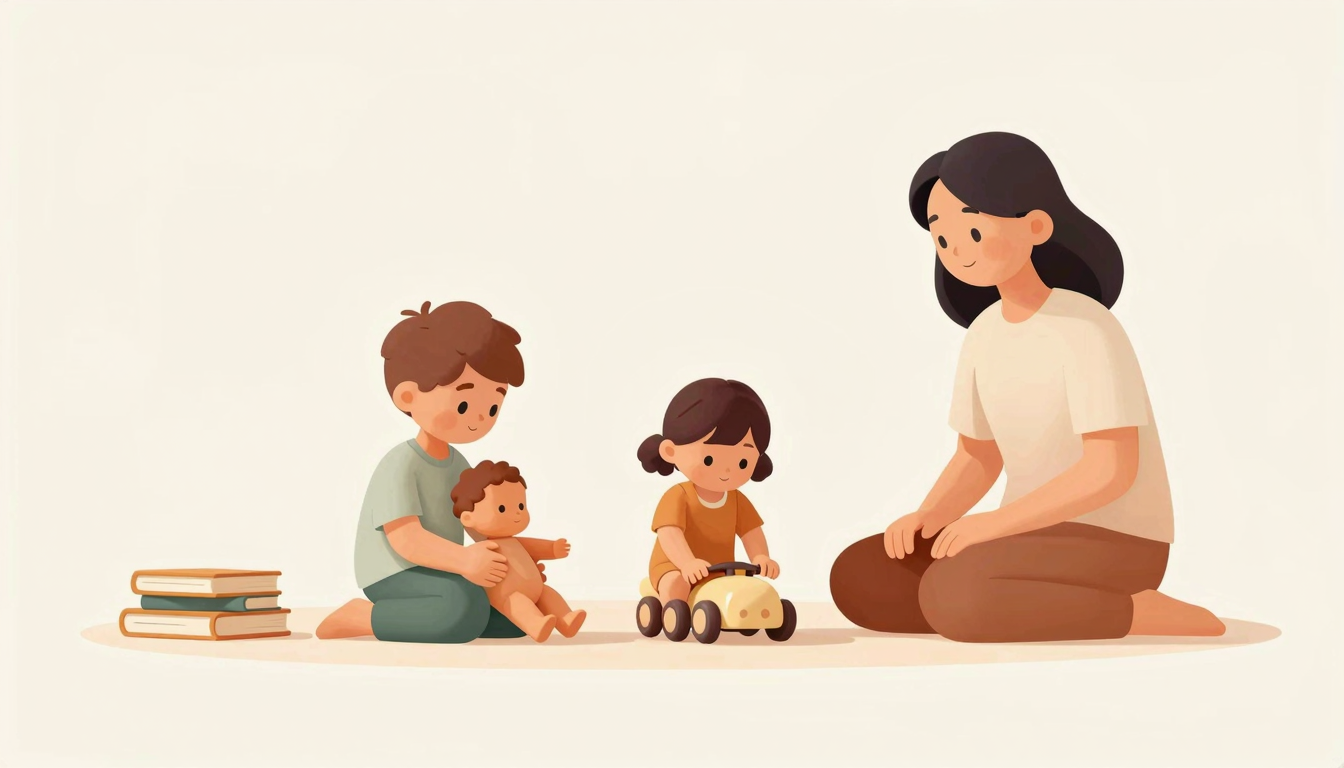
The developmental account cited next places the beginning of gender learning in infancy, with gender identity gradually forming in early childhood. It describes this emerging understanding in binary, unchanging terms: recognizing a person as either male or female and regarding gender as fixed. In the same account, young children rapidly learn the behaviors their culture assigns to boys and girls. They develop ideas about how males and females should be and begin to favor activities associated with their own gender. Boys generally preferring toy cars to dolls is offered as an example. The writer infers that children are already beginning to learn gender stereotypes while their gender identity is still forming.
Where do those expectations come from? The writer argues that stereotypes are culturally constructed rather than biologically determined, drawing on a cultural explanation that connects their formation to ethnic traditions, the wider society’s culture and family culture.
Children encounter these influences in ordinary life. In their early years, they spend much of their time with family members and learn about gender by observing their parents’ behavior. Outside the home, the people they see also influence their understanding. At school, interactions with teachers and classmates, along with textbook content, shape their views. Media encountered through electronic devices adds another source of influence. Any of these experiences may contribute to gender stereotypes taking shape without children consciously realizing it.
The cultural explanation describes how these influences can sustain stereotypes across generations: socialization shapes people’s views of gender; those views restrict the social roles available to individual women and men; and those restrictions, in turn, help reproduce the stereotypes.
Whom do these restrictions hurt? Much of the attention given to gender stereotypes concerns discrimination against women. The writer broadens that concern to include the harm they also do to men.
Research cited in the discussion reports that the stereotype that girls cannot do well in science can lead women to perform significantly below men in science-related studies. The same report describes a corresponding effect in the humanities: the stereotype that boys are unsuited to these subjects can lead men to perform significantly below women. It also suggests that stereotypes may cause people to doubt or dismiss their own abilities, with consequences that can extend to their future career choices and performance at work.
The constraints reach beyond education and careers, narrowing the possibilities for who we can become. Girls can play with LEGO, and boys can choose dolls. Makeup need not be reserved for women, nor motor racing for men.
That freedom can begin with the choices made for children. The writer reports that, in recent years, many parents have resisted overemphasizing gender stereotypes in infancy and early childhood by choosing more neutral clothing colors beyond blue and pink. Their intention is to leave children room to choose from the beginning.
We should reject fixed definitions of how men and women ought to be. Men and women are independent, free individuals, and no one should be shaped to fit a prescribed template. Fortitude, initiative, responsibility and courage are not exclusively male traits; gentleness, dependence, diligence and weakness are not exclusively female.
“I want to dance gracefully in the moonlight and ride away on a motorcycle with the wind.”
That “I” could be anyone.