Summary
Tomorrow’s deadline can feel like someone else’s problem. Similarity, vividness and positivity offer ways to think about the connection between who you are now and who will live with your choices.
At a glance
Future self-continuity describes how close you feel to your future self. Researchers have reported that lower self-continuity is associated with greater procrastination: immediate pleasure can feel more tangible than later anxiety or satisfaction. Imagining your future self more vividly, recognizing similarities and regarding that person positively may help strengthen the connection.
“What does arresting Zhou Shuren have to do with me, Lu Xun?” The joke treats two names for the same person as though they belonged to different people. We can draw a similar distinction between who we are now and who we will be when the consequences arrive.
Imagine an assignment due at noon tomorrow. You haven’t written a word, but you’re lying in bed watching funny videos on your phone. You know the anxiety and misery of scrambling to meet that deadline could leave you overwhelmed. You keep watching anyway.
Or imagine browsing Taobao at the beginning of the month, ordering things you’ll regret buying the very next day. Money gets tight at the end of every month. You know you could find yourself trying to stretch a single container of instant noodles across three days, yet that knowledge does little to stop you from placing another order.
Is this procrastination? Have you simply forgotten how much it hurt last time?
Another possibility is that you’re treating your future self as a stranger. You know someone will have to finish the assignment or get through those days without enough money. Although that someone is you, their trouble may feel far removed from the choice in front of you now.
When your future self feels unfamiliar
Picture passing a stranger who looks overwhelmed by a deadline. You might pause and think, “That looks stressful,” then carry on. There is some sympathy, but it goes no further. Imagining yourself working late to meet a deadline can feel much the same. You watch from a distance, without a clear sense of what that future version of you is going through. Or imagine spending three months next semester doing very little, then facing exam week. “That looks stressful,” you might think again. Wait—isn’t that how you felt about the stranger?
At this point, imagine a psychologist leaning over to whisper, “Exactly! Your self-continuity is low.” That playful explanation gives a name to the sense of distance.
In psychological research, self-continuity describes the felt connection among your past, present and future selves. Higher self-continuity means recognizing them as one continuing self. Time passes, but the person you were, the person you are and the person you will become all feel like you. Researchers also use the narrower concept of future self-continuity to describe how close you feel to your future self from where you stand today.
Researchers have reported that thinking about the present self and the future self involves different brain regions, and that the regions involved in processing the future self more closely resemble those involved in processing a stranger.
That unfamiliarity can be easy to imagine. Consider someone who will one day become an accomplished, widely admired expert. Back in college, that person might struggle to picture any of those achievements. “I can barely keep up with assignments and grades,” the student might say. “I’m still so naive. How could I possibly be that successful professional?” If the two versions could somehow meet across time, the younger one might simply stare in astonishment.
Must our present and future selves remain strangers, then? No. The future self-continuity model identifies three relevant dimensions—similarity, vividness and positivity. Try imagining yourself ten years from now. If an image takes shape, consider how much that person resembles who you are today, how clear and lifelike they seem, and how positively you regard them. Those questions illustrate the three dimensions.
Part of what makes the future self feel unfamiliar may be the uncertainty surrounding them. We don’t know what will happen or who we will become, so the person we’re trying to imagine can seem vague and remote. Even the end of the month can feel that way. While shopping, it may be hard to picture how vulnerable and helpless you could feel later, trying to get by on instant noodles.
The pleasure now and the cost later
The distance can matter even when the future is only a day away. Return to the person in bed, choosing videos over homework. “I don’t feel like working. Leaving it until the last day won’t be that painful.” So the videos keep playing.
The next day, you’re writing frantically into the night when yesterday’s reasoning comes back to you. You can barely believe you found it convincing. Furious with yourself, you vow never to do this again. Next time, of course, you’ll be back in bed, making much the same argument for another video.
One way to understand this cycle is that today’s self cannot quite feel tomorrow’s anxiety. You can know the work will be stressful without experiencing that stress as you decide whether to start. But what might change if you could feel some of that future distress now?
Researchers have reported that people with higher self-continuity tend to give greater weight to future benefits. They are more inclined to curb irrational purchases and save for the future, exercise self-control in pursuit of academic goals, and reduce behaviors that could harm their future selves.
Recognizing ourselves as the eventual bearers of those consequences may give us more reason to hold back today. The person who will live with our choices begins to feel like someone whose interests matter now.
Research also points to self-continuity as an important factor in procrastination. People with lower continuity tend to be more prone to putting things off. Vividness appears particularly important in this relationship, with more vivid images of the future self linked to greater ability to move beyond procrastination. One possible explanation is that difficulty clearly feeling how overwhelmed we will be later contributes substantially to our willingness to delay now.
While we’re watching videos on our phones, the pleasure is immediate. We feel it fully. Tomorrow’s frantic work and deadline anxiety are harder to imagine clearly enough to feel anything comparable. Against all that enjoyment, the coming distress can seem small. Even the satisfaction of having finished the work remains distant. We cannot readily feel either the anxiety of leaving it undone or the pleasure of completing it, while the enjoyment of putting it off is already here. That imbalance can keep us choosing another video, even though the brief pleasure may leave us with greater stress and anxiety later. We delay, struggle, regret it—and find ourselves doing it again.
It’s easy to admire people who keep their work organized and plan their time carefully, who do their work well and still enjoy their leisure, or who maintain regular routines and disciplined eating habits. A stronger connection to your future self might give you some of that motivation, a reason to make a few concessions now for the sake of your own well-being later.
Making the connection more tangible
Similarity, vividness and positivity suggest a place to start. Look for connections between who you are now and the person you imagine becoming. Put that imagined future self into words on paper, giving the image clearer, more vivid detail. Try regarding that person more positively, too. If you can recognize similarities, picture your future self clearly and feel positively toward them, could the distance between now and then begin to shrink?
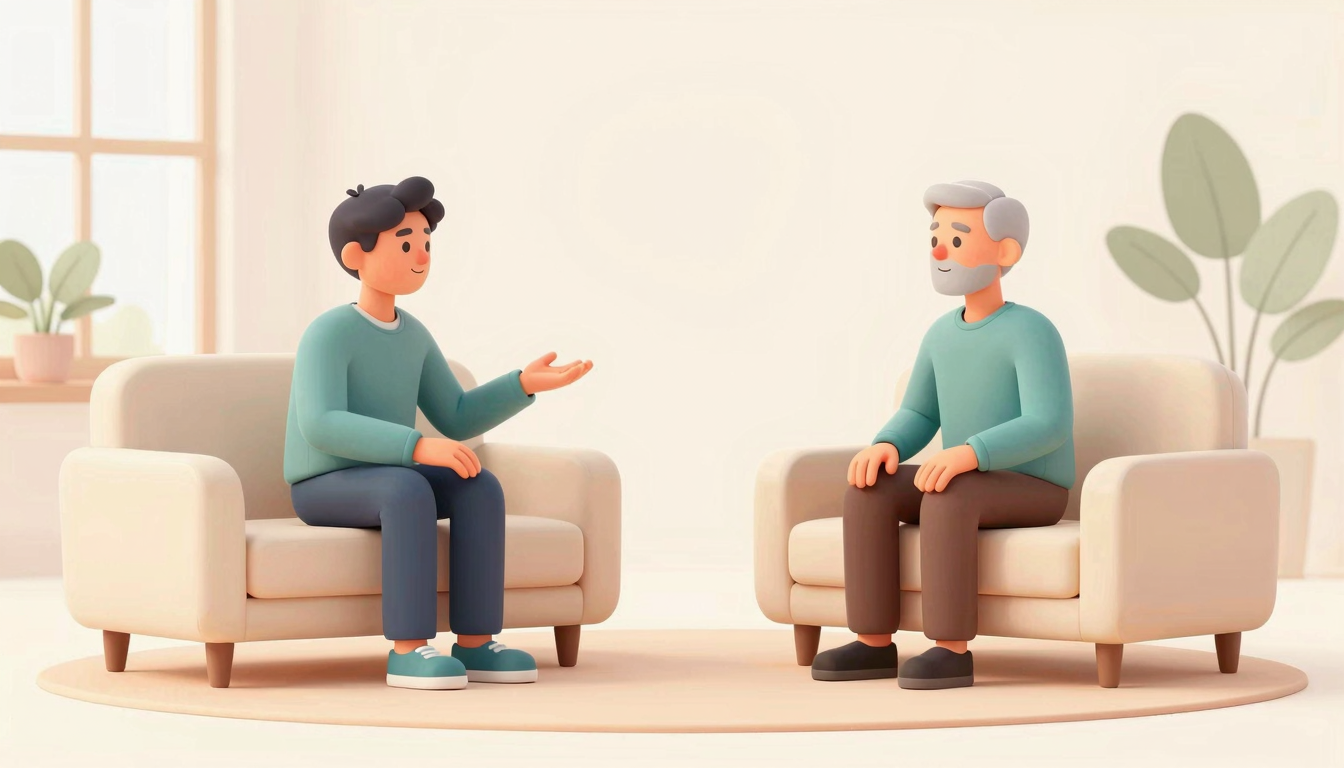
Researchers have explored several ways of strengthening that connection. They have asked participants to imagine their future selves, write letters to them and engage in conversation with them. They have even used virtual reality to let participants see an elderly version of themselves. These interventions were reported to increase self-continuity.
The idea is that once your future self becomes someone you can picture clearly and recognize as yourself, you may begin to consider how your choices today will affect that person.
An online motivational saying about studying may capture the same idea. It offers a thought experiment for a moment when you don’t feel like studying. Close your eyes and imagine the exam is already over. The results arrive today, and you haven’t gained admission—again. In this imagined future, you tearfully plead, “Could I have one more chance? I promise I’ll study as hard as I can.”
Then open your eyes. This is that new chance.
Imaginatively entering a possible future can make it more concrete. Picture yourself ten years from now, starting with who you are today, and you may recognize how much carries through. An imagined conversation with that future self can give the image greater clarity and life. Where the present and the imagined future meet, there is room for change.
The next time you feel tempted to put something off, or choose a pleasure you know will cost you later, try closing your eyes. Imagine what follows, and place yourself in those circumstances. Would those consequences still feel bearable if you were the one living through them? Take a first step toward that seemingly unfamiliar future self and consider your answer.
The present gives us so much to take in. We breathe in the scent of roadside flowers, feel a breeze against our faces and see a cat dart into the grass. We can watch drops fall into a puddle, willow fluff drift through the air and wind lift dust from the ground. Life here and now feels clear and specific.
The future is harder to grasp. If we place the present at the origin of a time axis, the future stretches out like a ray with no endpoint. We cannot touch it, and we struggle to imagine it. Beside the tangible details of today, it seems vague and abstract.
Yet who we are now and who we will become belong to the same timeline, one continuing self. In that sense, our future self is never truly a stranger. Everything we have lived through has shaped who we are today. What we do now is already creating the past our future self will inherit.
Frequently asked questions
What is the difference between self-continuity and future self-continuity?
Self-continuity describes the felt connection among past, present and future selves. Future self-continuity refers more specifically to how close your present self feels to your future self.
What are the three dimensions of future self-continuity?
The future self-continuity model identifies similarity, vividness and positivity: how much your imagined future self resembles you now, how clearly you picture that person and how positively you regard them.
How can you make your future self feel more connected?
Look for similarities between your present and future selves, write down a vivid description of that imagined person and try regarding them positively. Researchers have reported increased self-continuity following exercises involving imagination, letters, conversation and virtual reality images of an elderly self.