Summary
Why can a familiar person’s success hurt more than a distant public figure’s advantage? The writer connects envy’s comparisons with an effort to preserve a positive view of ourselves.
At a glance
The writer proposes that envy can protect a positive self-image when an unfavorable social comparison threatens it. In this explanation, envy helps balance the conflict between feeling inferior to someone else and continuing to believe in our own worth. Defensive responses may include self-improvement, seeking reassurance, or diminishing the envied person, with different consequences for those involved.
What is envy? The writer’s proposal is that this painful emotion can function as psychological self-defense. Before considering what it might protect, it helps to look at what it involves.
Shakespeare describes jealousy as a “green-eyed monster”; Chinese speakers call envy “red-eye disease.” The colors differ, but both expressions draw attention to the eyes. To the writer, that shared imagery seems to suggest something about how envy begins: we see what someone else has achieved.
The psychological definition cited in this account centers on social comparison. Envy is the unpleasant feeling that arises when we recognize that another person possesses something we want but lack. It combines a sense of inferiority with hostility and resentment toward the person whose advantage has brought that lack into view.
Many psychologists approach envy as a relatively stable tendency, known as trait envy: faced with the same event, some people are more likely than others to feel envious. Chinese slang calls a habitually envious person a “lemon spirit,” an informal label for someone soured by other people’s advantages.
Research on dispositional envy examines a tendency to experience envy and its relationships with other self-report measures. That is not evidence that feeling envy indicates an anxiety disorder, phobia or obsessive-compulsive disorder. The source account does not identify enough evidence to support its specific list of moderate clinical correlations.
Other researchers examine envy as a state arising in particular circumstances. From this perspective, anyone may experience it—in romantic relationships and marriage, at work, or within social groups. General susceptibility is one part of the picture; the situation also matters.
When another person’s advantage hurts
Similarity, personal relevance, perceived control and perceived unfairness can help describe a comparison. They are not four conditions that must all be present for envy. Research distinguishing benign and malicious envy shows that appraisals of control and deservingness can help differentiate responses rather than serving as universal prerequisites.
Within this framework, the more similar another person is to us, the stronger our envy tends to be. Similarity can involve social closeness—whether someone is a friend, relative, classmate, roommate, or stranger. It can also concern professional distance, as in a comparison between doctors and programmers, or differences in status, class, and power.
The writer illustrates this by contrasting distant public figures with familiar peers. The wealth of one public figure or the beauty of another may be less likely to provoke envy than a former classmate’s sudden rise to success. A roommate making a striking entrance one day, wearing heavy makeup, may stir resentment more readily than a public figure’s beauty.
But similarity alone is not enough in this account. The comparison must also matter personally: envy generally concerns a domain we value or an advantage we perceive as threatening our interests. Research cited by the writer suggests that when personal relevance is low, even someone similar to us may inspire admiration or pride in their achievement instead of envy.
Consider the writer’s example of a colleague who reveals an impressive talent for sketching in front of others. If drawing matters little to you, you may simply admire the skill and express your approval. If you consider it important and have studied it diligently since childhood, the same display may be more likely to stir envy.
Low perceived control may make a comparison feel difficult to change. However, envy can also accompany a belief that improvement is possible; effort directed at reaching another person’s advantage is often discussed as benign envy. Low control is not required for every envious experience.
The writer contrasts losing out through a boss’s favoritism, a drawing of lots, or gambling with a disappointing result we believe our own efforts can change. When the outcome feels beyond our control, envy may arise more readily. When we see room to improve through effort—as with examination results—we may be more inclined to rally, work harder, and improve ourselves.
Perceived unfairness can add resentment to a comparison, but envy can occur when the other person’s advantage seems deserved. Anger need not become hatred, and neither emotion determines how someone will act.
The writer illustrates this with the discovery that a student sharing your desk earned high exam marks by cheating, or that a colleague secured a promotion through connections. Discovering such circumstances may provoke hostility toward that person, or even lead to an attack.
What envy may be defending
The writer asks whether envy can have a protective function. A painful comparison can prompt self-improvement or hostility, and the feeling alone does not establish whether an actual unfairness occurred. Its consequences depend partly on what the person does next.
Imagine losing a sports match and envying the winning team. The writer interprets this as an effort to preserve self-worth. It is one possible reading, not evidence of an unconscious belief that you are capable or a test of healthy self-esteem.
In this explanation, envy involves a cognitive conflict. The comparison puts you below someone else, while your existing view of yourself remains positive. Those judgments pull against each other. Envy becomes a psychological strategy for balancing the conflict between what the unfavorable comparison suggests and what you believe about yourself.
Psychologists have used the image of a “psychological immune system” to describe how the mind defends itself, drawing an analogy with the body’s defenses against invading germs. In this account, perceiving a psychological threat—whether already present or approaching—activates responses intended to protect us from its effects.
The writer sees losing a social comparison as one such threat because it puts our positive self-evaluation at risk. Consider what it would mean to stop accepting yourself altogether, to feel that you had no good qualities and no worth. What would that do to your psychological well-being?
Psychologist Tesser argues that people have a fundamental need to maintain a positive self-evaluation. The writer interprets this as an inborn tendency to accept ourselves and view ourselves favorably. A separate account of psychological self-protection describes what may happen when external events provoke self-doubt: we try to integrate the unsettling experience into our sense of who we are in ways that preserve a positive self-image.
The writer describes this defensive process as usually automatic. The mind may respond to negative events before we are aware of its efforts to protect us. Five possible responses illustrate how this can play out in envy.
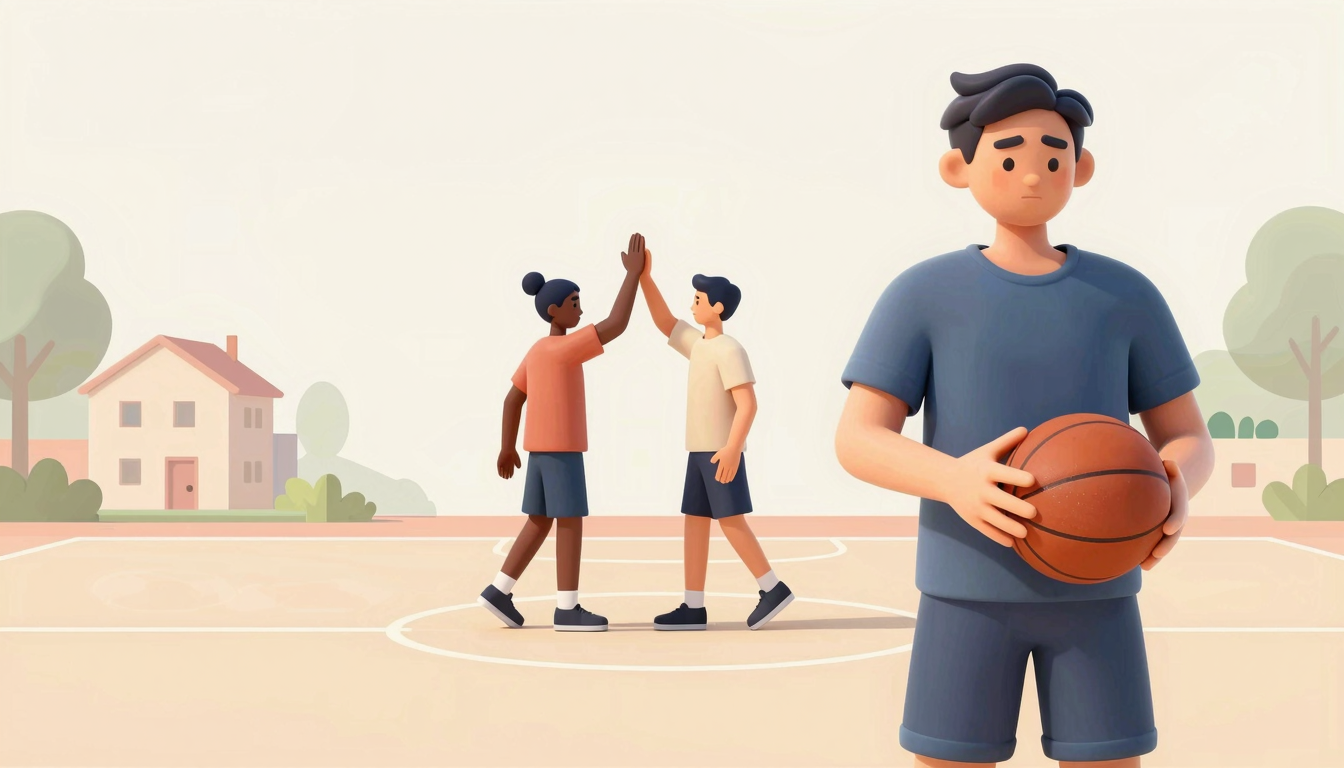
One is to shift the comparison to an area where we feel superior. Someone outperformed academically might think, “He may do better in class, but I’m better at basketball.” Losing ground in one domain leaves room to assert an advantage in another.
Another response explains the unfavorable result through something other than our own ability: “He’s just lucky. If I’d had even half his luck, I would have surpassed him long ago.” Attributing the difference to luck preserves the belief that ability was never the problem.
We may also seek reassurance from other people. Deliberately showing friendliness or taking the initiative to help someone can become a way to gain social support and elicit praise.
A fourth response turns toward greater effort, with the aim of matching or surpassing the person we envy. Here the imagined conviction is, “I’m no worse than he is. I’ll work harder to improve, and next time I’ll beat him.” Belief in our own ability sustains an attempt to change the next result.
The fifth response turns against the envied person: disparaging or attacking them. Aggression may be indirect, damaging their relationships or social reputation, or direct, through insults, fault-finding, mockery, and open antagonism.
These responses illustrate what the writer sees as envy’s complex, multifaceted character. We may defend ourselves by raising our own standing, repeatedly reassuring ourselves that we are not so inadequate after all. Or we may diminish someone else, picking out their faults to compensate for our perceived shortcomings and feelings of inferiority. Both can serve a defensive purpose in this explanation, with very different consequences for the people involved.
Facing the emotion
Envy can be painful on either side of the comparison. Feeling it can draw us into an inner struggle and lead us to behave unpleasantly toward others. Being its target can mean suffering undeserved harm and the hurt of being treated unfairly. Even as we experience envy, we may try to play it down, suppress it, hide it, or deny that it exists.
The writer sees acknowledging envy as a possible starting point for reflection. It can help to identify the valued advantage and choose a response. Feeling envy does not by itself prove resilience, healthy self-esteem or future improvement.
There is no need to condemn yourself for having an emotion. Acknowledging envy can coexist with responsibility for how you treat the other person; denying the feeling and acting on it harmfully are different problems.
The writer hopes that more open acknowledgment could make envy easier to discuss. Openness alone cannot guarantee that a person targeted by hostility will be safe from it.
Frequently asked questions
What is trait envy?
Trait envy is a relatively stable tendency: faced with the same event, some people are more likely than others to feel envious.
What factors can shape an envious comparison?
Similarity, personal relevance, perceived control and perceived unfairness may shape the experience, but they are not four universal prerequisites. Envy can coexist with deserved success and a belief that improvement is possible.
How can envy lead to different defensive responses?
In the writer’s explanation, people may emphasize strengths in another domain, attribute an unfavorable result to luck, seek praise and social support, work to improve, or disparage and attack the envied person. These responses can serve a defensive purpose while having different consequences.