Summary
Body shame can surface in private self-comparison, family remarks and conversations about other people's appearance. This article explores how those habits take hold and offers five ways to begin changing them.
At a glance
This article uses body shame broadly to include shame about your own appearance and appearance-based criticism of others. Comparison, childhood messages, weight talk and media ideals can sustain it. Suggested responses include self-acceptance, attention to inner experience, boundaries around body comments and critical social-media use; exercise may help when motivated by health and fitness, while weight-loss goals may intensify self-objectification.
When you see attractive people on social media, what happens after that first glance?
“They look amazing. That face, that body—and then there's me…”
Or perhaps: “That can't be real. They don't look like that in person…”
These are only some of the reactions that can arise. Beneath admiration, comparison or disbelief, there may be something harder to recognize: body shame.
What body shame looks like
Here, body shame is used broadly to describe criticism or attacks, through words or behavior, directed at ourselves or others because of how some part of the body looks. It encompasses both feeling ashamed of our own appearance and what is commonly called body shaming when directed at someone else.
Three common forms help make it visible.
The first is comparing ourselves with others and feeling worse about our own appearance. Cosmetic surgery is one prominent example in this account: reshaping oneself according to another person's appearance as a “template” is understood as expressing an underlying lack of acceptance of, and confidence in, one's own looks.
The second is commenting on someone's appearance in their presence. A parent who says, “Look at you—you've gained weight again,” is participating in body shaming, even if the remark feels ordinary within the family.
The third is discussing someone's appearance without their knowledge. Online comparisons of which female celebrity is more beautiful, or speculation such as “She looks different again—has she had more cosmetic surgery?” turn other people's bodies into subjects for public judgment.
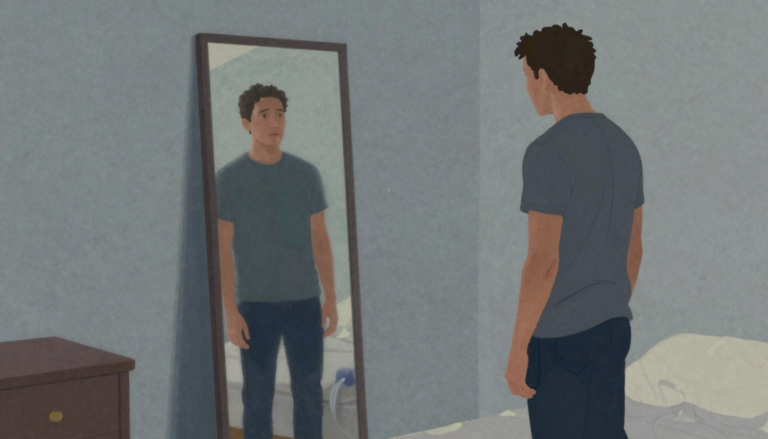
Body shame can also come from within. An apparently casual “I ate too much today” or “Too many sweets will make me fat” may carry self-reproach. This broad account also treats dieting and attempts to lose weight as expressions of body shame.
Adolescents are described as the group most susceptible to its influence. They are already exploring their identities and relationships between the sexes, and comparisons between their own bodies and other people's can become part of that process. Looking through friends' photos on social media may prompt them to evaluate themselves against idealized images and begin to feel ashamed of their bodies.
How comparison wears away confidence
One of the clearest costs of body shame is damage to self-esteem. You see someone on the street and feel inferior when you compare your body with theirs. You worry that people discuss your appearance behind your back. You quietly compare yourself with your peers. These small moments accumulate until confidence in your body erodes, leaving you increasingly unsure of yourself.
Body shame can also contribute to anxious or depressed feelings. Polished images of online shopping models and social-media influencers subtly shape shared ideas of beauty. As the requirements for a supposedly “ideal body” become more demanding, appearance becomes another source of anxiety.
That anxiety can follow us into relationships. Research cited in the source links shame with a tendency to avoid interpersonal interaction. Someone ashamed of their body may fear being rejected because of their appearance and experience greater social anxiety when interacting with others. When body shame becomes more severe, it can also lead to unhealthy behaviors and mental health problems, including eating disorders, body-image disorders and excessive exercise.
Girls and women tend to experience higher levels of body shame than boys and men, and the negative effects are described as more serious for them. One possible explanation is how they are socialized: from childhood, girls more often receive the message that their value comes from being physically attractive.
Why knowing better does not make it stop
Recognizing that body shame is harmful does not necessarily stop us from scrutinizing ourselves or evaluating other people's bodies. The explanation cannot rest entirely on individual responsibility. Childhood experiences, everyday conversations and the media environment all help sustain these habits.
What childhood teaches us to notice
“You're too heavy. I can't carry you.”
“Look how strong that other child is.”
Neither statement is an overt attack, yet both can carry an implication that the child falls short. Research cited in the source describes adverse childhood experiences as common and links them with personality, body image and health in adulthood. People with such experiences are also described as more likely to develop body shame.
Cognitive attribution theory offers one explanation by focusing on the evaluations through which shame develops. Shame can arise when a person interprets an experience as a judgment of the whole self. In Lewis's account, shame is connected to our need for attachment to others. An early experience of being rejected by someone we love may feel beyond our control, leading us to explain that rejection as evidence of a defect in who we are. This provides a way to understand how body shame can begin in childhood.
Praise can shape us, too. A child repeatedly hears adults admiring someone's lovely face, large eyes or fair skin. These seemingly innocent comments gradually establish standards of attractiveness. Over time, those standards become deeply embedded: we envy someone praised as beautiful, then feel inferior when our reflection does not match the same ideal. Body shame quietly enters ordinary life through admiration as well as criticism.
How weight talk feeds the cycle
“I'm too fat.”
“I've eaten so much—I'll definitely gain a few jin.” A jin is 500 grams.
Self-mocking or disparaging conversations about food, weight, body shape and appearance are often called “fat talk.” They give outward expression to body shame and anxiety, but they can also generate more of both.
In these conversations, people begin scrutinizing their own bodies and comparing themselves upward against an ideal. Attention settles on perceived shortcomings. Body image becomes more negative, and further shame follows. What sounds like a passing remark can help keep that cycle going.
How media narrows the ideal
Socially imposed body standards existed long before social media. A familiar Chinese saying tells of a King of Chu who favored slender waists, prompting people at court to pursue that preference so intensely that many were said to have starved to death. The story illustrates the force a dominant ideal of beauty can exert.
Today's media environment is filled with carefully constructed celebrity images, presented in highly appealing ways that influence what people consider beautiful. The tripartite influence model identifies mass media as an important source of influence on body shame.
For adolescents, prolonged exposure can bring their beauty preferences into line with those promoted by the media. They repeatedly measure themselves against a single, demanding standard. The gap between that ideal and their actual bodies can further reduce body satisfaction and produce shame.
Five ways to push back against body shame
Many people have spent years suffering under other people's judgments while still, deliberately or unconsciously, scrutinizing themselves and others. Awareness gives us somewhere to begin changing that pattern.
1. Practice accepting yourself
Start by easing the constant inspection of your body. Treat yourself with the kindness you would offer a close friend, and practice accepting yourself rather than continually searching for faults.
Try listing your strengths and regularly bringing your attention back to them. Recognizing your own value can help you feel more confident and at ease with your body.
You might also spend a little time each day considering what you have and appreciating the small details of ordinary life. Gratitude can help you notice what is good, value the present and treat yourself as someone worth cherishing. As self-acceptance grows, you may begin to notice beauty in your body that you previously overlooked—as though it were telling you, “You are wonderful.”
2. Give your inner experience more attention
Reducing self-objectification means giving less weight to how you look as an object of inspection and more attention to your experience from within.
An appreciation of beauty is part of being human, but beauty need not be confined to visible, external things. Each person's inner qualities have their own distinctive worth and deserve attention and care.
Make room for experiences that enrich that inner life. If you enjoy being outdoors, spend time in nature and take in the living world around you. If you prefer solitude, find a quiet corner and enjoy the fullness of your own mental world.
3. Exercise for health and fitness
Exercise can help reduce self-objectification, but its purpose matters. It can sometimes have the opposite effect.
When exercise is driven by the goal of losing weight, it may intensify self-objectification by making appearance and body image an even greater focus. When the intention is to improve physical fitness and maintain health, exercise can instead help reduce self-objectification and body shame.
The distinction is the reason for exercising, not simply whether you exercise at all.
4. Stop scrutinizing other people's bodies—and set boundaries around your own
When we judge someone's body, we apply our own values and standards. Those judgments also contain implicit demands we place on ourselves. Research cited in the source suggests that viewing other people's bodies more positively goes along with a more positive view of our own.
You can tell people clearly that you do not welcome comments about your body. That boundary can include apparent advice such as “Being fat is bad for your health” and apparent praise such as “You've lost weight recently.” A comment does not have to sound insulting to be unwanted.
Refusing this kind of evaluation can also be a way of offering acceptance to the child you once were—the child who wanted an adult to say, “Whatever you look like, I accept you.” You can now become that accepting adult: stop evaluating other people's bodies, and speak up when someone else is subjected to unwanted scrutiny.
5. Approach social media critically
As more people spend time online, messages about appearance arrive in wave after wave. Navigating that environment requires judgment: consider the messages coming toward you instead of automatically adopting them.
If a store sells adult clothing in sizes smaller than children's clothes, you can decline to buy it and choose clothes that fit you. You do not have to adopt the idea that a “perfect” body requires calorie control or copy bloggers who calculate food calories before eating.
Food does not have to become an enemy. You can plan nutritious meals and eat slowly, savoring each bite. Healthy eating supports a strong body. Hold on to your confidence as you decide which messages deserve a place in your life.
“We are all born so beautiful; the greatest tragedy is believing other people when they tell us we aren't.”
Whatever you look like, you deserve to be loved and accepted.
Frequently asked questions
How does this article distinguish body shame from body shaming?
The article uses body shame as a broad term covering both shame about one's own appearance and criticism of someone else's body, commonly called body shaming.
What is fat talk?
Fat talk means self-mocking or disparaging conversations about food, weight, body shape and appearance. It can express existing body shame and anxiety while also encouraging further scrutiny and comparison.
Can exercise help reduce body shame?
Its purpose matters. Exercise motivated by health and physical fitness can help reduce self-objectification and body shame, while exercise driven by weight-loss goals may intensify attention to appearance and self-objectification.
Can boundaries around body comments include compliments?
Yes. The article includes apparent praise about weight loss and apparent health advice among comments someone may choose to refuse. A comment does not have to sound insulting to be unwanted.