Summary
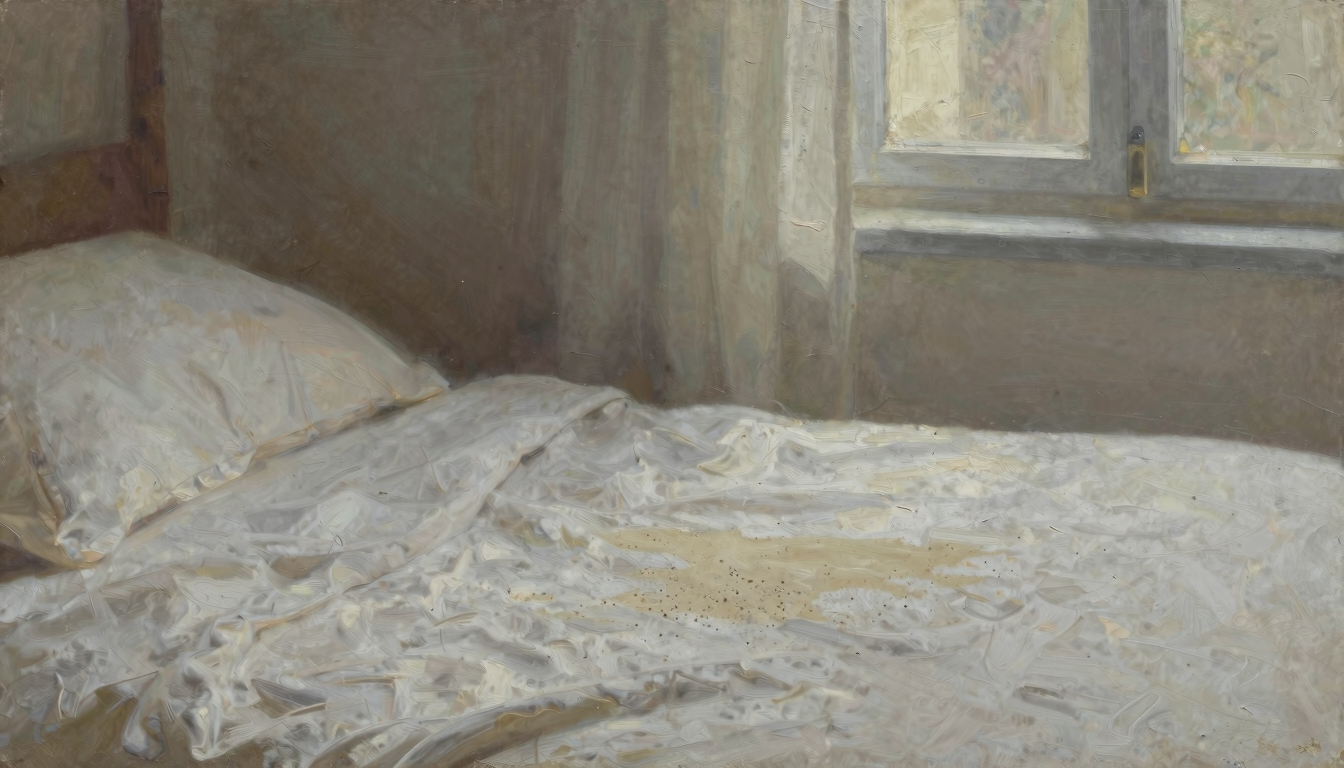
Sand in your bed after a major life event may symbolize traces of change entering a place where you expect rest, familiarity, or closeness. Small grains can make an otherwise comfortable surface feel unsettled. The image may suggest that the event’s practical or emotional residue still needs a place, even after the main transition is over. It does not prove that the event caused the dream, that you are failing to adjust, or that another disruption is coming. Notice whether the sand feels irritating, comforting, or simply unfamiliar, and whether you can remove it.
At a glance
Sand in your bed after a major life event may symbolize traces of change entering a place where you expect rest, familiarity, or closeness. Small grains can make an otherwise comfortable surface feel unsettled. The image may suggest that the event’s practical or emotional residue still needs a place, even after the main transition is over. It does not prove that the event caused the dream, that you are failing to adjust, or that another disruption is coming. Notice whether the sand feels irritating, comforting, or simply unfamiliar, and whether you can remove it.
Separates lingering residue from whole event, ongoing input from finite material, and location-specific meanings.
Record amount and location; identify known remaining detail; finish or bound one task.
Small traces can change a familiar resting place
A bed can symbolize rest, privacy, intimacy, or the ordinary place to which you return. Sand brings a different texture into that space. Symbolically, it may represent many small remnants of a larger experience rather than one dramatic obstacle. A grain is slight, yet several grains can make comfort difficult.
After a move, marriage, loss, new role, or other major event, the image may fit the contrast between a changed life and an expectation that private routines should already feel normal. The symbolism does not set a correct timetable for adjustment. It invites attention to what remains unfamiliar in a space meant to support you.
If the sand feels warm and pleasant, it may instead suggest carrying a valued place or memory into rest. Sand associated with a beach differs from gritty material you cannot identify. Your association and the feeling of the scene matter more than deciding that every grain represents trouble.
The amount and movement of sand matter
A light scattering may symbolize small details that have followed you home. A bed buried under sand adds a different scale: the resting place seems overwhelmed or difficult to access. Do not interpret a few grains as total collapse if the dream still leaves the bed usable.
Sand pouring in while you clean can symbolize a task that seems to renew itself. Sand that stops arriving can suggest a finite residue, even if removing it takes time. The difference is between ongoing input and what is already present. That distinction can help identify whether a waking routine needs a boundary or simply a practical reset.
If you shake the sheets and the sand falls away, the scene may offer a hopeful image of making space for rest. If you cannot remove it, the image may symbolize frustration with a limit. Neither sequence guarantees what will happen after you take a particular action.
A shared bed adds the question of an exchange
In a shared bed, sand can symbolize a change affecting closeness or a routine held by two people. Notice whether both people feel the grit and whether both try to remove it. A shared discomfort with shared effort differs from one person being expected to restore comfort alone.
If you hide the sand, the image may concern keeping an inconvenience private to preserve the appearance that everything is settled. If you point it out, it may symbolize making a lingering need visible. The dream does not establish that another person has neglected you or caused the discomfort.
An empty bed with sand can place the emphasis on your own return to a private space. A bed you cannot enter can emphasize access to rest. These details should not be reduced to a single prediction about relationships or loss.
Shoes carry residue through movement
Sand in your shoes may symbolize a small discomfort that accompanies movement. Unlike sand in bed, it affects how you proceed rather than how you rest. It may suggest carrying remnants of one setting into the next or continuing a task while something needs attention.
Taking off the shoes adds an opportunity to pause and remove the grit. Walking despite it may symbolize persistence, but persistence is not automatically the best response. The scene can invite a question about whether a brief adjustment would make the next step easier.
Sand across a house or in a room broadens the private setting. It may symbolize change spreading into routines, boundaries, or the organization of home. A room with a few grains differs from a house filled with dunes. Read the extent before deciding how much of your life the image concerns.
Sand in the mouth concerns receiving or expressing
Sand in the mouth may symbolize difficulty speaking clearly or encountering something that does not feel nourishing. If you try to spit it out, the scene may emphasize refusing or clearing what feels unsuitable. If you cannot speak, it may concern an expression that feels obstructed.
Eating sand differs from finding it already in your mouth. Deliberate eating may symbolize trying to take in something that does not provide what you need; accidental ingestion may emphasize surprise or unwanted contact. These are possible associations, not a diagnosis or a fixed bodily meaning.
Do not turn the dream into a claim about illness, danger, or a required action involving your body. If a waking physical experience exists, it is separate from the symbolic image. The dream cannot establish its cause.
Sand can suggest change without predicting erosion
As a loose material, sand may symbolize instability, accumulated small parts, or something difficult to hold in one shape. It can also suggest a remembered landscape, warmth, leisure, or a surface that can be reshaped. Seeing sand alone does not determine which association matters.
A spiritual reading may consider the difference between what shifts and what provides a reliable place to stand or rest. That can invite reflection on routines or commitments you want to carry through change. It does not prove that a foundation will fail or that a supernatural warning has been issued.
The bed gives the image a particular focus: what supports rest when the surrounding life has changed? A hopeful reading can concern making comfort possible again, grain by grain, without pretending that an important event leaves no trace.
Four ordinary settings to consider
At work, sand in bed may symbolize a new role following you into private time. Messages, unfinished decisions, or changed hours can become small interruptions to rest. Check the actual contact expectations and agree on one boundary around when you are available.
In relationships, the image may symbolize a shared routine altered by a major event. One person may expect closeness to resume immediately while the other needs a different pace. Name one concrete adjustment rather than asking the dream to reveal another person’s feelings.
At home, the sand may fit unfinished details after a move or household change. Boxes, appointments, and unfamiliar routines can make a resting place feel less settled. Choose one small area to restore for ordinary use; completing that area does not require declaring the whole transition finished.
With money, grains can symbolize many small costs following a large commitment. The dream does not predict financial loss. List actual outstanding expenses and identify which require attention now, so that vague concern becomes a bounded task.
A new home with unfinished details
Consider Hana, who has recently moved to a smaller flat. She dreams of lying down in her familiar bed and finding sand between the sheets. She keeps brushing it away, then notices that her shoes are still on.
Hana recognizes that she has been trying to rest while carrying the move’s unfinished errands into every evening. She reads the shoes as a symbol of remaining in the mode of moving, rather than a warning that the new home is unsafe. She sets aside one half-hour for administration and makes the bedroom the first room she finishes arranging.
The remaining errands are still there, but Hana has a clear stopping point and a usable place to rest. The result is one settled routine within an unfinished transition. The dream helps her notice what seems to follow her into bed; the practical arrangement addresses the actual tasks.
Separate the event from the residue
Record where the sand appeared, how much there was, and what you did. Then compare the image with one known detail that remains after a major event. Avoid treating the entire event as harmful simply because one part still feels uncomfortable.
Ask whether the residue is a task, a boundary, a memory, or an unfamiliar routine. Choose one proportionate action: finish a small task, discuss a shared need, protect private time, or leave room for a valued memory. If no association fits, the image can remain unresolved.
Sand in your bed may symbolize traces of change beside the wish for rest. Its useful meaning can concern restoring one ordinary comfort while accepting that a changed life need not become familiar all at once.
Frequently asked questions
What does sand symbolize in a dream?
Sand may symbolize loose or shifting conditions, many small parts, or a remembered landscape. Its location and feeling determine the useful association, rather than a fixed prediction.
What does seeing sand in a dream mean?
Seeing sand may invite attention to texture, movement, and the setting it occupies. A pleasant beach and gritty bedding carry different associations.
What does sand in bed mean?
It may symbolize residue of change entering rest, privacy, or closeness. It does not prove that a life event caused the dream or that another disruption is coming.
What does sand in your shoes mean?
It may symbolize a small discomfort carried through movement. Removing the shoes can suggest pausing to address something before continuing.
What does sand in your mouth mean?
It may symbolize obstructed expression or unwanted material that feels unsuitable to receive. The dream does not diagnose a bodily problem.
What does eating sand in a dream mean?
Eating adds an action of taking something in. It may symbolize trying to receive something that does not meet a need, while accidental ingestion emphasizes surprise.
What does sand in a house or room mean?
It may symbolize change entering domestic routines or boundaries. The amount and spread matter; a few grains differ from a filled room.
Does the dream mean I should already be over the event?
No. The image provides no correct timetable for adjustment. It can support reflection on one remaining need without measuring how you should feel.