Summary
Dreaming about your hair turning white may symbolize becoming aware of time, seeing yourself in a changed role, or feeling that experience has become visible. Sudden whitening can emphasize how quickly expectations seem to shift; a gradual change can emphasize continuity. The dream does not predict illness, premature aging, death, or a guaranteed gain in wisdom.
At a glance
Dreaming about your hair turning white may symbolize becoming aware of time, seeing yourself in a changed role, or feeling that experience has become visible. Sudden whitening can emphasize how quickly expectations seem to shift; a gradual change can emphasize continuity. The dream does not predict illness, premature aging, death, or a guaranteed gain in wisdom.
Color transition pace self-recognition and assigned experience rather than hair disappearance.
Recall pace visibility response continuity; clarify one expectation.
Hair changing color is different from hair disappearing. You may remain recognizably yourself while one visible feature changes. The useful question is how you meet that difference: with surprise, pride, concern, acceptance, or pressure to become someone you do not yet feel ready to be.
A visible change in a familiar self
Hair is a visible feature through which people may recognize themselves. When its color changes in a dream, the image can bring identity and appearance into contact. Something remains yours while looking different.
White hair may evoke age or experience when those associations belong to the dreamer. It can also evoke brightness, unfamiliarity, or a departure from an expected appearance. No single association has to govern every dream.
The transition may resemble noticing that a familiar role now carries different expectations. You may be regarded as experienced while still feeling uncertain, or feel changed before anyone else notices. The dream cannot determine what others actually think.
Look at what remains unchanged. Your face, voice, activity, or relationships may continue through the transformation. Symbolically, visible change need not erase the rest of your identity.
Hair turning white all at once
A sudden change can make the experience of time feel compressed. The scene may evoke being asked to become ready or responsible before you have had room to adjust. Speed can be central even when the white color itself feels neutral.
If whitening follows an event, consider that connection within the dream. A difficult conversation, a completed task, or an unexpected arrival can each make the transformation mean something different. Do not supply a cause that was not remembered.
Shock may emphasize a gap between your familiar self-image and the changed appearance. Calmness may emphasize readiness to recognize a transition. Neither reaction proves that a real change is good or bad.
The image does not show how quickly your waking hair will change. Its possible meaning concerns the felt pace of a transition, not a physical timetable. A sudden dream event can represent a gradual concern.
Gradual whitening and a single white strand
Gradual whitening may evoke accumulated experience or a transition noticed in stages. The dream can emphasize continuity: change arrives without a single moment when everything becomes different.
One white strand may focus attention on a small sign of difference. It may feel welcome, inconvenient, or disproportionately important. The response helps distinguish acknowledgment from worry about a detail defining the whole.
A patch of white may evoke a change that is visible in one area rather than everywhere. It does not locate a future problem or count years of experience. The pattern matters through its role in the scene.
If you examine the change repeatedly, the dream may emphasize attention itself. Perhaps the detail has become a point through which you assess your readiness or appearance. Looking more often does not necessarily give a clearer answer.
A mirror and another person's reaction
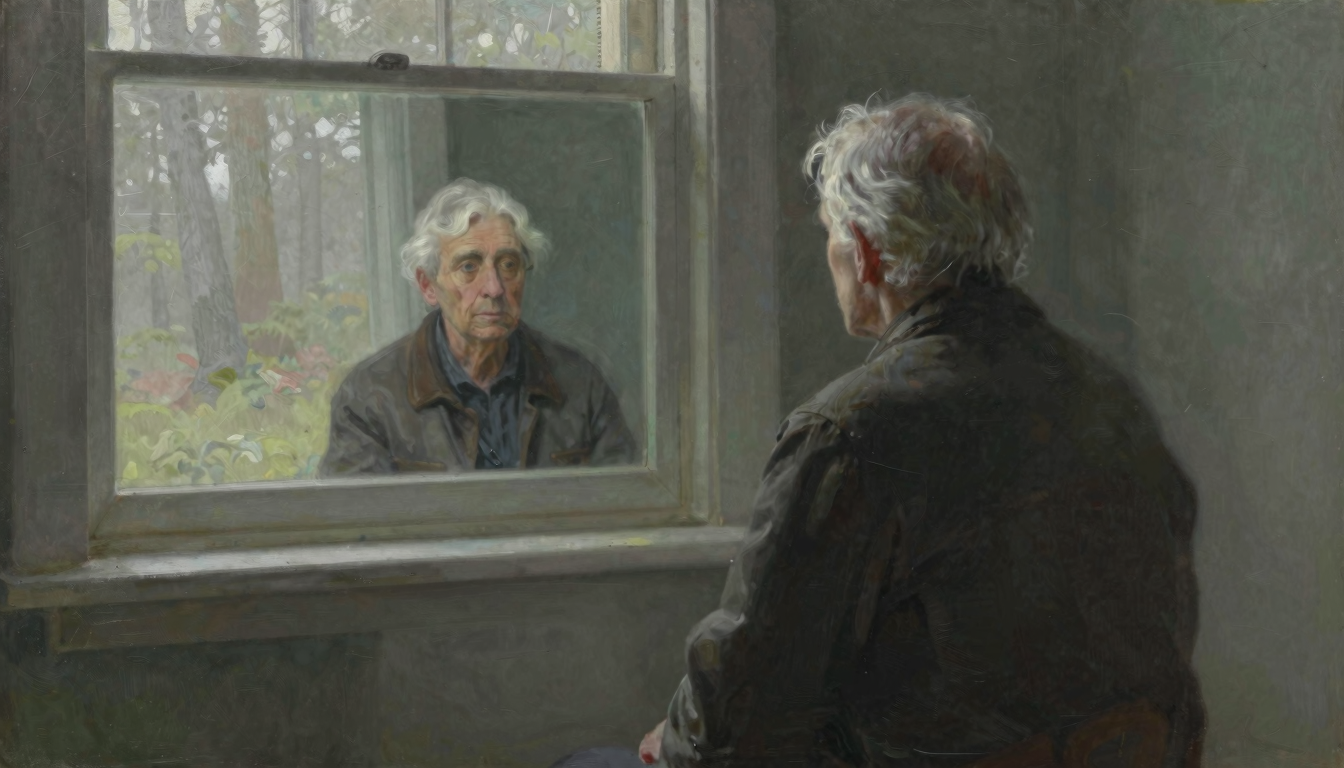
Seeing white hair in a mirror may bring self-recognition to the center. You are encountering a visible version of yourself that differs from expectation. The question may be whether you still recognize your own presence beneath the change.
If another person notices first, the scene may concern being seen in a new way. Admiration can evoke a desired acknowledgment; surprise can evoke uncertainty about visibility. The reaction is part of the dream, not evidence of that person's private opinion.
If you hide the hair, the image may concern control over when a change becomes public. If you show it openly, it may concern accepting visibility. Neither gesture supplies a universal rule about confidence.
A stranger who treats you as older or more experienced may emphasize a role being assigned through appearance. The scene can invite reflection on whether that role fits. Looking different does not obligate you to accept every expectation attached to it.
White hair and the weight of experience
An encouraging reading may connect white hair with perspective gained over time. The dream may make experience visible, particularly if you continue an activity with ease or receive respectful attention.
A cautionary reading may concern feeling required to be the wise or responsible person in every setting. An appearance associated with experience can become a burden when it leaves no room to ask questions or learn.
The image does not certify wisdom. Experience can offer useful perspective while leaving areas of uncertainty. Symbolically, maturity may involve acknowledging both rather than performing certainty for others.
Notice whether the changed hair helps you take a measured role or makes you feel trapped in one. The difference lies in the relationship between appearance, responsibility, and choice. White is not automatically an auspicious or inauspicious verdict.
Hair turning white and falling out
When hair turns white and then falls out, the dream contains two distinct changes. Whitening alters a visible feature; falling out adds loss or reduced coverage. The sequence can evoke a transition becoming associated with vulnerability.
If the loss begins only after you notice the color, the scene may emphasize fear that visible change will lead to further loss. That is a possible symbolic association, not proof that one real event causes another.
If both happen together, the image may amplify concern about continuity and self-recognition. Look at whether you remain able to act and whether anyone offers support. The aftermath can keep capacities in view that the transformation initially obscures.
The combined image does not predict hair loss, disease, death, or loss of status. Its useful distinction concerns change versus disappearance. Do not treat a new appearance as evidence that everything supporting you is being removed.
Covering changing or accepting the color
Covering white hair may evoke choosing privacy around a transition. Changing its color may evoke wanting to control presentation. The dream does not require a particular waking hairstyle or make either response dishonest.
Accepting the white color may evoke allowing a difference to become part of your familiar self. Acceptance can coexist with uncertainty about what comes next. It need not mean welcoming every expectation that others attach to the change.
If you try to reverse the color and it keeps returning, the scene may emphasize a difference that cannot be resolved solely through appearance. The question may concern the role or passage of time represented by the color.
If the hair changes back naturally, the image may emphasize shifting self-perception rather than a permanent transformation. Dreams can move between states without supplying a final judgment. Consider the activity and feeling that accompany each state.
Spiritual meaning of hair turning white
Spiritually, hair turning white may invite reflection on time, perspective, and continuity through change. A personal reading may connect the image with becoming less attached to a familiar appearance or recognizing what experience has taught you.
An encouraging interpretation may concern steadiness that does not require looking unchanged. A cautionary interpretation may concern assuming that an outward sign makes you spiritually superior or responsible for everyone else's guidance.
White can carry personal associations with clarity or renewal, but the dream does not prove purification, enlightenment, divine selection, or a promised long life. These claims require more than a color transformation.
A measured reflection asks what kind of responsibility fits your actual experience and what remains open to learning. The image can support that question without turning aging or appearance into a spiritual rank.
Where the change may fit ordinary life
Work and becoming the experienced person
White hair may resemble being treated as the person who should know every answer. Check the actual scope of your role, then clarify one area where advice or shared responsibility is needed. Experience can contribute without becoming unlimited obligation.
Relationships and a changed place in the family
A visible transformation may resemble relatives seeing you in a new role. Check which expectation has actually changed, then discuss one responsibility before accepting it. The dream cannot establish what another person believes about your age or capability.
Home and a routine entering another stage
Gradual whitening may resemble a household arrangement that has changed over time without a clear discussion. Check what no longer fits, then revise one routine. Symbolically, continuity can include adjustment rather than preserving every old form.
Creativity and showing a different style
A new hair color may resemble work that no longer matches your earlier presentation. Check whether the difference serves the current purpose, then let one changed element remain visible. Recognition need not depend on repeating an old appearance exactly.
A modern example of a role becoming visible
Marcus helped run a neighborhood photography walk. New participants began asking him to decide every route and explain every camera setting. He dreamed that his hair turned white in a mirror while he held the same camera. He recognized himself, but felt uneasy when everyone waited for his instructions.
He connected the visible change with being assigned a more experienced role. His judgment was that he could offer useful knowledge without becoming the only person responsible for the group. He asked another regular participant to choose the route and invited people to share one technique they knew.
The walk followed the agreed route, and participants exchanged several practical tips without waiting for Marcus to answer every question. The ordinary result came from sharing responsibility while keeping his own contribution available, rather than rejecting experience or pretending to know everything.
Keep the transition distinct from a prediction
Recall the pace, visibility, reaction, and what remains unchanged. Separate whitening from loss, acknowledgment from imposed responsibility, and experience from certainty.
Your hair turning white in a dream may help you consider how a transition becomes visible. Choose one real expectation to clarify. The symbolism can support recognition of change without forecasting physical aging or making appearance determine your worth and responsibilities.
Frequently asked questions
What does my hair turning white in a dream mean?
It may symbolize becoming aware of time or a changed role becoming visible. Pace, response and what remains familiar help narrow the reading.
What if my hair turns white suddenly?
Suddenness may evoke expectations changing faster than you feel ready for. It does not forecast the speed of physical aging.
What does hair turning white and falling out mean?
Whitening changes appearance while falling out adds loss. Together they may evoke vulnerability during transition without predicting hair loss or illness.
What is the spiritual meaning of hair turning white?
It may invite reflection on perspective and continuity through change. It does not prove enlightenment, purification or divine selection.
Is white hair a sign of wisdom in a dream?
It can carry a personal association with experience, but the image does not certify wisdom. Consider whether the role allows uncertainty and learning.
What if someone else notices first?
The scene may emphasize being seen in a changed role. It does not reveal that person's real private opinion.
Does the dream predict death or illness?
No reliable prediction follows from a change in dream hair color. Its possible meaning concerns symbolic transition rather than a future medical event.
What if I accept the white hair?
Acceptance may evoke allowing a visible difference into your self-image while retaining choice over the expectations attached to it.