What this article is really about
Dreaming about walking through walls may symbolize discovering that an apparent obstacle does not limit you in the way you expected. It can suggest freedom from an old assumption, access to an unfamiliar possibility, or a wish to move without the usual resistance. If the passage felt unsettling, it may emphasize uncertainty about boundaries or the consequences of entering another space. The dream does not establish supernatural ability or permission to disregard real limits. Its meaning depends on the wall, your purpose, and what changed after you crossed it.
Direct answer
Dreaming about walking through walls may symbolize discovering that an apparent obstacle does not limit you in the way you expected. It can suggest freedom from an old assumption, access to an unfamiliar possibility, or a wish to move without the usual resistance. If the passage felt unsettling, it may emphasize uncertainty about boundaries or the consequences of entering another space. The dream does not establish supernatural ability or permission to disregard real limits. Its meaning depends on the wall, your purpose, and what changed after you crossed it.
Intact boundary with unexpected personal passage distinguishes this action from wall collapse destruction and ordinary doors.
Recall intact barrier intention crossing result welcome and one checked assumption.
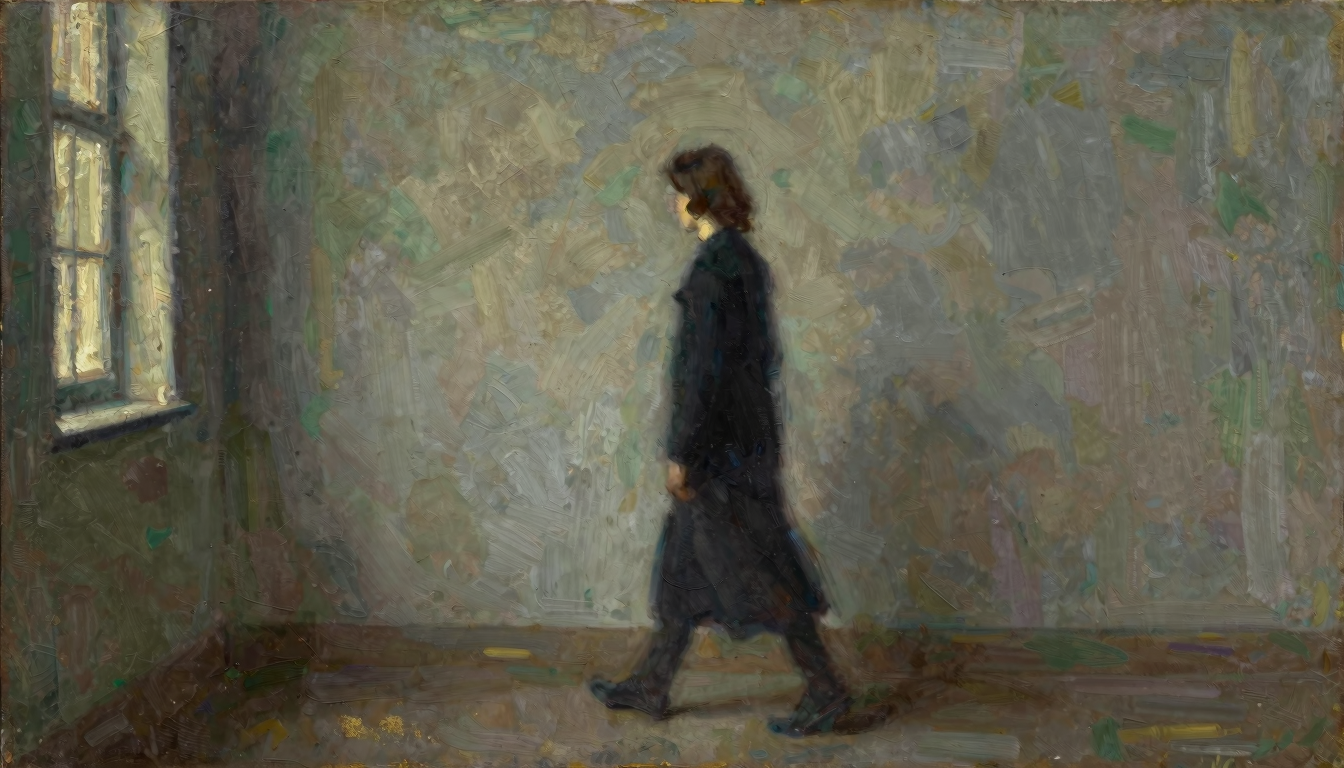
The wall remains intact while you pass through. That detail distinguishes this dream from breaking a wall or watching one collapse. The image may concern a changed relationship with a barrier rather than the destruction of the barrier itself.
What walking through walls can symbolize
A wall may represent separation, an assumed limit, privacy, or a division between activities and people. Passing through it can symbolize a possibility that becomes available without the effort you expected.
The favorable tendency may be flexibility: something you regarded as impossible turns out to have a different route or set of terms. The difficult tendency may be confusing the feeling of freedom with the belief that every boundary has become irrelevant.
Notice whether you intended to cross or discovered the ability by accident. A chosen passage differs from suddenly finding yourself on the other side. The first may emphasize purpose; the second may emphasize surprise or having to understand an unfamiliar position.
The image does not mean that all waking obstacles are imagined. A dream can make a physical wall permeable without changing actual constraints. Its symbolic value may lie in examining one assumption while keeping real facts, consent, and responsibility in view.
Passing through an intact wall
An intact wall may symbolize a division that continues to exist even though you experience unexpected access. The separation can remain meaningful for others or for another part of the situation.
If crossing felt effortless, the scene may suggest that you expected more resistance than the dream presented. Consider which expectation the ease challenged. It does not prove that the same ease will be available in a waking task.
If the wall felt solid until you touched it, the image may emphasize discovering a difference through direct contact. Something that looks closed from a distance may have terms you have not yet clarified.
If you looked back and the wall was unchanged, the scene may suggest that your movement did not erase the distinction between the two spaces. You might enter a new role or activity while recognizing that its responsibilities remain different from the place you left.
If you could see both sides at once, the image may emphasize understanding a separation from more than one position. Access can widen perspective without making you responsible for everything on either side.
Choosing to cross
Walking toward a wall with a clear destination may symbolize a purpose that makes an old limit worth examining. The central question may be why you wanted to cross, rather than whether the dream gave you an extraordinary ability.
If you crossed to meet someone, the scene may suggest the wish to make contact despite a perceived separation. Notice whether the other person welcomed the encounter. The ability to reach someone in a dream does not establish an invitation in real life.
If you crossed to leave an uncomfortable room, the image may symbolize the wish for a way out that does not require a prolonged struggle. A waking change still needs an available route and suitable consideration of its effects.
If you crossed simply because you could, the scene may emphasize curiosity or experimenting with a new possibility. The favorable movement may be discovering what is available; the difficult movement may be letting the novelty of access replace a reason for entering.
If you paused before crossing, the image may suggest room to decide. You do not have to use every opportunity simply because it appears. Purpose can matter as much as capability.
Crossing accidentally
Accidentally walking through a wall may symbolize finding yourself beyond a familiar limit before you have understood the change. The surprise may concern a new responsibility, access to information, or an unfamiliar social position.
If you were pleased, the scene may suggest an opportunity that arrived without the expected struggle. If you were alarmed, it may emphasize uncertainty about where you now belong or how to return.
Notice whether you could orient yourself on the other side. An unexpected opening becomes a different situation when you understand the space and the people in it. Access alone does not tell you what your role should be.
If you apologized to someone after crossing, the dream may emphasize awareness that your movement affected another person's space. That does not prove you have committed a real wrong. It may clarify the importance you attach to checking the terms of contact.
If nobody noticed, the scene may emphasize a private change in perspective. You can experience a possibility before others recognize it. The dream does not establish that you are invisible or exempt from ordinary consequences.
What was on the other side
A welcoming room may symbolize a possibility that feels usable once you enter. A confusing space may suggest that overcoming one assumed obstacle leaves other questions unresolved.
If the room was empty, the image may emphasize that access is only a beginning. Passing a barrier does not automatically provide a purpose, relationship, or next step. The dream may ask what you wanted the opening to make possible.
If you entered someone's home, consider the associations of privacy and hospitality. A familiar person may evoke a relationship whose terms you are reconsidering. An unknown home may emphasize entering a situation whose expectations you do not know.
If you found another wall, the scene may suggest that one changed assumption does not remove every limit. Each division may serve a different purpose. The dream does not require you to keep crossing until no separation remains.
If you returned to the original room, consider what you brought back: knowledge, relief, uncertainty, or nothing noticeable. A brief passage may be meaningful because it changes how you understand the place where you began.
When you cannot pass through
Trying to walk through a wall and being stopped may symbolize the difference between a desired possibility and the conditions actually available in the scene. It need not mean that you lack determination.
If you had crossed earlier but could not do so again, the image may emphasize that access is not permanent or transferable to every setting. A route that worked once may have depended on particular circumstances.
If others crossed while you could not, the scene may suggest comparison or uncertainty about differing opportunities. It does not prove that others are more deserving or that you have been spiritually excluded.
If part of your body passed through while the rest remained stuck, the image may emphasize an incomplete transition. You might imagine a new position while another commitment still holds you in the old one. This is a conditional association, not a diagnosis or prediction.
Notice whether you found a door, asked for help, or remained focused on repeating the same attempt. Another understood route may serve the purpose without reproducing the unusual passage you expected.
Fear, ease, and excitement
Feeling free while crossing may symbolize relief from a familiar expectation. The favorable possibility is a wider view of what you can try. The feeling does not guarantee that a waking change will be easy or successful.
Feeling afraid may emphasize uncertainty about losing ordinary reference points. A wall usually makes a separation clear; moving through it can make the distinction less familiar. Ask what the wall helped you understand before it became permeable.
Excitement may suggest curiosity about a new possibility. If you kept crossing without looking at the spaces you entered, the scene may emphasize the experience of movement becoming more important than its purpose.
If the passage felt ordinary, the dream may suggest that a once dramatic possibility has become familiar. The image does not need to be interpreted as a major spiritual event simply because the action is impossible while awake.
An unusual dream action can also remain an imaginative scene without a clear waking connection. You do not need to force a lesson from it to acknowledge that it was memorable.
Spiritual meaning and favorable tendencies
In a conditional spiritual reading, walking through walls may symbolize moving beyond an assumed separation, openness to another perspective, or a change in what seems possible. The scene can evoke freedom while still asking how that freedom is used.
A favorable tendency may be approaching an old limit with curiosity and discovering an appropriate opening. A difficult tendency may be believing that insight places you beyond other people's boundaries or removes the need for practical judgment.
The dream does not establish astral travel, supernatural powers, special spiritual status, or an instruction to enter a real place. Those claims cannot be demonstrated by dream imagery. A personally significant experience can remain meaningful without becoming proof of an extraordinary ability.
If the image connects with a religious or contemplative practice you know, consider its actual teaching separately. The dream's emotional force cannot supply an authoritative ruling about the experience or its source.
Four ordinary-life connections
Work and assumed restrictions
You may believe a task or role is unavailable because you have not checked its actual terms. An intact wall can symbolize that assumption, while passage can symbolize discovering that the conditions differ from what you expected.
Check one specific requirement with the person who understands it. Ask about an appropriate route to participation. The favorable movement is informed access; the difficult movement is assuming that enthusiasm removes the requirement entirely.
Relationships and privacy
You may want closeness while being uncertain about what another person welcomes. Passing through a wall can symbolize the wish to reach them without encountering separation.
Check what kind of contact they have actually invited. Offer one clear conversation and allow them to choose whether to take part. The symbolic possibility is connection with understood terms, rather than access being mistaken for consent.
Learning and inherited expectations
An old belief about who can learn a skill may make a new activity seem closed. Crossing a wall can symbolize seeing that expectation from another position.
Check the real entry level and what help is available. Try one suitable introductory session. The favorable movement is testing an assumption through an ordinary opportunity; the difficult movement is expecting the first attempt to prove unlimited ability.
Creative projects and category limits
You may avoid combining interests because you regard them as belonging to separate worlds. A permeable wall can symbolize exploring a connection without erasing the distinctions that make each practice useful.
Check what each activity contributes and where their methods differ. Make one small experiment with a clear purpose. The result may open a usable possibility while leaving other limits intact.
A modern example
Tessa enjoyed drawing but assumed a neighborhood printmaking group was only for experienced artists. She had seen finished work at an exhibition and treated that appearance as the group's entry requirement. She never asked about its beginner sessions.
In a dream, Tessa stood outside a studio and walked through its wall. Inside, several people were trying simple exercises at separate tables. The wall remained unchanged behind her. She remembered that getting inside had been easy, but she still needed to understand what the group was doing.
Tessa did not take the dream as proof that real boundaries could be ignored. She recognized an assumption she had not checked. She contacted the organizer, learned that a beginner session was open to newcomers, and registered for one afternoon with the required materials.
Her first print was uneven, and she needed help with the sequence. The group gave her an ordinary starting point. She decided to attend again after learning what the next session involved, rather than expecting instant skill or automatic membership.
The dream image helped her distinguish the imagined barrier from the actual terms of access. The opening was useful because she asked about it and entered through the available process.
Reading your own walking-through-walls dream
Recall whether you chose the passage or crossed accidentally, whether the wall stayed intact, and what was on the other side. Notice the purpose of entering and whether the encounter was welcome, confusing, or incomplete.
If a waking connection fits, clarify one assumption or check one appropriate route before acting. An unexpected possibility can be explored while real boundaries remain meaningful. If no connection fits, the passage can remain a vivid dream without becoming an obligation, prediction, or claim of supernatural power.
Frequently asked questions
What does walking through walls in a dream mean?
It may symbolize unexpected access or freedom from an assumed limit. The purpose and consequence of crossing help refine the reading.
How does this differ from a wall collapsing?
The wall stays intact while you pass through. The image concerns your relationship with a barrier rather than its destruction.
What does crossing accidentally mean?
It may suggest finding yourself beyond a familiar limit before understanding your new position. Access alone does not explain your role.
What does choosing to cross mean?
It may emphasize a purpose that makes an assumption worth examining. Capability does not automatically establish permission or a reason to enter.
What does finding another wall mean?
It may suggest that one changed assumption leaves other limits intact. Each separation can have different terms and purposes.
What does being unable to pass through mean?
It may emphasize a difference between desired access and available conditions. It does not determine worth or predict permanent exclusion.
Does the dream have a spiritual meaning?
A conditional reading may concern openness and moving beyond an assumed separation. It does not establish special spiritual status or an authoritative instruction.
Does walking through walls prove supernatural ability?
No. Dream imagery cannot verify supernatural powers or authorize disregarding physical limits privacy or real terms of access.