What this article is really about
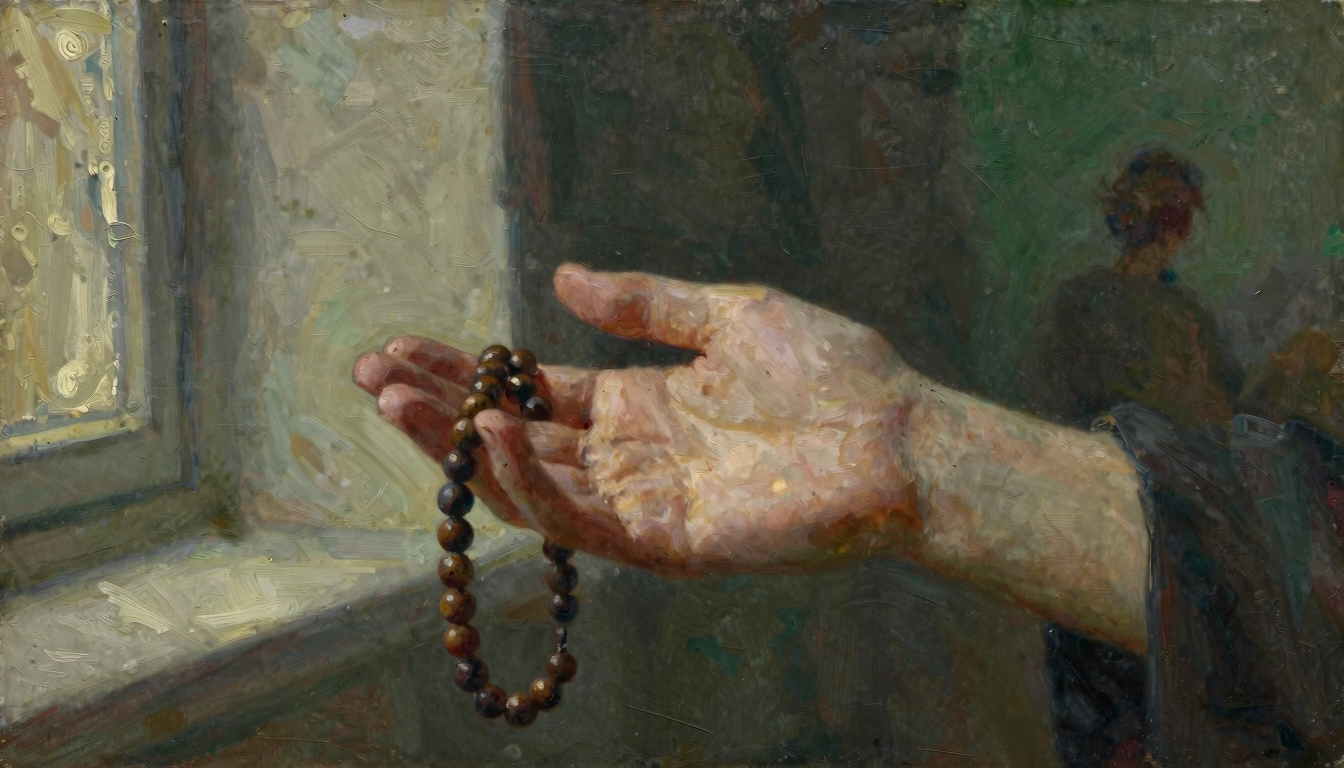
Dreaming about prayer beads may symbolize repeated attention to something you value, a familiar sequence that helps you continue, or a wish for a clear beginning and endpoint. Holding or moving through the beads can suggest deliberate practice; repeatedly restarting may suggest uncertainty about when enough has been done. Their religious meaning depends on your own associations and tradition. The dream does not guarantee spiritual protection, predict an outcome, or prescribe a number of prayers. Its meaning depends on what the repetition served and whether it helped you return to ordinary life or kept you circling the same concern.
Direct answer
Dreaming about prayer beads may symbolize repeated attention to something you value, a familiar sequence that helps you continue, or a wish for a clear beginning and endpoint. Holding or moving through the beads can suggest deliberate practice; repeatedly restarting may suggest uncertainty about when enough has been done. Their religious meaning depends on your own associations and tradition. The dream does not guarantee spiritual protection, predict an outcome, or prescribe a number of prayers. Its meaning depends on what the repetition served and whether it helped you return to ordinary life or kept you circling the same concern.
Tangible repetition sequence attention and completion distinguish beads from generic devotion.
Recall action sequence intention endpoint and one proportionate clarification.
Prayer beads make a sequence tangible. Their symbolic question may concern how a repeated act supports a purpose without becoming a demand to keep repeating indefinitely.
What prayer beads can symbolize
Prayer beads may represent attention given a form you can follow. In a dream, the movement from one bead to another can suggest continuity, remembrance, or a practice that does not depend on a dramatic result every time.
The favorable possibility is a usable rhythm: a small repeated act helps you stay connected to something meaningful. The difficult possibility is losing the purpose within the sequence, or expecting completion to guarantee certainty about a result outside your control.
Notice whether you knew what you were doing. A familiar sequence differs from holding an object whose use you do not understand. The dream does not establish that you should adopt an unfamiliar religious practice.
The beads can be personally significant without carrying a fixed prediction. Their action in the scene matters more than a universal rule about their appearance, material, or number.
Repetition with a purpose
Moving through beads calmly may symbolize sustained attention. The value can lie in returning to the intention rather than producing a new feeling with each step.
If you finished and turned toward another activity, the scene may suggest that the practice has a place within life. If you could never finish, the image may emphasize uncertainty about the terms of completion.
A sequence that becomes the whole concern
If you watched only the count and forgot why you began, the dream may suggest that measurement has displaced purpose. A visible sequence can be useful while still needing a clear relationship with what it serves.
This is not a diagnosis or a judgment about religious devotion. It is a conditional question about the particular dream action: did the repetition support attention, or did attention become entirely absorbed by making the sequence feel complete?
Holding prayer beads
Holding prayer beads without moving them may symbolize keeping a valued practice or reminder close. The object can suggest familiarity, comfort, or readiness to give something attention when you choose.
If the beads felt heavy, the scene may emphasize an obligation attached to the reminder. If they felt easy to hold, it may suggest that the practice fits within your current life. Weight in a dream does not measure your actual spiritual responsibility.
Notice whether you chose to carry them or someone placed them in your hand. A chosen object differs from an expectation received without discussion. The image may ask how the practice became yours and what you understand it to mean.
If you put the beads down, consider whether the action felt like a pause or a loss. Setting aside a reminder can make room for ordinary participation without erasing its significance. The dream does not require you to abandon a real practice.
Moving through the beads or counting
Moving from bead to bead may symbolize taking one step at a time within a familiar sequence. If the motion felt clear, the image may suggest that a modest repeatable act is enough to support the current intention.
Counting may emphasize an endpoint or a wish to know where you are in the process. A count can provide structure, but the dream does not prescribe an auspicious number or establish that completing it will cause a particular event.
Losing your place may suggest an interruption or uncertainty about whether to continue. Notice whether you resumed from a workable point or felt required to erase all progress and begin again. Those actions raise different questions about continuity and standards.
Repeatedly restarting may symbolize difficulty accepting an imperfect completion. The scene may emphasize a demand that the sequence feel untouched before it can count. It does not prove anything about your character or the validity of a real religious act.
If another person counted with you, the dream may suggest shared rhythm or dependence on someone else's timing. Consider whether their help clarified the practice or made your own sense of purpose less available.
Broken strings and scattered beads
A broken string may symbolize a familiar sequence losing its arrangement. The individual pieces can remain even when the order that joined them has changed. This may concern a routine, shared practice, or expectation whose former form no longer works.
Scattered beads may suggest having to decide how the parts relate again. Gathering them carefully can emphasize care for what remains meaningful. Trying to account for every bead before doing anything else can emphasize a demand for completeness.
A broken string does not predict misfortune, spiritual danger, or a failed prayer. Its meaning depends on the consequence in the scene. Did you lose something essential, find a new way to continue, or discover that the practice could pause while the object needed attention?
Repairing the string may symbolize restoring a useful form. Replacing it may suggest adaptation rather than rejection. Neither action prescribes how you should handle an actual sacred object; consider real practice and appropriate guidance separately.
If some beads were missing, notice whether you could still recognize the object and its purpose. An incomplete form can feel difficult without making every remaining part worthless.
Receiving, giving, losing, or finding beads
Receiving prayer beads may symbolize being offered a reminder, practice, or expectation. A welcome gift can suggest connection and support. An unwanted gift may emphasize uncertainty about whether the associated commitment is yours to accept.
Giving beads may symbolize sharing something you value. Notice whether the other person chose to receive them. A meaningful offering differs from assuming that another person needs the same form of attention you use.
Losing beads may suggest concern about access to a familiar reminder or routine. It does not prove that your underlying value has disappeared. Ask whether the dream emphasized the object itself, its relationship with a person, or the practice you associated with it.
Finding beads may suggest recognizing a neglected connection or discovering a form of attention that seems available. It does not establish a supernatural instruction. Consider whether you knew what to do with them or simply noticed their presence.
If the beads belonged to someone you knew, the dream may bring that relationship into your reflection. Their presence does not prove a message from the person or reveal their real spiritual state.
Material, color, and unfamiliar forms
Wooden beads may feel plain or familiar; polished beads may feel precious; a particular color may evoke a personal memory. These associations can refine the scene without supplying a fixed result.
Dark beads do not automatically signify danger, and pale beads do not guarantee purity or protection. An ornate object can be meaningful, burdensome, or simply beautiful depending on your action and response.
An unfamiliar form may suggest approaching a practice whose terms are not yet clear. Curiosity can be valuable without requiring immediate participation. The dream does not authorize you to assign the same meaning to every religious tradition's beads.
If a number stood out, consider what it meant within the scene: completion, an interruption, or comparison with someone else's sequence. This article does not provide numerological predictions or tell you how many repetitions to perform.
Prayer beads in an Islamic dream context
Questions about prayer beads in a dream in Islam may ask whether the image has a specific religious result. This article does not supply a verified Islamic ruling assigning a certain event, spiritual status, or protection to the dream.
The scene may invite personal reflection on remembrance, attention, continuity, or intention. Those conditional associations do not establish that a prayer has been accepted, that a future event is guaranteed, or that a particular number is required.
If the object is part of your actual practice, consider what it means to you and consult knowledgeable guidance for a real religious question. A dream's emotional force cannot replace understanding of the practice itself.
If it is unfamiliar, begin with the action you actually saw rather than inventing a rule for the tradition. You can describe a wish for clear attention without claiming authority over religious meaning.
Four ordinary-life connections
Faith and intentional practice
A valued practice may feel sustaining while its surrounding expectations become unclear. Prayer beads can symbolize the relationship between repeated action and the intention it serves.
Check what the practice means to you and which question requires knowledgeable guidance. Consider one suitable period of reflection with understood terms. The symbolic possibility is continuity that supports life, rather than an indefinite test of whether your effort has become enough.
Work and repeated checking
A task may have a defined review process, yet you keep returning to it because completion does not feel certain. Counting beads can symbolize a sequence whose endpoint exists but is difficult to accept.
Check the actual completion criteria and whether anything new requires another pass. Confirm one result with the relevant person if needed, then move to the next task. The dream may help distinguish useful review from repeating the same action without new information.
Relationships and regular contact
You may value a recurring conversation or gesture while wondering whether its frequency measures the whole relationship. Beads can symbolize continuity through small acts, but also a concern that every act must follow an exact count.
Check what the other person actually values and what contact is workable for both. Discuss one shared expectation. A meaningful rhythm can allow variation without making each interruption a verdict on care or loyalty.
Creative learning and small steps
A skill may develop through repeated practice whose value is not visible in every session. Moving through beads can symbolize a sequence that supports attention even when no dramatic improvement appears.
Check one modest practice goal and an appropriate endpoint for the session. Notice what you learned, then return another day. The favorable movement is steady participation; the difficult movement is demanding that each repetition prove the entire future result.
A modern example
Imogen helped prepare a community newsletter. The group had agreed on a final check for names, dates, and the order of notices. After finishing those checks, she repeatedly reopened the same pages, hoping another complete pass would make her feel certain that nothing could be wrong.
In a dream, Imogen held prayer beads and moved through the whole string. Each time she reached the end, she returned to the first bead because the final moment did not feel different enough. The detail she remembered was that the sequence had an endpoint, but she expected it to produce a feeling it could not guarantee.
Imogen did not treat the dream as a religious instruction or a diagnosis. She recognized a question about the newsletter's actual review terms. She confirmed the agreed checklist with another volunteer, corrected one date they found, and marked the review complete unless new information arrived.
A small wording issue was noticed later and corrected in the next issue. The newsletter still served its ordinary purpose. Imogen had time to speak with contributors instead of using every spare moment for another identical pass.
The beads image helped her distinguish a useful sequence from a demand for absolute certainty. The final check could be complete without controlling every possible later discovery.
Spiritual meaning and favorable tendencies
In a conditional spiritual reading, prayer beads may suggest remembrance, patient attention, continuity, and a practice that gives intention a repeatable form. Their value may lie in helping attention return rather than guaranteeing an external outcome.
A favorable tendency may emphasize a rhythm whose purpose and endpoint are clear. A difficult tendency may emphasize the sequence becoming more important than its intention, or completion being treated as a promise of certainty.
The dream does not establish blessing, punishment, accepted prayer, or spiritual protection. Personal significance can remain meaningful without becoming a universal prediction. The action in the scene is the clearest place to begin.
Reading your own prayer-beads dream
Recall whether you held, counted, received, repaired, lost, or found the beads. Notice what the sequence served and whether it ended. Distinguish a chosen rhythm from an imposed count, and a useful reminder from a demand to keep repeating until all uncertainty disappears.
If a waking connection fits, identify one repeated act and its actual purpose. A clarified endpoint, suitable conversation, or modest practice can make that relationship more usable. If none fits, the beads can remain a vivid object in the dream without becoming an instruction or prediction.
Frequently asked questions
What does dreaming about prayer beads mean?
They may symbolize repeated attention continuity or a wish for a clear sequence. Notice its purpose and whether it helped you return to ordinary life.
What does holding prayer beads symbolize?
It may suggest keeping a valued reminder close. A chosen object differs from an obligation placed in your hand without understood terms.
What does counting or restarting mean?
Counting may emphasize an endpoint; restarting may emphasize uncertainty about accepting completion. The dream does not prescribe a number of repetitions.
What do broken strings and scattered beads mean?
They may suggest a familiar sequence losing its arrangement while its parts remain. They do not predict misfortune or failed prayer.
What do receiving or giving beads symbolize?
They may emphasize an offered practice or shared reminder. The recipient’s choice matters and the image does not require a real gift or ritual.
What do losing or finding prayer beads mean?
They may suggest access to a familiar reminder changing or a connection becoming visible. They do not establish a supernatural message.
What do prayer beads mean in an Islamic dream context?
This article supplies no verified Islamic ruling assigning accepted prayer protection spiritual status or a future result. Personal reflection remains separate from religious certainty.
Do color material or number predict an outcome?
No. Those details may add personal associations but do not establish moral worth protection or numerological results. Action and purpose help refine the reading.