What this article is really about
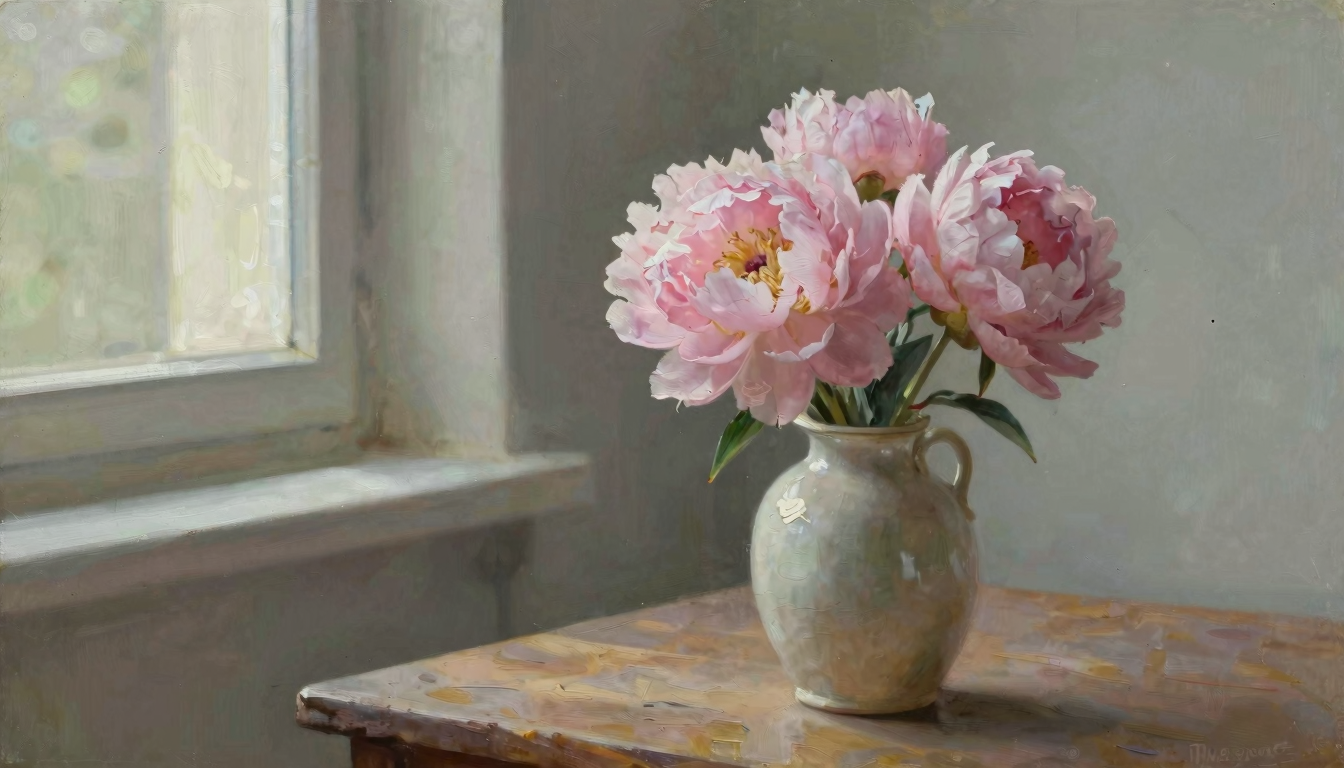
Dreaming about peonies may symbolize fullness, a moment worth appreciating, or uncertainty about allowing something pleasant to be enough. A pink peony may add a gentler or more personal association, but its color does not prove love, good fortune, or a future celebration. The dream's useful question is whether you can recognize what is already present without needing to enlarge, preserve, or explain it immediately.
Direct answer
Dreaming about peonies may symbolize fullness, a moment worth appreciating, or uncertainty about allowing something pleasant to be enough. A pink peony may add a gentler or more personal association, but its color does not prove love, good fortune, or a future celebration. The dream's useful question is whether you can recognize what is already present without needing to enlarge, preserve, or explain it immediately.
Peony fullness recognition of completed moment distinct from grapes consumption pearl fear.
Recall form action condition; acknowledge one completed part.
A full flower can make abundance visible on a small scale. That image can support reflection without promising prosperity or turning a pleasant scene into a prophecy.
Fullness on a modest scale
A peony may evoke a concentrated sense of fullness when its layered bloom is what draws your attention. One flower can feel complete without requiring a large display around it.
The encouraging reading may concern appreciating a result in its present form. The cautionary reading may concern expecting fullness to last unchanged or to justify a larger promise. Neither predicts how a waking situation will develop.
If you pause to look, attention may be central. If you keep adding flowers, the scene may emphasize quantity or an expectation that enough must become more. These are possible comparisons rather than judgments about your character.
The useful distinction is between recognizing a satisfying moment and demanding that it prove permanent abundance. A small complete detail can matter without representing the whole future.
A pink peony and a personal pleasure
A pink peony may evoke tenderness, warmth, or a personally pleasing expression if those associations belong to your experience. Its color can make the flower feel inviting without deciding what it means to anyone else.
Pink does not confirm romance, reveal affection, or guarantee a harmonious relationship. If another person offers the flower, your response matters alongside the gesture. The dream cannot establish their waking motives.
If you choose a pink peony yourself, preference may become prominent. If it is already part of the setting, the scene may emphasize encountering something pleasant rather than creating it.
The useful question is what the color changes in your response. A gentler appearance may invite appreciation while still leaving the actual purpose of the scene open.
One peony and several blooms
A single peony may make one result or pleasure stand out. Several blooms may emphasize a shared display, variety, or the relation between quantity and attention.
If one flower holds your interest, the scene may emphasize specificity. If you keep comparing the flowers, selection or evaluation may become more prominent than enjoyment.
A large arrangement does not predict wealth or a grand occasion. A small one does not prove limitation. The scale needs to be read alongside what the flowers are doing in the scene.
Symbolically, abundance can be a quality of attention rather than a count. You may recognize enough in one detail without needing every part of a situation to feel complete.
A bud and a full bloom
If the dream includes a bud, the scene may emphasize a form not yet fully visible. A full bloom may emphasize an expression that has become easier to recognize.
Neither stage supplies a timetable. A bud does not guarantee a coming reward, and a full flower does not prove that a relationship or project has reached its best moment.
If you wait for a bud to open, anticipation may matter. If you overlook a bloom while watching the bud, the scene may emphasize attention fixed on what might happen rather than what is present.
Only use this distinction when the stages were actually remembered. Do not add an opening flower to a still scene simply because it makes the interpretation feel more hopeful.
Holding a peony without changing it
Holding a peony may evoke direct contact with something you appreciate. The scene can emphasize possession, careful handling, or a desire to keep a moment close.
If holding feels easy, the image may emphasize a modest pleasure that fits. If you grip it tightly or keep adjusting it, the scene may emphasize effort to control its form. Neither diagnoses anxiety or establishes a psychological cause.
The useful distinction is between caring for an object and requiring it to stay perfect. Symbolically, attention can support enjoyment without making preservation the main activity.
Notice whether you actually look at the flower while holding it. A scene can make the work of keeping something more prominent than experiencing what you wanted to keep.
Giving and receiving peonies
Giving peonies may emphasize sharing appreciation or marking a moment. Receiving them may emphasize your response to an offer of attention.
A welcomed gift may evoke a gesture that fits the setting. An awkward gift may emphasize uncertainty about what accepting means. Neither response reveals the giver's hidden intention.
If words accompany the flowers, the message may be clearer. If the flowers must communicate everything, the scene may emphasize a chosen symbol carrying more expectation than it can resolve.
A pleasant gesture can remain modest. The dream does not require accepting an offer or expecting a particular response. Ordinary agreement and a clear message remain separate from the image.
Peonies growing in a shared space
Peonies in a garden may evoke pleasure that exists within an ongoing arrangement. Paths, spacing, and who tends the flowers can make participation more prominent than a finished display.
If there is room to pause, the setting may support appreciation. If the flowers fill every available space, the scene may emphasize a mismatch between an attractive arrangement and the activity it is meant to allow.
The dream cannot judge a real garden or determine whether anyone's preferences are unreasonable. Its comparison concerns fit within the remembered scene.
Symbolically, a beautiful setting can need ordinary limits. Leaving room to move does not diminish the flowers; it can make attention to them more possible.
A flower past its fullest moment
If a peony's condition changes or petals loosen, the scene may emphasize a moment that cannot remain identical. That does not predict loss, death, or the end of a relationship.
Your response can distinguish appreciation, disappointment, or a wish to preserve. None of those feelings proves what you should do with a real situation.
A changing flower can make the difference between value and permanence noticeable. Something can have mattered without remaining in the same form forever.
The useful comparison is whether you recognize the moment or demand that it keep proving itself. A modest result can be worthwhile even when it is temporary or followed by another ordinary task.
Pleasant symbolism without a promised reward
A symbolic reading of peonies may concern enjoyment, gratitude, or recognizing enough. These remain possibilities for reflection rather than evidence of a guaranteed blessing.
The dream does not establish prosperity, marriage, fertility, or divine approval. No specific traditional teaching is being attributed here as the flower's certain meaning.
If the image has cultural or spiritual significance for you, distinguish that personal association from an authoritative claim about the dream. A meaningful flower does not need to decide the future to be worth considering.
The practical value of the image may lie in how you relate to a present result. Appreciation can coexist with unfinished work without requiring either to erase the other.
Four ordinary situations to consider
Work and acknowledging a completed part
A project may keep expanding before anyone recognizes what is already finished. One full bloom may resemble a modest completed result. Check what is actually done, then mark one contribution clearly. The dream cannot predict the project's future value.
Relationships and a manageable gesture
A thank-you may become elaborate because a simple expression feels insufficient. Giving a peony may resemble appreciation with a clear scale. Check what you want to say, then express one specific acknowledgment. The dream cannot reveal another person's preferences.
Home and room to enjoy
A pleasing arrangement may keep growing until it limits ordinary use. A garden may resemble beauty whose fit needs attention. Check what the space should support, then make one agreed adjustment. The dream does not require rejecting a valued object.
Creativity and knowing when to pause
A finished piece may be repeatedly revised without a clear purpose. Holding a full flower may resemble a result that needs attention rather than more alteration. Check the intended effect, then pause after one deliberate review. The dream does not predict reception.
A modern example of recognizing the completed part
Nora was preparing a small booklet of poems for a reading group. After finishing one page, she kept changing its border and adding more possible sections before showing it to anyone. She dreamed of a pink peony in a plain vase, repeatedly turning the vase while never stopping to look at the flower.
She connected the scene with making presentation the main task after a modest result was already available. Her judgment was that the page needed one clear reading before further changes.
She sent the page to a friend with a specific question about the order of the lines. The friend suggested one adjustment, and Nora printed the page for the next meeting. The ordinary result came from a focused question and a completed version; the dream did not guarantee praise or prove that revision was unnecessary.
Read fullness alongside what is already present
Recall whether the peonies were pink, held, offered, growing, or changing condition. Distinguish a satisfying detail from permanent abundance, care from control, and a modest acknowledgment from a promised outcome.
Choose one completed part you can recognize before adding more. A peony dream may offer a thoughtful image of appreciation and enough without predicting fortune or requiring every pleasant moment to remain unchanged.
Frequently asked questions
What does dreaming about peonies mean?
They may evoke fullness appreciation or allowing a modest present result to be enough. They guarantee no prosperity or outcome.
What does a pink peony mean?
It may evoke tenderness warmth or personal pleasure if those associations fit. Pink does not confirm romance or reveal affection.
What does one peony rather than many mean?
One may emphasize a particular detail while several may emphasize scale or comparison. Quantity does not measure the image's value.
What does holding or receiving peonies mean?
Holding may emphasize care or preservation; receiving may emphasize your response to a gesture. Neither establishes hidden motives.
Does a changing peony predict loss?
No. A changing condition may make temporary value noticeable without predicting death or a relationship ending.
Do peonies promise good fortune or marriage?
No. Conditional symbolism can concern gratitude or enjoyment, but the dream establishes no guaranteed reward or authoritative traditional verdict.