Summary
Dreaming about olives may symbolize something worthwhile that needs preparation, a steady source of nourishment, or a tentative offer of peace. Eating fruit, seeing an olive tree, holding a branch, and using olive oil emphasize different relationships with the same plant. Green or black color can add a personal association, but neither guarantees a favorable or unfavorable outcome. The dream cannot establish a religious verdict or predict reconciliation.
At a glance
Dreaming about olives may symbolize something worthwhile that needs preparation, a steady source of nourishment, or a tentative offer of peace. Eating fruit, seeing an olive tree, holding a branch, and using olive oil emphasize different relationships with the same plant. Green or black color can add a personal association, but neither guarantees a favorable or unfavorable outcome. The dream cannot establish a religious verdict or predict reconciliation.
Olive preparation changed form and tentative peace distinguish grapes and unusual fruit topics.
Recall form action condition response; choose one usable next step.
The central distinction is between something having potential and being ready for a particular use. Notice what you actually do with the olives, how they taste, and whether anyone participates willingly.
Something useful after preparation
An olive can offer a symbolic image of value that is not immediately available in the form you want. Whole fruit, prepared food, and oil represent different ways of meeting something that has a purpose.
If preparation is prominent, the dream may emphasize patience with a process rather than passive waiting. Its encouraging side may concern recognizing value beneath an initially unappealing experience. Its cautionary side may concern assuming that effort alone will make any situation suitable.
A bowl ready to share differs from fruit you cannot yet eat. The first may emphasize availability; the second may emphasize an unfinished step. Neither proves that a waking opportunity is good or that you should persist indefinitely.
Olives may also evoke modest sufficiency rather than a dramatic reward. A few that fit the meal can matter more than a large quantity with no use. Read the scale alongside the activity rather than treating abundance as an automatic promise of wealth.
Green olives and an unfinished impression
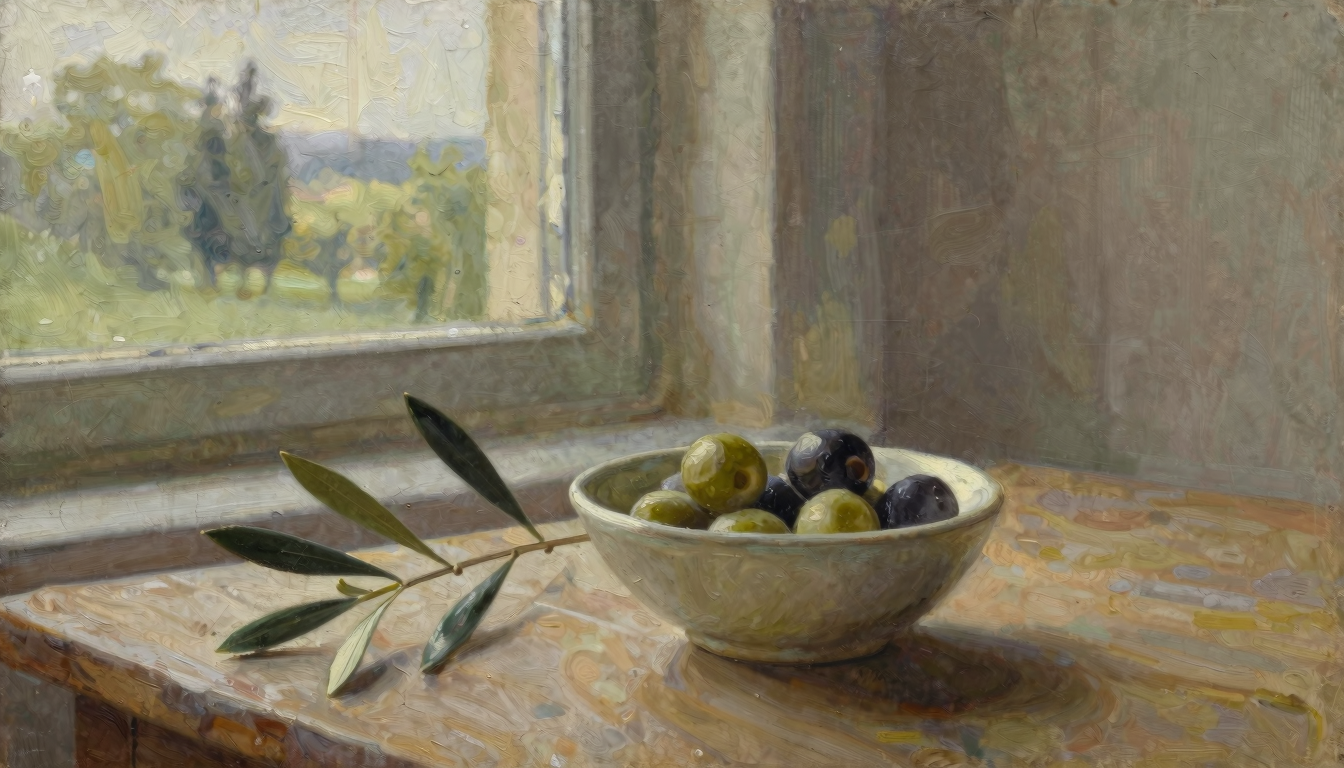
Green olives may evoke freshness, sharpness, or something still being assessed if those associations fit your experience. A bright green bowl can feel inviting to one dreamer and unfamiliar to another.
A dream about green olives does not by itself mean that a plan is immature. Color is only one detail. Fruit already prepared and enjoyed suggests a different symbolic situation from fruit held back because it is not ready.
If you hesitate before tasting, the scene may emphasize assessing an unfamiliar possibility. If you enjoy it, it may emphasize finding a preference through experience. Neither response tells you what another person should choose.
Notice whether the color attracts you or whether someone insists that it must. Symbolically, personal readiness and outside expectations can diverge without either color becoming a universal good or bad sign.
Black olives and a settled preference
Black olives may evoke depth, familiarity, or a finished presentation when those meanings belong to your associations. Seeing them in a shared dish can emphasize how a known preference fits with the tastes of others.
A dream about black olives cannot establish loss, danger, or success from darkness alone. The action and condition matter more. A clean bowl willingly shared differs from food avoided because something about it feels wrong.
If you select black olives while leaving another kind, the scene may emphasize an established preference. If another person chooses differently, it may emphasize variety within a shared setting rather than a disagreement that must be resolved.
Compare what the color means to you with what actually happens. A settled preference can be useful without making every alternative unsuitable. That distinction prevents a single visual feature from carrying the entire interpretation.
Eating olives and making value usable
Eating olives may symbolize taking something into ordinary experience rather than merely considering it. Enjoying the taste may emphasize a choice that feels usable; reluctance may emphasize uncertainty about what you are being offered.
A bitter taste may evoke difficulty accepting a situation, but it cannot identify a hidden betrayal or prove that a relationship is harmful. A pleasant taste likewise does not guarantee that an offer is reliable.
Eating alone may emphasize your own preference. Sharing may emphasize whether people can participate without pressure. Being urged to eat may make agreement more important than the fruit itself.
If a pit is prominent, the scene may emphasize a part that must be distinguished from what you can use. Symbolically, accepting an offer need not mean accepting every condition attached to it. Check real conditions separately before making that comparison useful.
Olive oil and a different form of usefulness
Olive oil may symbolize value expressed through a changed form. Instead of holding a whole fruit, you encounter something that spreads, joins a dish, or changes how a surface feels.
Using a modest amount may emphasize proportion. Pouring more than the scene can hold may emphasize a mismatch between an intended benefit and actual need. The dream cannot recommend a product or establish a health effect.
Oil that helps ingredients come together may evoke support that works through a shared activity. Oil spilled away from the activity may evoke effort losing its purpose. These are conditional comparisons, not statements about future gain or loss.
An unopened bottle may emphasize potential held in reserve. Choosing when to use it may emphasize judgment about timing. The useful question is what the oil changes in the dream, rather than assuming that every appearance represents blessing or healing.
An olive tree and continuing provision
An olive tree may evoke a source that requires a longer relationship than one meal. Roots, branches, fruit, and the space around it can make continuity more prominent than immediate consumption.
Standing near a tree may emphasize connection to a familiar place. Gathering fruit may emphasize drawing on something already established. Caring for the tree may emphasize maintaining conditions rather than demanding immediate results.
A tree without visible fruit may emphasize expectation or a different stage of a process. It does not predict infertility, financial difficulty, or punishment. A full tree likewise does not promise a harvest in waking life.
Notice whether you are allowed to approach and whether the tree belongs to anyone in the scene. Symbolically, access and responsibility may matter alongside provision. Something enduring can still require agreement about how it is used.
An olive branch and a tentative peace gesture
An olive branch may evoke an offer of peace when that familiar association is meaningful to you. Holding it, offering it, or receiving it are different actions: intention, invitation, and response should not be collapsed into one outcome.
Offering a branch may symbolize willingness to reopen a conversation. Receiving one may symbolize considering an invitation. Leaving it untouched may emphasize uncertainty, timing, or a need for clearer terms.
The branch cannot prove that someone has forgiven you or intends to return. Nor does it require you to reconcile. A gesture can begin a process without deciding its conditions.
If both people remain at a distance, the scene may emphasize peace as a possibility rather than an accomplished fact. Its practical value may lie in choosing a modest, specific conversation instead of demanding an immediate restoration of closeness.
Islamic and biblical questions need a clear boundary
Questions about an olive tree in Islam or olive oil in Islam may concern faith, provision, or the meaning of a personally significant image. A dream alone does not establish an Islamic interpretation, religious ruling, or promise of blessing. No specific teaching is established here for either the tree or the oil.
A question about olive oil in the Bible may similarly concern religious associations held by the dreamer. Those associations can matter to the scene without proving that the dream has a biblical meaning or divine origin. No passage is being offered as an authoritative explanation of this dream.
If you want a faith-specific interpretation, distinguish what you remember from what a named text actually says. The symbolic readings here remain conditional comparisons. Fruit, oil, tree, and branch still need to be read separately even when faith is part of the experience.
Four ordinary situations to consider
Work and preparation before use
A task may look ready while a necessary step remains unclear. Prepared olives may resemble making an idea usable rather than merely attractive. Check what must be done before anyone can act, then complete or assign one concrete step. The dream cannot judge the idea's commercial value.
Relationships and a peace gesture
A strained conversation may involve willingness without agreement about what happens next. A branch may resemble a small invitation. Check whether contact is welcome, then offer one specific topic or time. Symbolically, making room for peace differs from claiming that reconciliation is complete.
Home and a continuing source
A familiar household arrangement may support several people while its maintenance falls to one. A tree may resemble ongoing provision and responsibility. Check who uses the arrangement and who cares for it, then clarify one shared task. The dream cannot determine anyone's motives.
Creativity and changing the form
A promising idea may need a different expression before it becomes useful. Oil may resemble moving from raw material to an adaptable form. Check what the intended audience needs to understand, then try one small version. The dream does not predict its reception.
A modern example of a modest invitation
Adrian and his cousin had stopped planning their shared photo project after disagreeing about which pictures belonged in it. Adrian dreamed of offering a small olive branch across a table while a bowl of olives remained between them, untouched.
He connected the scene with wanting cooperation without having agreed on a usable next step. His judgment was that a friendly gesture should invite a limited conversation, not imply that the whole disagreement had disappeared.
He asked whether his cousin would review just ten photographs with him and suggested keeping disputed choices in a separate folder. His cousin agreed. They selected six pictures and listed the remaining questions before ending the meeting. The ordinary result came from a specific invitation and a manageable task; the dream did not predict agreement or reveal his cousin's feelings.
Read the form before deciding the meaning
Recall whether the scene centered on fruit, eating, oil, a tree, or a branch. Then distinguish preparation from waiting, personal preference from a verdict, continuing provision from immediate reward, and a peace gesture from a completed reconciliation.
Choose one waking situation where a usable next step would help. An olive dream may offer a thoughtful image of value, proportion, or peace without guaranteeing prosperity or assigning a religious message.
Frequently asked questions
What does dreaming about olives mean?
It may evoke preparation, usable value, continuing provision or a tentative peace gesture. Form action and response matter more than a fixed verdict.
What do green olives mean in a dream?
They may evoke freshness or something being assessed if those associations fit. Green color alone does not prove that a plan is immature.
What do black olives mean in a dream?
They may evoke familiarity or a settled preference. Darkness alone does not predict danger loss or success.
What does eating olives mean?
It may emphasize making an offer part of ordinary experience. Taste sharing and willingness can distinguish personal preference from pressure.
What does olive oil mean in a dream?
It may evoke value expressed through a changed form or proportion in a shared activity. It establishes no health effect or guaranteed blessing.
What does an olive tree mean?
It may evoke continuity provision and responsibility over time. Visible fruit or its absence does not predict a waking harvest.
What does an olive branch mean?
It may evoke a tentative peace gesture. Offering receiving and accepting are separate actions; the branch does not prove reconciliation.
Do olive tree and olive oil dreams have a certain Islamic or biblical meaning?
No certain religious conclusion follows from the dream. No specific Islamic teaching or biblical passage is established here as its explanation; personal faith associations remain distinct from authoritative interpretation.