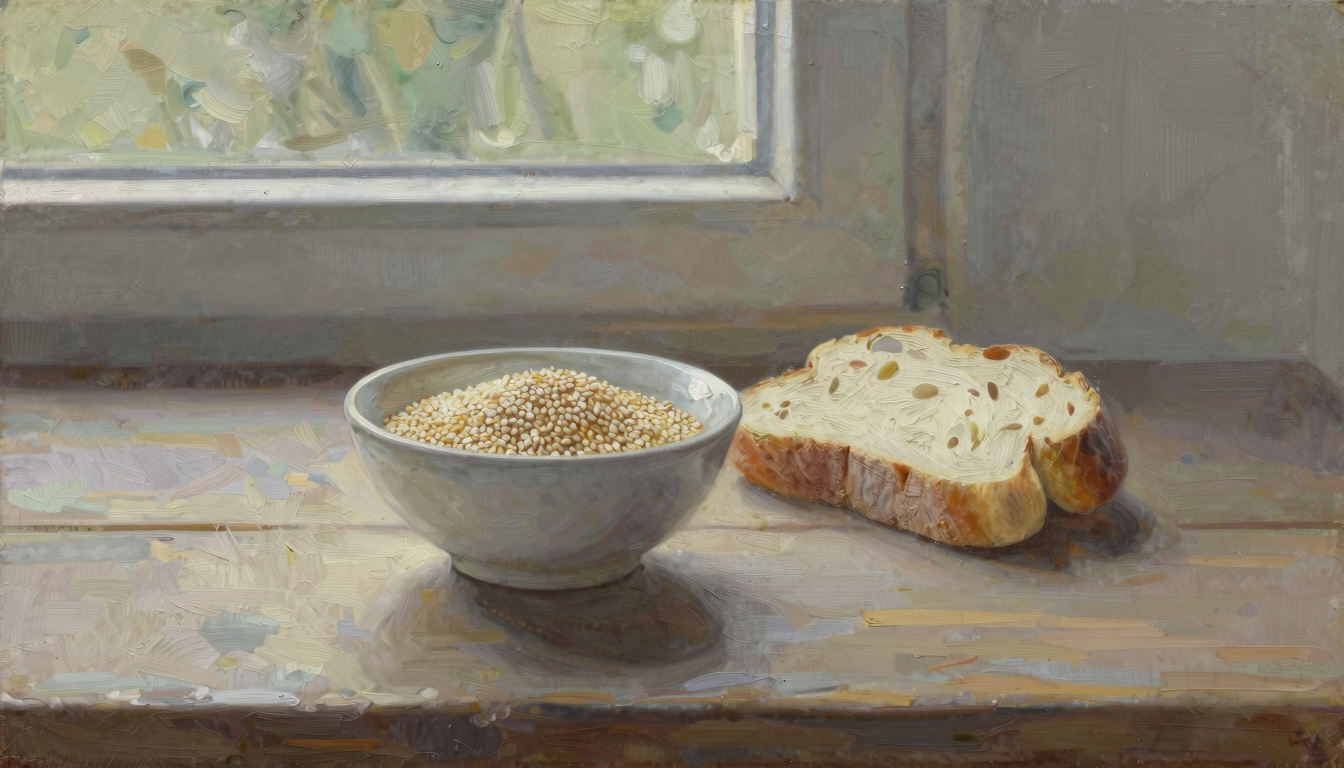
What this article is really about
Dreaming about eating sesame seeds may symbolize making use of small contributions, recognizing value that is easy to overlook, or bringing separate details into an ordinary experience. The action of eating matters: the seeds are being used rather than merely stored as future possibilities. This is a conditional symbolic reading, not a promise of wealth, fertility, improved health, or a reward for persistence.
Direct answer
Dreaming about eating sesame seeds may symbolize making use of small contributions, recognizing value that is easy to overlook, or bringing separate details into an ordinary experience. The action of eating matters: the seeds are being used rather than merely stored as future possibilities. This is a conditional symbolic reading, not a promise of wealth, fertility, improved health, or a reward for persistence.
Small pieces used together distinct from blocked swallowing sweet comfort external bread consumption.
Recall use quantity response and clarify one modest contribution.
The useful question is whether the small pieces feel satisfying together or whether counting and collecting them has replaced the purpose they were meant to serve.
Small pieces becoming an experience
Sesame seeds may offer an image of value on a small scale. Eating them can make the difference between having many little things and actually using them noticeable.
An encouraging reading may concern recognizing how modest contributions belong together. A cautionary reading may concern expecting quantity alone to produce satisfaction. Neither proves the worth of a real project or relationship.
If the seeds are part of a meal, their role may be supporting rather than central. If they are the only food in the scene, the comparison may concern whether a small detail is being asked to serve a larger purpose.
The symbolic distinction is between something small and something insignificant. A detail can matter through its use without needing to stand for abundance or a complete answer.
Eating rather than saving
Eating seeds may emphasize using what is available in the present. Saving them may emphasize a possibility kept for another time, but that is a different action.
If eating feels ordinary, the scene may concern participation in a familiar experience. If it feels deliberate, it may concern choosing to use something you had previously only gathered.
The dream does not tell you to spend resources, change your diet, or consume something in waking life. Its comparison concerns the remembered action rather than an instruction.
A possible symbolic question is whether you have allowed a small useful thing to become useful. Keeping every detail for later can make preparation more visible than the activity it was intended to support.
A pinch a handful and a bowl
A pinch may emphasize a modest addition. A handful may make quantity more noticeable. A bowl may emphasize a collection available to be used or shared.
The amount does not measure a future reward. Many seeds do not guarantee prosperity, and a few do not predict deprivation. Read the quantity alongside how it functions in the scene.
If a little is enough to change the experience, specificity may be central. If you keep adding more without noticing a difference, repetition may become prominent instead.
The useful distinction is between a contribution with a clear role and accumulation without a clear purpose. A small amount can fit an ordinary moment without needing to prove that enough will always be available.
Seeds within another food
Sesame seeds on bread or in another remembered dish may emphasize a detail within a larger whole. Their meaning need not replace the food's role in the scene.
If you notice the seeds first, the image may concern attention drawn to a supporting element. If you remove them, it may concern preference or fit. Neither proves that you reject support or fail to appreciate something.
If the dish feels familiar, the seeds may connect with a personal routine. If it feels unfamiliar, they may become a recognizable detail within a new experience.
Symbolically, an addition can matter without carrying the whole task. Notice what the seeds contribute and what belongs to the surrounding food rather than assigning everything to one ingredient.
Taste and the response it brings
If a taste is clearly remembered, your response can distinguish enjoyment, uncertainty, or preference. Do not add a flavor merely because you know what sesame usually tastes like.
Enjoyment may emphasize a small contribution that fits. Dislike may emphasize a mismatch between an available detail and what you want from the experience. Neither establishes the quality of a real offer.
The dream cannot diagnose a nutritional need, allergy, or medical condition. It also does not recommend eating sesame as a remedy.
The useful symbolic question is whether your response changes after direct experience. Something can look promising while remaining a matter of preference once it becomes part of an actual moment.
Eating slowly and eating in a hurry
If you eat slowly, the scene may emphasize attention to small details. If you eat hurriedly, it may emphasize using what is available without pausing to distinguish its parts.
Neither pace proves mindfulness, impatience, or a psychological cause. The remembered purpose matters: a brief snack and a shared meal can make different comparisons.
If you keep counting while eating, measurement may become more prominent than experience. If you stop counting, the scene may emphasize allowing the pieces to belong to a whole.
Symbolically, attention can be useful without becoming endless evaluation. A small contribution does not need to be individually measured every time before it can have a place.
Sharing sesame seeds
Sharing may emphasize distributing a modest resource or participating in a common experience. The scene can make how the seeds are offered as important as their amount.
A welcomed offer may resemble a contribution that fits. An untouched offer may resemble uncertainty about purpose or preference. Neither reveals another person's motives or feelings.
If everyone takes a little, the image may emphasize participation without identical portions. If one person keeps dividing the bowl, the scene may emphasize allocation overshadowing the activity.
The useful comparison is between making something available and deciding how others must use it. A modest offer can leave room for a response rather than becoming a demand for appreciation.
Spilled seeds and the effort to recover them
If seeds spill, the scene may emphasize small pieces becoming difficult to keep together. This does not predict financial loss, bad luck, or failure.
Gathering every seed may emphasize attention to completeness. Leaving some may emphasize a decision about what can reasonably be recovered. Neither proves carelessness or the correct use of real resources.
Notice whether recovering the seeds helps the original activity continue or becomes a separate task without an endpoint. Symbolically, a desire to waste nothing can still need a clear purpose.
The distinction is between noticing a small loss and allowing it to define the whole experience. A useful contribution can remain useful even when not every piece is preserved.
Light and dark seeds
If color stands out, it may change the seeds' contrast with the bowl or surrounding food. Light and dark seeds can make sorting, similarity, or visual difference prominent.
Color does not establish purity, danger, good fortune, or a religious message. It also does not identify a real seed's properties from a dream.
If you sort by color, selection may be central. If you eat them together, their shared role may matter more than appearance. Those actions provide different comparisons without a fixed color code.
Only use this branch when the distinction was remembered. An ordinary eating scene does not need extra details to make it meaningful.
Abundance without a promised reward
A bowl of many small seeds may evoke abundance as an image, but the dream does not guarantee money, success, fertility, or divine approval. No particular traditional teaching is being attributed as a certain verdict here.
A symbolic reading may concern noticing what is available or recognizing how separate contributions come together. Its value lies in reflection rather than forecasting.
If the quantity feels reassuring, the scene may emphasize a present sense of enough. If it feels endless, it may emphasize accumulation that has lost its purpose. Neither describes your actual resources.
The useful question is what the seeds do within the scene. Abundance as an appearance and usefulness as an experience remain different things.
Four ordinary situations to consider
Work and small contributions
A task may depend on several details that rarely receive attention. Eating seeds together may resemble those pieces becoming useful as a whole. Check which details actually support the task, then acknowledge one contribution. The dream cannot predict success.
Relationships and a modest offer
A small gesture may be available without a clear shared purpose. Sharing seeds may resemble that uncertainty. Check what was offered, then respond to the specific gesture. The dream cannot reveal affection or require gratitude.
Home and keeping everything
Small objects may accumulate because each might be useful later. Stored seeds may resemble preparation without use. Check what an object currently supports, then choose one practical use or agreed place. The dream does not require discarding valued belongings.
Creativity and details serving a whole
A piece may keep gaining little additions before its main idea becomes clear. Seeds within food may resemble supporting details. Check the intended expression, then keep one addition that serves it. The dream cannot predict reception.
A modern example of using the small pieces
Elena was preparing a booklet for a local craft group. She had collected many tiny decorative patterns but kept comparing them without completing a page. She dreamed of eating sesame seeds from a small bowl while repeatedly stopping to count what remained.
She connected the scene with measuring available details instead of using them in a finished piece. Her judgment was that one pattern could support a page without needing to represent every option she had gathered.
She chose a simple border, placed it around one set of instructions, and asked another member whether the page was easy to follow. They moved one illustration, and Elena printed the page for the next session. The ordinary result came from selection and a clear use; the dream did not guarantee praise or prove that the other patterns lacked value.
Read the pieces alongside their purpose
Recall whether the seeds were loose, part of food, shared, counted, or spilled. Distinguish smallness from insignificance, quantity from usefulness, and collecting from actually participating in an experience.
Choose one modest contribution whose use you can clarify. An eating sesame seed dream may offer an image of separate details becoming meaningful together without promising abundance or requiring every piece to be counted before you begin.
Frequently asked questions
What does dreaming about eating sesame seeds mean?
It may evoke small contributions becoming useful together. Read the action rather than treating quantity as a promised reward.
Do sesame seeds predict money or fertility?
No. An image of abundance does not establish wealth fertility health or divine approval.
What if the seeds are part of another food?
They may emphasize a supporting detail within a larger whole. Notice what they contribute without making one ingredient explain the entire scene.
What does sharing sesame seeds mean?
It may emphasize making a modest contribution available. The dream cannot establish another person's motives or require appreciation.
What if I count or spill the seeds?
Counting may emphasize measurement and spilling the difficulty of keeping small pieces together. Neither predicts financial loss or proves the right waking action.
Does eating sesame in a dream indicate a dietary need?
The dream cannot diagnose a nutritional need or condition and does not recommend sesame as a remedy.