What this article is really about
Dreaming about a willow tree may symbolize a private feeling, a gentler way of expressing something difficult, or the relationship between shelter and openness. A weeping willow's hanging branches can make sadness noticeable, but the name does not prove that you are grieving or predict a loss. Your position and response matter: the same canopy can feel restful, concealing, crowded, or easy to leave.
Direct answer
Dreaming about a willow tree may symbolize a private feeling, a gentler way of expressing something difficult, or the relationship between shelter and openness. A weeping willow's hanging branches can make sadness noticeable, but the name does not prove that you are grieving or predict a loss. Your position and response matter: the same canopy can feel restful, concealing, crowded, or easy to leave.
Willow hanging canopy and private feeling distinct from fruit intuition and falling trees.
Recall canopy action response opening; clarify terms of one pause or conversation.
The useful distinction is between making room for a feeling and deciding what that feeling must mean. A dream can offer an image to consider without diagnosing your emotional state.
A feeling given room rather than a fixed verdict
A willow may evoke softness or emotional privacy if those associations fit your experience. Its branches can draw attention downward or create a space partly separated from the surroundings.
The encouraging reading may concern allowing a feeling to exist without demanding an immediate resolution. The cautionary reading may concern remaining hidden when a specific conversation would help. Neither establishes what someone secretly feels.
A tree seen at a distance may emphasize noticing a mood. Standing beneath it may emphasize inhabiting that mood. Walking through the branches may emphasize moving between private experience and a shared setting.
Notice whether the scene asks you to stay, speak, watch, or move. These actions can distinguish reflection from avoidance without turning quietness into a problem by itself.
A weeping willow does not predict sorrow
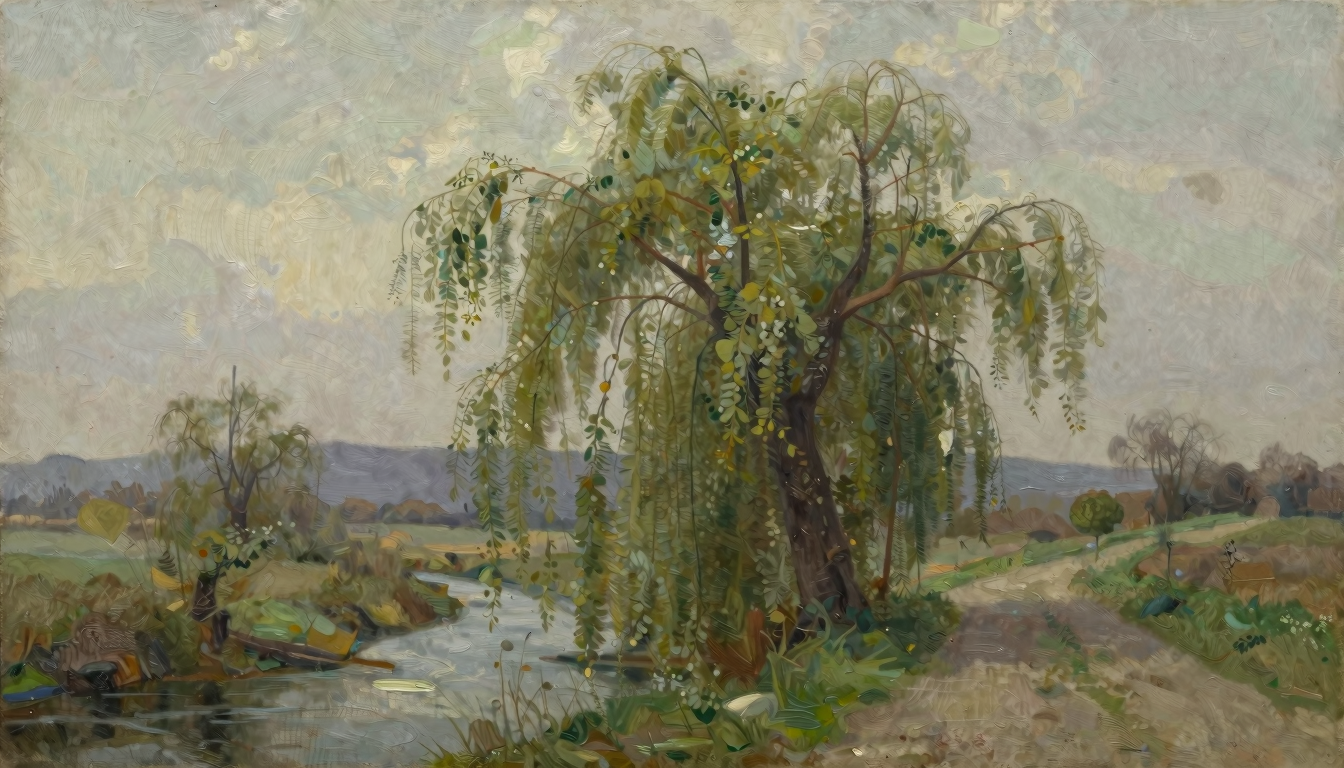
A weeping willow tree dream may make drooping branches or the word weeping especially prominent. Those details can evoke sadness, tenderness, or a wish for a place where an expression need not be explained.
The name is not evidence that someone will cry, die, or leave. It also does not prove that you have an unrecognized psychological condition. A familiar visual association can matter without becoming a diagnosis or omen.
If the tree feels beautiful rather than sad, that response belongs in the reading. If you feel troubled beneath it, consider what else happens in the scene before assigning the mood to the species alone.
The useful question is whether the willow gives a feeling room or seems to make it harder to move. A mournful association can be present alongside comfort, curiosity, or an ordinary memory of a place.
Hanging branches and a private space
Branches hanging around you may evoke a curtain or a place where you can step apart from other activity. Symbolically, the canopy may make privacy more noticeable than strength or height.
If you can see outward and leave freely, the scene may emphasize chosen privacy. If the branches obscure everything, it may emphasize uncertainty about how to reconnect with what is outside. Neither image proves that a waking relationship is restrictive.
Holding a branch aside may emphasize making a small opening. Remaining behind it may emphasize a need for a pause or reluctance to participate. The surrounding circumstances help distinguish those possibilities.
Privacy can support expression when you choose its terms. It can also become a habit that leaves another person unsure how to approach. The dream cannot settle that difference, but the image may help you consider it.
A willow beside water
If water appears beside the willow, the scene may emphasize a feeling in relation to movement or reflection. Still water can make an image linger; moving water can make passing and change more prominent.
These are conditional comparisons. Water is not proof of emotional depth, purification, or an approaching event. A riverbank you remember may simply carry a personal association with a place.
Watching the reflection may emphasize considering how a feeling appears. Walking along the bank may emphasize movement without an immediate destination. Crossing away from the tree may emphasize leaving a reflective setting for another activity.
Notice whether the water is central or only part of the background. An incidental detail need not carry as much interpretive weight as an action you clearly remember.
Movement and a gentler expression
A willow moving in wind may evoke expression that changes shape while remaining connected. Its motion can make yielding, rhythm, or responsiveness more prominent than a fixed stance.
If the movement feels easy, the scene may emphasize allowing a response without forcing its form. If it feels overwhelming, it may emphasize difficulty finding a stable position within the surrounding activity. Neither reading establishes how resilient you are.
A still willow may emphasize a pause rather than lack of feeling. Movement and stillness are different scene details, not a universal ranking of better and worse emotional states.
The useful distinction is between allowing some movement and abandoning your own position. A gentler expression can remain clear about what you need. Symbolically, softness does not require agreement with every demand.
Standing outside and choosing whether to enter
Seeing a willow from outside its canopy may emphasize the choice to approach a private space. You may be curious, hesitant, or simply passing through the setting.
If another person stands beneath it, the scene cannot reveal their hidden feelings. It may emphasize your own uncertainty about whether to join them, give them room, or ask what they need.
Entering without being invited may make participation or boundaries prominent. Being welcomed may emphasize an offer of shared quiet. Neither action predicts how a real conversation will unfold.
The dream can make approach itself worth considering. Sometimes a specific question is more useful than assuming that you already understand the mood of the person or place you are approaching.
A familiar willow and a remembered place
A willow linked with a childhood path, garden, or meeting place may evoke the relationship between memory and present feeling. Recognition can give the tree significance before any general association is considered.
Returning to it may emphasize reconnecting with an earlier experience. Finding it different may emphasize how memory and present circumstances no longer fit exactly. Neither detail requires a return to the past.
If the tree recalls a person, distinguish your memory from evidence about that person's current life. A dream cannot confirm their wishes, motives, or condition.
A remembered place can offer a language for feeling without becoming an instruction. What the willow helps you notice now may matter more than preserving the exact circumstances of an earlier visit.
Resting and leaving the canopy
Resting beneath a willow may evoke a pause in which a feeling does not need to compete with other activity. The scene may emphasize permission to take time rather than a demand to remain there indefinitely.
Leaving the canopy can be equally meaningful. It may emphasize returning to a task, deciding to speak, or finding that the pause has served its purpose. Departure does not automatically mean rejecting the feeling.
If you try to make the pause last forever, the scene may emphasize wanting a protected setting without its ordinary limits. If someone interrupts, consider whether the interruption feels welcome or imposed.
The tree's symbolic role may therefore involve a transition between private reflection and participation. Neither side has to erase the other. A feeling can be acknowledged while an ordinary next step remains possible.
Four ordinary situations to consider
Work and a quieter conversation
A difficult task may be discussed only through hurried messages. A canopy may resemble a need for a more private setting. Check what actually needs clarification, then arrange one brief conversation. The dream cannot identify another person's unspoken concerns.
Relationships and giving room
Someone may want a pause without having explained its terms. A willow may resemble privacy that needs a clear way back to contact. Check whether a conversation is welcome, then offer one choice about timing. Symbolically, room can support connection without forcing it.
Home and an available place to pause
A busy household may leave little room for quiet activity. Resting beneath the tree may resemble a modest space for a pause. Check the shared schedule, then agree on one short period that works for everyone. The dream cannot diagnose what the household needs.
Creativity and expressing a mood
A piece may feel too direct or too hidden for what you want to communicate. Hanging branches may resemble how presentation reveals or conceals a feeling. Check what the audience can actually follow, then revise one passage or image. The dream does not predict its reception.
A modern example of a clear invitation
Mara was preparing a small photo display with her sister. After disagreeing about one picture, she stopped discussing the display while continuing to send unrelated messages. She dreamed of standing beneath a willow, holding one branch aside but never stepping out to the path where her sister waited.
She connected the scene with wanting space while leaving the way back to the discussion unclear. Her judgment was that a pause could be useful if it included a specific invitation to continue.
She asked whether they could review the disputed photograph for fifteen minutes the next afternoon. They decided to use another picture and completed the display plan before ending the call. The ordinary result came from a clear invitation and a limited discussion; the dream did not reveal her sister's feelings or guarantee agreement.
Read privacy alongside the way back
Recall whether the willow gave shelter, obscured the surroundings, or left an opening. Distinguish sadness as an association from a prediction, a private pause from permanent withdrawal, and a gentler expression from an unclear message.
Choose one feeling or conversation whose terms you can make clearer. A willow dream may offer a thoughtful image of privacy and expression without assigning a fixed emotional verdict or predicting loss.
Frequently asked questions
What does dreaming about a willow tree mean?
It may evoke a private feeling gentler expression or the relationship between shelter and openness. Action and response matter more than a fixed verdict.
What does a weeping willow tree dream mean?
Its hanging branches or name may evoke sadness tenderness or privacy. They do not diagnose grief or predict loss.
What does standing beneath a willow mean?
It may emphasize chosen privacy or a pause. Whether you can see outward and leave can distinguish shelter from uncertainty about reconnecting.
What does a willow beside water mean?
Water may make reflection or movement prominent if it is central to the scene. It establishes no purification or approaching event.
Does a willow dream reveal another person's feelings?
No. A person beneath the tree may make your own approach or uncertainty noticeable, but the dream cannot confirm hidden motives or emotions.
What does leaving a willow canopy mean?
It may emphasize returning to an activity or choosing to speak after a pause. Departure need not mean rejecting the feeling.