What this article is really about
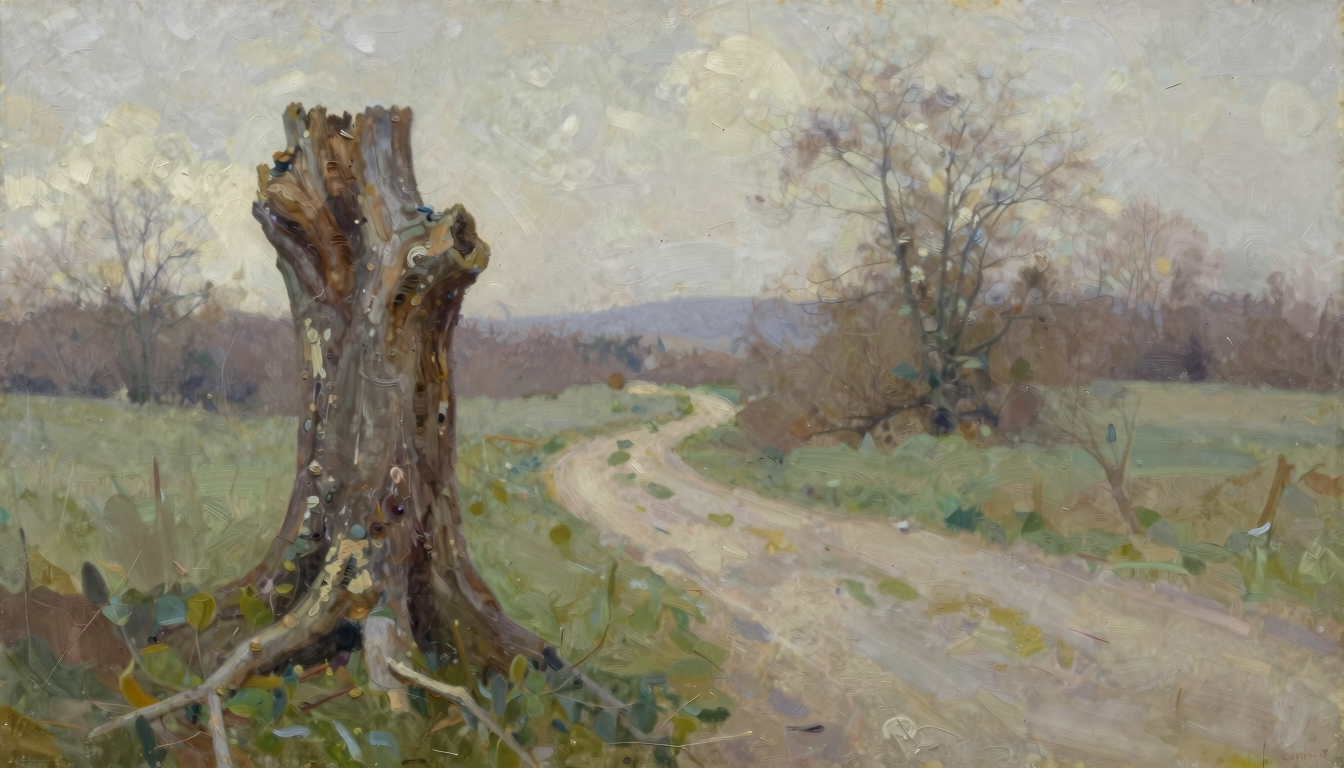
Dreaming about a tree stump may symbolize the remaining footprint of something whose earlier form has ended, a familiar place with a changed purpose, or a decision about what to keep using. A stump can be an obstacle, a seat, a landmark, or simply something you notice. It does not predict loss, failure, or inevitable renewal. Its useful question is how what remains relates to the activity you want to carry out now.
Direct answer
Dreaming about a tree stump may symbolize the remaining footprint of something whose earlier form has ended, a familiar place with a changed purpose, or a decision about what to keep using. A stump can be an obstacle, a seat, a landmark, or simply something you notice. It does not predict loss, failure, or inevitable renewal. Its useful question is how what remains relates to the activity you want to carry out now.
Stump remainder changed use and footprint distinct from falling-tree event.
Recall remainder role action result; clarify one present activity.
An earlier purpose can be over while its presence still matters. The dream may make that difference visible without telling you whether to preserve or remove the remainder.
What remains after a changed form
A tree stump may evoke an ending that has already occurred within the scene. Unlike watching a tree fall, you encounter what is left rather than the movement of change itself.
The encouraging reading may concern recognizing a usable remainder or acknowledging a past role. The cautionary reading may concern expecting the old form to return before allowing the present activity to proceed. Neither establishes that something in waking life has ended permanently.
A stump in a familiar place may evoke history. One in a space you are trying to use may emphasize its current effect. The same object can hold a memory and occupy practical space at the same time.
The central distinction is between remembering a role and continuing to organize everything around it. A remainder can matter without retaining every function it once had.
Seeing a stump without acting on it
Simply seeing a tree stump may emphasize recognition before a decision. The scene may invite noticing an earlier presence without requiring immediate action.
If you pause beside it, reflection may be prominent. If you pass it easily, the stump may serve as a landmark rather than an obstacle. Neither response predicts closure or proves that you have moved on.
A distant stump can make absence visible through a familiar outline. A stump close to your feet can make its current position more important. Distance changes the relationship between memory and use.
Notice whether you actually need anything from it. Symbolically, acknowledging a remainder differs from trying to restore it or remove it. Observation can be a meaningful part of a decision without becoming the entire process.
A stump blocking a path
A stump in the way may evoke a remaining arrangement that affects movement after its original purpose has changed. Its symbolic role may concern the present route rather than the history of the tree.
Walking around it may emphasize adapting without removing everything. Stopping before it may emphasize uncertainty about the next step. Trying to move it may emphasize a deliberate change in the setting.
None of these actions proves that a person is obstructing you or that an old relationship must be abandoned. The dream cannot identify blame from the position of an object.
The useful comparison is whether the remainder genuinely interrupts what you need to do. A remembered attachment can matter while a practical route still needs clarification. The dream raises that question without answering it for every situation.
Sitting on a tree stump
Sitting on a stump may symbolize a changed use for something that no longer serves its earlier role. Instead of providing a canopy, it becomes a place to pause.
If sitting feels welcome, the scene may emphasize a modest use that fits. If it feels awkward, it may emphasize making do without deciding whether the arrangement remains suitable. Neither predicts comfort or hardship.
A seat can be temporary. Getting up afterward may matter as much as resting. Symbolically, a remainder can support a current activity without becoming its permanent center.
The distinction is between a useful adaptation and preserving something only because it is familiar. The dream cannot settle which applies, but your response in the scene may make the question clearer.
A cut surface and the visible record
If the stump's surface draws your attention, the scene may emphasize marks of an earlier form. Rings, texture, or a remembered height can make accumulated time more noticeable.
Counting rings does not supply a prophecy or determine your age. A number explicitly present can be a personal detail without becoming a universal code. The dream cannot calculate a deadline from the surface of a stump.
Touching the cut surface may evoke direct contact with a remainder. Looking without touching may emphasize a more distant relationship with its history. Neither action establishes grief or a psychological condition.
A visible record can acknowledge that something existed without requiring its restoration. Symbolically, history and current usefulness are different questions even when they occupy the same object.
A shoot beside the stump
If a shoot or new growth is actually present, the scene may emphasize a new form beside an earlier remainder. Do not assume growth that you did not remember simply because the image invites a hopeful interpretation.
A small shoot may evoke a possibility rather than an accomplished recovery. Its presence does not guarantee that a real plan or relationship will return. The new form may also differ from what came before.
If you attend to the shoot, the scene may emphasize recognizing something modest. If you compare it constantly with the earlier tree, expectation may dominate. Neither response tells you that the past was better or that the future must improve.
The useful distinction is between allowing a different possibility and demanding a replica of the old form. A symbolic beginning can remain uncertain while still being worth noticing.
An old stump and gradual change
An old stump may evoke a remainder whose relationship with the surroundings has changed over time. Moss, weathering, or other details can make its place within the setting more important than a single ending.
If the stump blends into the landscape, it may function as part of a familiar scene. If it stands out sharply, its presence may remain an unresolved question within the activity. Neither establishes how long a waking feeling should last.
A weathered appearance does not prove that something is worthless. A fresh surface does not prove that you need immediate closure. Time and usefulness can relate in different ways.
The dream may help distinguish duration from purpose. Something can remain for a long time without needing to define every current choice. It can also continue to serve a modest role without returning to its former one.
Removing keeping and making room
Trying to remove a stump may symbolize changing the remaining footprint of an earlier arrangement. Choosing to keep it may symbolize retaining a particular use or point of reference.
Neither choice is automatically favorable. Removal can serve a clear activity or become effort without a purpose. Keeping can preserve something useful or make movement unnecessarily difficult.
Notice what the decision enables afterward. A space that becomes usable differs from an empty space whose purpose remains unclear. The dream cannot tell you that every remainder should be cleared.
Symbolically, a concrete present need can give the decision a basis. The question is what you want to do now and whether the stump's role supports that activity, rather than whether keeping or removing is inherently more mature.
Dream Valley tree stumps
The phrase Dream Valley tree stumps may concern a named game or setting rather than a sleeping dream. The words alone establish no gameplay steps, tool requirements, locations, or symbolic message.
If you mean a game question, its answer depends on that setting's actual context. The comparisons here do not provide instructions for removing game objects or unlocking areas.
If an image from a game appeared in your dream, distinguish the remembered image from what happened within the dream scene. An object blocking a route can carry a personal association without importing every rule of the game into its interpretation.
A proper name should not decide the meaning of an experience whose details remain unclear. The useful reading still concerns the stump's role, your action, and what the space allows afterward.
Four ordinary situations to consider
Work and a remaining process
A task may keep an old approval step after its original purpose changes. A stump in a path may resemble a remainder worth checking. Clarify what the step still serves, then agree on one adjustment. The dream cannot judge the process without real information.
Relationships and a changed tradition
A familiar shared activity may no longer fit current schedules. Sitting on a stump may resemble keeping a modest version of a valued connection. Check what each person wants now, then suggest one workable form of contact. The dream cannot decide another person's feelings.
Home and the use of space
An object may remain in a room because of its earlier role. The stump may resemble a footprint that holds memory while affecting current use. Check what the space needs to support, then make one agreed change. The dream does not require discarding meaningful things.
Creativity and unfinished material
An earlier project may leave fragments that can be reused or set aside. A stump may resemble material with a changed purpose. Check whether one fragment serves the current piece, then use or archive it deliberately. The dream does not predict the new piece's success.
A modern example of a changed use
Amelia kept a large display board from a completed community exhibition in the room where she wanted to run a small writing group. She dreamed of a tree stump in the middle of a clearing, with people trying to arrange chairs around it and leaving no place for a shared table.
She connected the scene with a meaningful remainder occupying space needed for another activity. Her judgment was that preserving the exhibition's record did not require preserving the board's old position.
She photographed the display, stored the board elsewhere, and asked the group how to arrange the room. They put a table in the center and completed their first writing session with enough room for everyone's notes. The ordinary result came from clarifying the present use and keeping a record; the dream did not prove that the exhibition was unimportant or predict the group's success.
Read the remainder beside the present activity
Recall whether the stump was noticed, used as a seat, blocking a route, kept, or removed. Distinguish history from current function, a modest adaptation from restoration, and a possible shoot from a guaranteed renewal.
Choose one remaining arrangement whose present role you can clarify. A tree stump dream may offer a thoughtful image of what persists after change without predicting loss or demanding a single form of closure.
Frequently asked questions
What does dreaming about a tree stump mean?
It may evoke the remaining footprint of an earlier form or a decision about changed use. It predicts neither loss nor inevitable renewal.
What does a stump blocking a path mean?
It may emphasize a remainder affecting a current route. The dream cannot identify blame or demand that a relationship be abandoned.
What does sitting on a tree stump mean?
It may evoke a modest changed use or temporary pause. Its usefulness differs from restoring its former role.
Does a shoot beside a stump predict recovery?
No. If new growth is actually remembered it may evoke a different possibility, but it does not guarantee restoration or success.
Should a stump dream make me remove something?
No. Clarify what keeping or removing would enable in the present activity rather than treating either choice as automatically better.
What about Dream Valley tree stumps?
The phrase may concern a named game or setting. It establishes no locations tool requirements or gameplay steps; those need the setting's actual context.