Summary
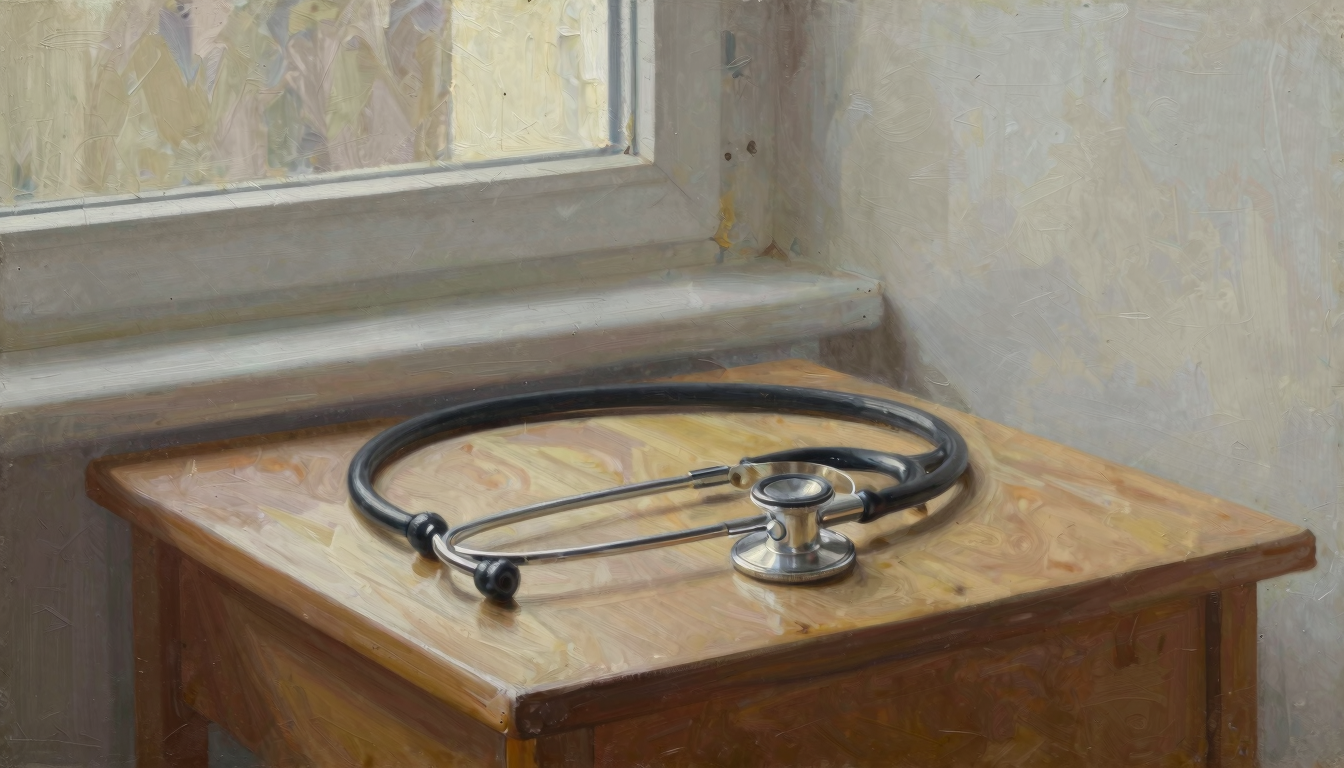
Dreaming about a stethoscope may symbolize focused listening, wanting a concern to receive careful attention, or the difference between noticing something and deciding what it means. Who holds the instrument, what they listen to, and whether the attention feels welcome shape the reading. The dream is not a medical test: it cannot diagnose illness, confirm health, or reveal another person's hidden feelings.
At a glance
Dreaming about a stethoscope may symbolize focused listening, wanting a concern to receive careful attention, or the difference between noticing something and deciding what it means. Who holds the instrument, what they listen to, and whether the attention feels welcome shape the reading. The dream is not a medical test: it cannot diagnose illness, confirm health, or reveal another person's hidden feelings.
Directed listening through an instrument consent and gap between hearing and interpreting.
Recall listener sound permission; ask one clear question.
A stethoscope concentrates attention on something that is not obvious from a distance. Symbolically, it can bring a question into view: what needs to be heard more carefully, and who has permission to listen?
Attention directed beneath the surface
A stethoscope may evoke listening with a particular purpose. Unlike hearing many voices around you, the scene directs attention toward one source. That focus can feel caring when it makes room for understanding and intrusive when it seems to reduce you to an object of inspection.
Seeing the instrument without anyone using it may suggest attention available but not yet directed. Picking it up may suggest choosing to attend. Someone handing it to you may suggest an invitation to take a listening role, though the dream does not prove you have the knowledge to interpret what you hear.
The distinction between listening and interpreting is central. A sound can be noticed without its meaning being clear. The symbolic image may invite patience with that gap rather than a rush to assign a conclusion.
An encouraging reading may concern careful attention replacing an assumption. A cautionary reading may concern treating a focused impression as complete knowledge. The instrument does not give dream interpretation the authority of a real examination.
Someone listens to you
Someone using a stethoscope on you may evoke a wish to be taken seriously, receiving care, or feeling examined. The same action can have different meanings depending on whether you agree to it and whether the person explains what they are doing.
A calm encounter may emphasize trust in a process of attention. An uncomfortable encounter may emphasize exposure or lack of choice. The feeling belongs to the dream; it does not prove that a real caregiver or other person has acted improperly.
Notice whether you can ask a question or stop the scene. Having a voice can make cooperation more prominent. Being told to remain silent can make the balance between being heard and being inspected more prominent.
Symbolically, receiving attention need not mean surrendering every decision. The dream may help distinguish care that includes your perspective from attention that leaves you waiting for someone else to define the whole situation.
Holding the stethoscope yourself
Holding the instrument may symbolize taking responsibility for listening, trying to understand a concern, or wanting a more direct view of something important. It can place you in an active role rather than making you the person being examined.
If you use it comfortably, the scene may evoke confidence in attending to a particular question. If you struggle with it, the scene may evoke uncertainty about how to listen or what you are expected to conclude. Neither experience establishes professional ability.
Listening to yourself may evoke turning attention inward. Listening to another person may evoke care, curiosity, or responsibility. Consent matters in the symbolic reading: invited attention feels different from trying to discover something the other person has not chosen to share.
The useful distinction is between being present to a concern and claiming to know its answer. The dream can make that distinction visible without instructing you to perform an examination or evaluate anyone's health.
Hearing a rhythm or hearing nothing
A clear rhythm may evoke continuity, steadiness, or the experience of finding a signal amid uncertainty. An irregular or unfamiliar sound may evoke difficulty making sense of what you hear. These are symbolic possibilities, not findings about the body.
Hearing nothing may emphasize a gap between effort and understanding. The instrument may not be connected, the surroundings may distract you, or the scene may simply leave the sound absent. Do not turn that absence into a prediction of death or danger.
If you keep changing where you listen, the dream may emphasize searching for certainty. If you pause and ask what the other person feels, it may emphasize supplementing observation with their perspective.
The sound does not reveal a reliable message about a partner's love, an unborn child, or a future event. Its reflective value may lie in the experience of attending and in your response to uncertainty, rather than a diagnosis supplied by dream imagery.
A broken misplaced or unfamiliar instrument
A broken stethoscope may evoke a method of attention that no longer feels useful. The scene can raise a question about how understanding is sought without declaring that understanding is impossible.
Searching for a misplaced instrument may evoke wanting a clearer way to listen before making a judgment. Finding it may evoke readiness to attend, while continuing without it may emphasize relying on another form of communication.
An unfamiliar instrument can emphasize a role you have not settled into. Being expected to use it immediately may make responsibility feel larger than your preparation. Watching someone explain its use may make learning and support more prominent.
These details concern the dream's arrangement. They do not establish that equipment is faulty in waking life, predict a professional mistake, or prove that a real method should be abandoned. A symbolic obstacle can prompt a question without answering it.
Care authority and personal spiritual reflection
A stethoscope can carry associations with care and professional authority. In a dream, those associations may make the difference between being reassured and being understood more noticeable. An authoritative appearance does not automatically make the interaction feel supportive.
A person who listens first may evoke patience. A person who announces a conclusion before listening may evoke the weight of an assumption. The scene cannot establish a real person's competence or motives.
For a personal spiritual reflection, the instrument may suggest attentiveness, humility about what you do not know, or willingness to hear a concern before responding. That is a possible reflection, not a fixed religious interpretation or a divine instruction.
An encouraging reading may concern making space for a quieter signal. A cautionary reading may concern expecting one observation to settle every question. Care can include listening closely while leaving room for uncertainty and another person's own account.
The setting changes the emphasis
A stethoscope in a familiar clinical setting may draw on an ordinary association with being examined. One in a home, a rehearsal room, or a garden can place focused listening in a less expected context. The setting may help identify the kind of attention that felt important.
A crowd watching can emphasize visibility and pressure. A quiet private room can emphasize concentration or intimacy. Being unable to find privacy can make the conditions of attention more prominent than the instrument itself.
If the stethoscope is used on an object, such as a door or a musical instrument, the scene may emphasize trying to understand what lies behind an appearance. It does not make an object a source of factual or supernatural information.
Remembered details should guide the comparison. There is no need to invent a sound, a diagnosis, or a hidden message to make the dream meaningful. Sometimes the useful image is simply a deliberate pause to listen.
Where focused attention may matter
Work and a question that needs a hearing
A stethoscope may resemble giving one recurring concern a clear hearing. Check what has actually been reported, then ask one precise question before responding. Symbolically, attention can replace an assumption without turning a single impression into a complete conclusion.
Relationships and listening with permission
Being examined without explanation may resemble a conversation in which someone feels interpreted too quickly. Check whether the person wants advice or a hearing, then agree on one way to talk. The dream cannot prove another person's hidden feelings.
Home and a quiet concern
An absent sound may resemble uncertainty about what a family member needs. Check by asking rather than inferring, then arrange one practical conversation. Silence can leave a question open without establishing that something terrible is happening.
Creativity and hearing the work differently
Using a stethoscope on an instrument may resemble concentrating on one part of a creative piece. Check which detail needs attention, then revise one passage. The symbolic focus can remain useful without requiring every aspect to be perfected at once.
A modern example of hearing before deciding
Theo coordinated a small neighborhood choir. During rehearsals, one singer repeatedly asked to change a passage, and he assumed she wanted an easier part. He dreamed of holding a stethoscope against a closed music case while trying to announce what was inside before hearing anything.
He connected the scene with reaching a conclusion before asking a clear question. His judgment was that the repeated request needed a hearing, rather than a guess about the singer's ability.
At the next rehearsal he asked which entry was difficult to follow. She explained that two cues overlapped, so the group agreed on one visible cue and practiced the entry together. The next run began at the agreed moment. The ordinary result came from asking, clarifying, and rehearsing; the dream did not reveal her thoughts or provide a medical finding.
Keep listening separate from certainty
Recall who held the instrument, what was heard, and whether attention was welcome. Distinguish care from an imposed interpretation, hearing from knowing, and an unanswered question from a prediction of danger.
A stethoscope in a dream may help you consider where a more careful hearing could be useful. Choose one real concern and ask one clear question. The image can support that reflection without assessing health or deciding what another person feels.
Frequently asked questions
What does it mean to dream about a stethoscope?
It may symbolize focused listening or wanting a concern to receive attention. Who listens what is heard and whether you consent shape the reading.
What does a dream of a stethoscope mean if I only see it?
The instrument may evoke attention available but not yet directed. Seeing it alone does not establish a diagnosis or future event.
What if someone uses the stethoscope on me?
It may evoke receiving care or feeling examined. Your freedom to ask and stop helps distinguish welcome attention from exposure within the dream.
What if I hear nothing?
It may evoke uncertainty or a gap between effort and understanding. It does not predict death or establish a medical problem.
What if I hold the stethoscope myself?
It may evoke taking a listening role. Attending to a concern is different from knowing its answer or having professional ability.
What if the stethoscope is broken?
It may evoke a method of attention that feels unhelpful. The dream cannot establish that waking equipment or a real method is faulty.
Can this dream confirm health or reveal hidden feelings?
No. Dream imagery is not a medical test or reliable access to another person's thoughts. A real question needs its own information.