Summary
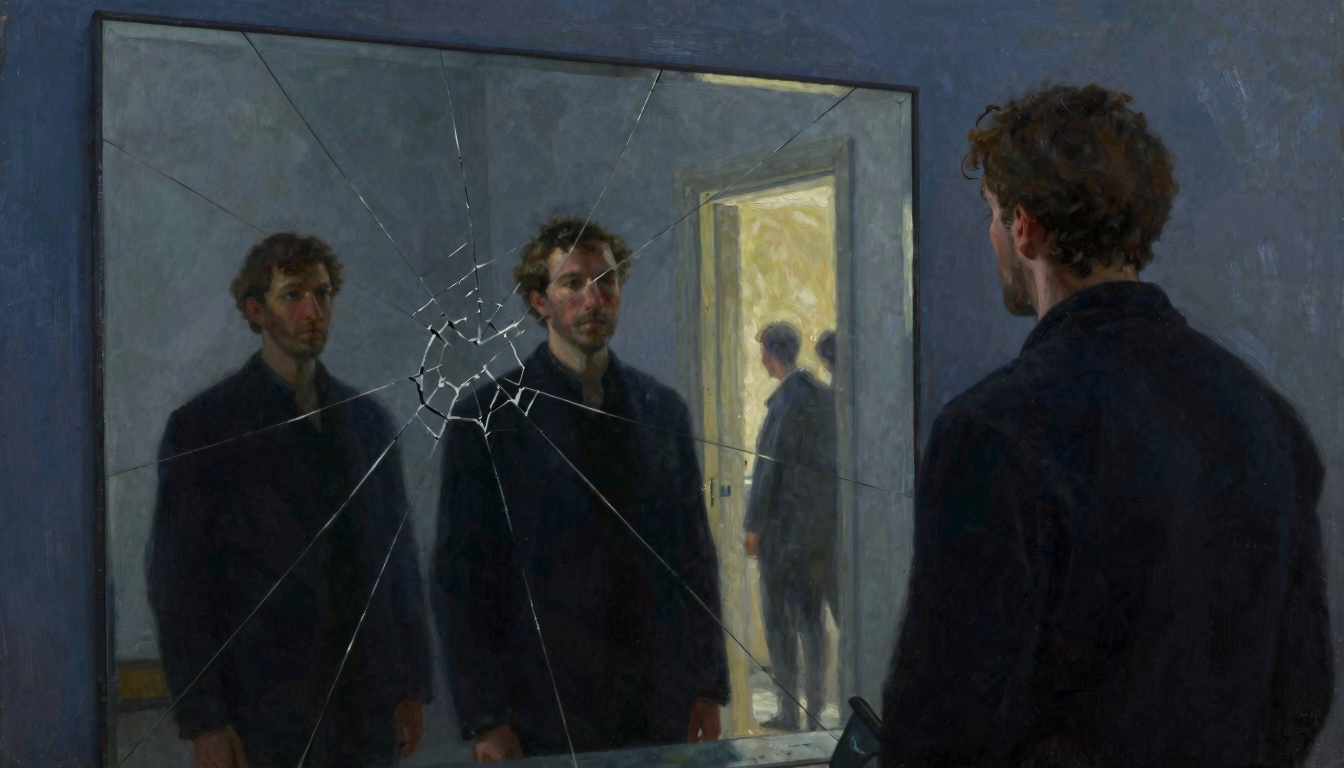
A cracked reflection may show the strain of performing an identity for acceptance or the start of leaving that role behind.
At a glance
A broken mirror can mean that the image you maintain for a group no longer feels whole. It may reflect fear of rejection, divided roles, or relief at dropping a performed identity. Ask who broke it, what the shards showed, who might see them, and how you felt.
Separates fear of social rejection from the constructive ending of a performed identity.
Identify the reflected self, the breaker, the witnesses, and one place where belonging currently requires performance.
Why belonging changes the mirror's meaning
A mirror shows a self as an image. In a belonging dream, that image can stand for the version of you presented to friends, relatives, coworkers, or a community. When the glass cracks, the dream may be showing tension between several identities: the agreeable person, the competent employee, the loyal family member, and the private self who wants something different.
This is not necessarily a sign of bad luck. The break can be painful when acceptance feels fragile, but it can also reveal that a polished social image has become too restrictive. Ask whether you feared losing the group or felt relieved that you no longer had to maintain a perfect reflection.
Details that narrow the interpretation
If you accidentally broke the mirror, the dream may reflect anxiety that an unplanned comment, refusal, or mistake will expose you. If someone else broke it, consider whether that person or group makes you question yourself. Breaking it deliberately may point toward rejecting a role that once won approval but now feels false.
The setting matters. A mirror in a workplace restroom can relate to professional fitting-in. One in a childhood home may connect to family roles learned early. A mirror at a party can reflect social comparison. If each shard showed a different face, you may be adapting so much between groups that no single version feels fully yours. If the shards showed one recognizable face, the break may be less about losing identity and more about seeing it without a smooth surface.
Case walkthrough: choosing connection without performance
Daniel had recently joined a software company where his team socialized through late-night gaming and sarcastic group chats. He wanted to belong, so he laughed at jokes he disliked and kept saying yes to online sessions even when he needed sleep. His coworkers seemed friendly, but he could not tell whether they liked him or the easygoing character he was performing.
In his dream, Daniel stood in the restroom before a team dinner. He adjusted his collar in a large mirror while voices called for him from outside. A crack appeared across his reflected mouth. When he tried to smile, the glass split into several pieces, each showing a slightly different expression. He pressed the shards together because he was afraid the group would enter and see them, but the edges cut his fingertips.
Daniel judged the dream as a belonging problem rather than a prediction. The voices represented the group waiting for him, while the divided expressions matched the different reactions he performed. The cut fingers suggested that maintaining the image was beginning to cost him.
Two days afterward, the team invited him to another gaming session before an early client call. Daniel replied that he would join for half an hour but needed to leave by ten. He also stopped pretending to enjoy one recurring joke and changed the subject without making a speech about it. The later event did not verify a supernatural warning; it gave him an ordinary chance to test the dream's concern.
The outcome was clearer than he expected. Two coworkers logged off at the same time, admitting they were also tired, and one later invited him to lunch. Daniel did not lose the group by showing a limit. In this case, the broken mirror can be read as a warning that belonging built on constant performance was injuring the very self he wanted others to accept.
How to work with the dream
First, write one literal sentence: “The mirror broke when ___, and I felt ___.” Then name the audience connected to the setting. Next, list the part of yourself you edit around that audience: preferences, accent, humor, needs, ambition, background, or boundaries.
Choose one low-risk act of honest participation. You might give a real preference when a group chooses a restaurant, decline one plan without inventing an excuse, or ask a question instead of pretending to understand. The goal is not to abandon every group or reveal everything at once. It is to learn whether connection can survive a small amount of truth.
If the dream followed an actual broken mirror, a move, renovation, or recent discussion of superstition, it may simply reuse fresh memory. Use the belonging interpretation only when current social strain and the dream's details support it.
Frequently asked questions
Is a broken mirror dream always bad luck?
No. A dream image is not proof of coming misfortune. In a belonging context, it may reflect a strained self-image or the end of a role that no longer fits.
What if someone else broke the mirror?
Consider how that person or what they represent affects your confidence and social identity. The dream may reflect feeling defined, criticized, or disrupted by outside judgment.
What does it mean if I broke the mirror deliberately?
Deliberate breaking can suggest a wish to stop performing an approved identity. Your emotion afterward helps distinguish freeing change from angry self-rejection.
Why did each shard show a different face?
Different faces may reflect adapting yourself across groups until your identity feels divided. Ask which version is chosen freely and which exists mainly to prevent rejection.
What practical step should I take?
Try one small, safe act of honesty with the relevant group and watch the response. A workable sense of belonging should allow some preference, limit, or disagreement.