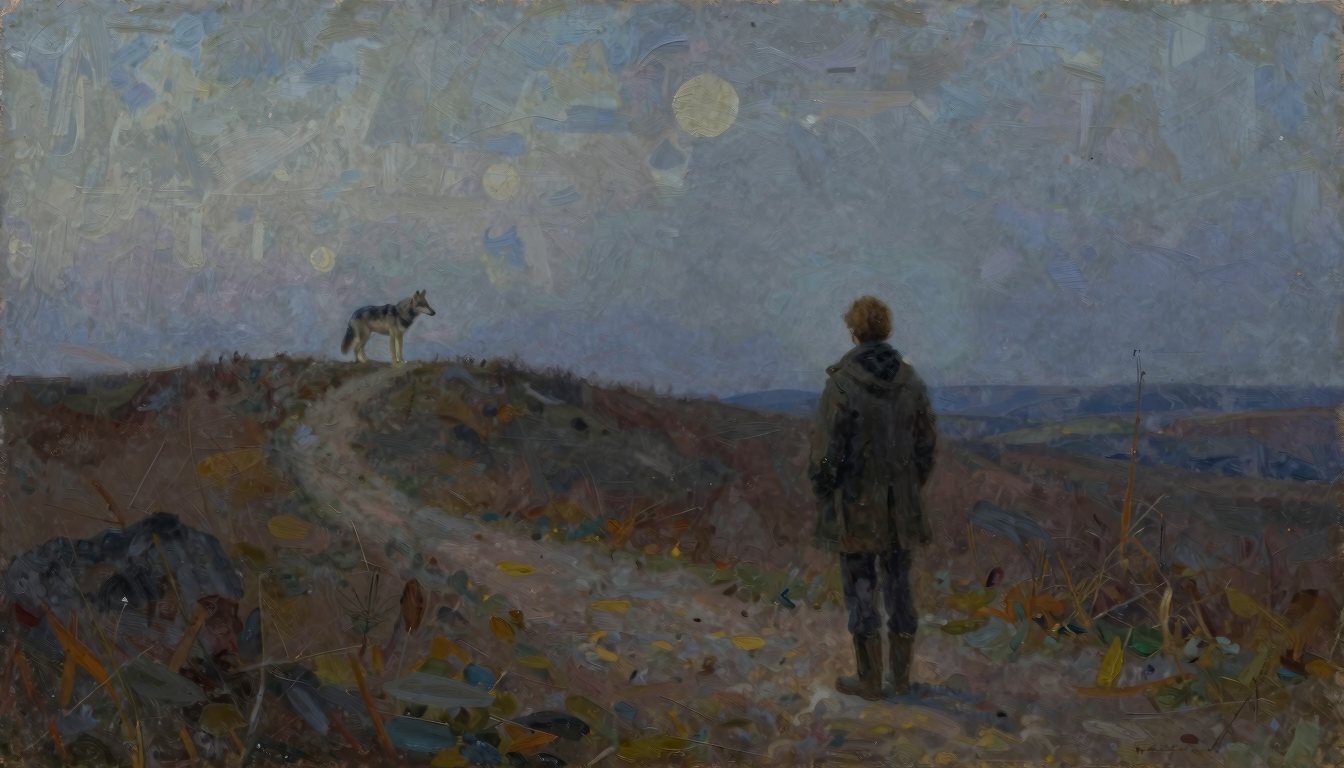
Summary
Distance turns the wolf into a signal to separate measurable risk from fear and protect your resources.
At a glance
A distant wolf can reflect guarded financial awareness: check the real risk, protect your resources, and avoid a fear-driven decision.
Uses distance, the wolf's behavior, and the dreamer's response to distinguish visible risk from projection.
Record distance, movement, fear level, money context, and one proportionate financial action.
Why distance changes the money reading
A wolf often carries an image of independence, appetite, competition, or danger. That does not create one fixed verdict. Distance supplies the decisive condition: the threat or force is visible, but it has not reached you. A wolf that watches without approaching may mirror a competitor, debt, unstable income, or a negotiation you are monitoring. A wolf that turns away may suggest that a feared problem is losing force. A wolf that begins closing the gap asks for earlier action.
Notice your response. Calm observation can point to readiness and self-trust. Panic may show that uncertainty is consuming more energy than the measurable risk deserves. If the dream includes money, a useful traditional-style conclusion is cautious protection: secure what you have, verify terms, and do not make a fear-driven gamble. The dream is not evidence of a guaranteed windfall, theft, or supernatural warning.
A modern money-and-security walkthrough
Elena was considering leaving a salaried job for freelance design. She had savings, but one large client had not signed the final contract. She dreamed of standing on a trail at dusk while a gray wolf remained on a ridge far away. It watched her but did not descend. She felt alert rather than terrified and woke before anything moved.
Her first impulse was to read the wolf as a sign that the new business would fail. A closer reading kept the distance and her calm response in view. The dream could represent a visible uncertainty that required boundaries, not a verdict against the plan. Elena delayed resigning until the contract was signed, calculated six months of essential expenses, and set a limit on unpaid revisions. The client signed two weeks later, but another lead disappeared; the preparation helped her absorb that loss without using high-interest credit. The outcome does not prove that the dream predicted a contract. It shows how the image may have functioned as a warning to prepare before exposure increased.
How to judge the symbol without overreacting
Carry one sentence through the process: “I saw a wolf far across the field while I was worried about paying my mortgage.” Ask:
- What money issue was visible but still at a distance—an upcoming bill, a competitor, a job change, or a disputed payment?
- Did the wolf watch, approach, flee, or remain indifferent?
- Did you feel prepared, threatened, curious, or trapped?
- What ordinary safeguard would reduce the measurable risk this week?
If the wolf stayed distant and you felt steady, the directional meaning may favor patience, reserve, and informed observation. If it advanced and you felt cornered, treat the dream as a prompt to shorten the distance between concern and action: review insurance, confirm a payment, renegotiate a term, or ask for professional financial advice. If it disappeared, do not assume the issue is solved; check whether you simply stopped looking.
Money guidance: opportunity, warning, and action
The favorable direction is controlled independence. You may be ready to protect your income, negotiate from a stronger position, or pursue an opportunity after checking its terms. The warning direction is isolation, predatory pressure, or letting fear turn every competitor into an enemy. Avoid impulsive investing, secret borrowing, and promises you have not read.
Make the interpretation practical: list liquid savings, fixed obligations, deadlines, and the one assumption most likely to fail. Then choose one small action—build a buffer, verify a contract, cancel an unnecessary fee, or schedule a qualified review. Dreams can organize attention; they cannot replace a budget, legal advice, or a safety plan.
When the dream may be ordinary material
A wolf image may follow a documentary, a game, a recent outdoor experience, or a conversation about crime or competition. A real financial emergency also deserves direct help rather than symbolic decoding. Use normal banking, legal, and personal-safety resources when a concrete problem exists.
Frequently asked questions
Is a distant wolf a bad sign for money?
Not automatically. Distance may indicate a visible but not immediate risk. The wolf’s behavior and your response help decide whether the useful direction is preparation, patience, or urgent boundary-setting.
What if the wolf was watching me?
It can reflect feeling observed by a competitor, creditor, employer, or uncertain market. Verify what is actually known before treating suspicion as fact, and strengthen one practical safeguard.
Does a calm feeling make the dream positive?
Calmness can support a reading of readiness and controlled independence, but it is not a promise of profit. Use the calm to make a measured plan rather than a reckless bet.
What if the wolf came closer?
A closing distance may signal that a financial concern needs a nearer deadline. Review terms, cash flow, insurance, or support now instead of waiting for anxiety to choose for you.
Can this dream predict theft or financial loss?
No. It cannot establish a future event. Treat it as reflective symbolism and rely on ordinary evidence, safeguards, and qualified advice for real decisions.