Summary
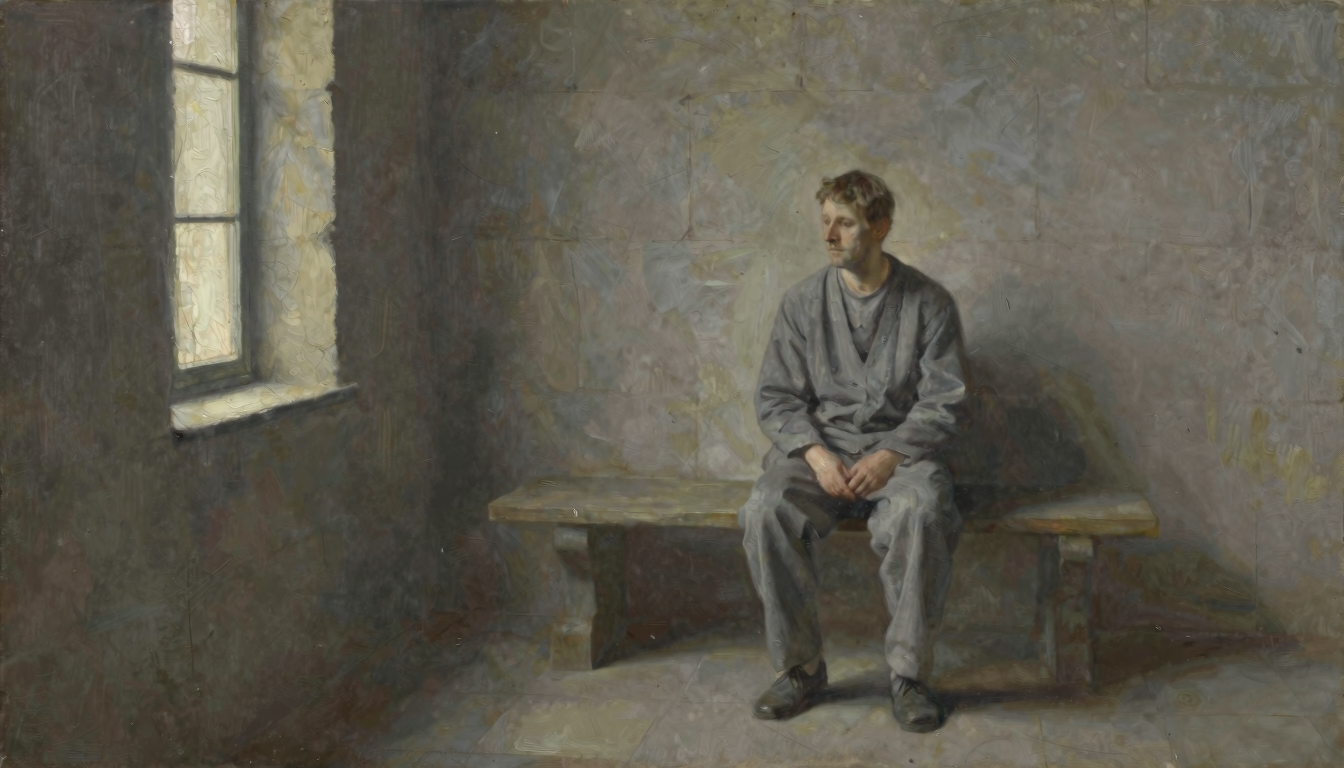
Dreaming about a prisoner may symbolize restricted choice, an obligation that feels difficult to leave, or concern for someone whose voice has little room. Being the prisoner places the restriction with you; seeing one may emphasize distance, empathy, or uncertainty about how to help. A prisoner of war adds a conflict larger than the individual. These are conditional symbolic readings, not predictions of arrest, proof of guilt, or evidence that someone intends harm. Notice what limits movement, who controls the terms, and whether any choice remains available.
At a glance
Dreaming about a prisoner may symbolize restricted choice, an obligation that feels difficult to leave, or concern for someone whose voice has little room. Being the prisoner places the restriction with you; seeing one may emphasize distance, empathy, or uncertainty about how to help. A prisoner of war adds a conflict larger than the individual. These are conditional symbolic readings, not predictions of arrest, proof of guilt, or evidence that someone intends harm. Notice what limits movement, who controls the terms, and whether any choice remains available.
Separates confinement from guilt, release from escape, and observer help from taking over another voice.
Record position and restriction; check actual terms; clarify endpoint or one available choice.
Restriction and guilt are different meanings
A prisoner is a person whose freedom is limited. The image may bring attention to constraint before it says anything about responsibility. A locked room can symbolize a situation that feels closed, but confinement alone does not establish wrongdoing.
If the dream gives a clear reason for imprisonment, consider how that reason affects the scene. An acknowledged mistake differs from an accusation you cannot answer. A punishment with an ending differs from a restriction whose terms are never explained.
You may reflect on regret when it is present, but do not supply guilt merely because the figure is a prisoner. The dream can concern lack of choice, waiting, or an unequal relationship with authority.
Being the prisoner makes the limit personal
Dreaming about being a prisoner may symbolize feeling unable to change an arrangement. The image can concern a commitment, a routine, a decision postponed, or a rule whose purpose has become uncertain.
Notice what you try to do. Asking when you can leave may emphasize the need for clear terms. Trying to communicate may emphasize a wish to be heard. Remaining still may symbolize waiting, exhaustion, or acceptance within the dream; it does not settle how you should act while awake.
If the door is open but you do not leave, the scene may raise a question about a restriction maintained by expectation rather than a visible barrier. Check whether that comparison fits an actual situation before treating it as an explanation.
Seeing prisoners changes the position of attention
Seeing prisoners may symbolize witnessing limited agency from outside. You may feel sympathy, distance, concern, or uncertainty about whether involvement is possible. Your position matters as much as the confinement itself.
A prisoner who asks for one specific thing differs from one whose needs you cannot determine. The first may symbolize a clear request; the second may emphasize the limits of what you know. Helping effectively can require listening rather than deciding the whole situation for another person.
Several prisoners may bring attention to shared conditions rather than an individual problem. The dream does not identify a real group's experience or authorize assumptions about people based on appearance.
Contact can symbolize recognition or a boundary
If a prisoner speaks to you or touches you, the scene may bring the distance between observer and participant into focus. A welcome touch may symbolize recognition or reassurance. An unwanted touch may emphasize a boundary you want respected.
For a dream about a Black prisoner touching you, the person's race does not determine danger, guilt, or symbolic character. Focus on the actual gesture, consent, familiarity, and your response. Personal associations can be examined without turning appearance into an omen.
A disturbing scene does not prove anything about an actual person or group. Distinguish what happened in the dream from a conclusion you might be tempted to add afterward.
A prisoner of war belongs to a larger conflict
A prisoner of war may symbolize being caught in a conflict whose terms are decided elsewhere. The image can emphasize distance from home, dependence on others, or the feeling that a private life has been overtaken by a larger struggle.
Being the prisoner of war may place attention on limited agency within that struggle. Seeing one may emphasize concern for someone affected by it. Neither scene predicts war, captivity, or a future event.
If the dream includes rival groups, ask whether you are being required to take a side or whether your main concern is finding room for ordinary needs. The symbolic conflict may resonate with an argument or divided responsibility, but the comparison should remain proportionate to waking facts.
Release and escape are not the same action
Being released may symbolize a change in terms, an obligation reaching its endpoint, or permission to resume movement. Escaping may emphasize initiative, urgency, or an unwillingness to accept the existing arrangement.
A peaceful release differs from one followed by another barrier. An escape with no destination may suggest movement away from a restriction before a next step is clear. The emotional relief can be meaningful without guaranteeing a waking resolution.
If you remain imprisoned, the scene may emphasize an unresolved limit. It need not become a verdict that change is impossible. Notice whether information, help, a conversation, or a defined ending is missing.
An Islamic reflection should remain personal and careful
If you seek an Islamic meaning for a prisoner dream, the image may prompt personal reflection on patience, responsibility, justice, and the wish for relief. These are reflective themes rather than a fixed religious interpretation asserted for this particular dream.
Confinement does not prove sin, punishment from God, or an approaching trial. Release does not establish a guaranteed blessing. The action and your actual circumstances matter more than a universal favorable or unfavorable label.
You may consider prayer or discussion with a trusted person if that fits your practice. The dream does not require a ritual or authorize a ruling about someone else's character.
Four ordinary settings can clarify the available choice
At work, confinement may symbolize a role whose scope keeps expanding. Check the actual duties, deadlines, and who can change them. Ask for one explicit priority or endpoint rather than assuming every request is permanent.
In a relationship, the prisoner may symbolize a commitment experienced as a loss of voice. Check whether a specific preference has been expressed and what response it received. State one concrete need in a conversation without treating the dream as proof of another person's motives.
In family life, being caught between groups may resemble a disagreement where you are expected to mediate. Check which responsibility is truly yours. Offer one bounded contribution and let the people involved speak for themselves.
With money and personal time, restriction may symbolize obligations that leave little flexibility. Check the actual payments or recurring commitments. Review one adjustable expense or time commitment so the next step rests on facts rather than the feeling of total confinement.
A defined endpoint can restore some agency
Consider Leah, who dreams of waiting in a plain room while a guard says that another task must be finished before she can leave. Each completed task is replaced by a new one. She asks for the list, but no one will show it to her.
Leah has agreed to help organize a community event and has gradually become responsible for every unfinished detail. She reads the changing tasks as a possible image of an obligation without a clear endpoint. She does not infer that the dream predicts imprisonment or proves that the organizers intend to exploit her.
She lists the tasks she has already accepted, confirms which two she can finish, and asks the organizer to assign the remaining work. The organizer reallocates registration and cleanup. Leah completes the venue booking and volunteer schedule, then leaves the next meeting at the agreed time. The ordinary result is a clearer commitment and room for her own evening; agency returns through stated terms rather than a dramatic escape.
Read the limit before naming the outcome
Record whether you are confined, observing, helping, being released, or trying to leave. Then identify what limits movement and whether its terms are clear. Responsibility, empathy, and restricted choice are different parts of the image.
Compare one detail with an actual arrangement. Check what can change and what information is missing before deciding that everything is closed. If the connection remains unclear, the dream can remain uncertain.
When a comparison fits, clarify an endpoint, ask what help is wanted, or state one need. A prisoner dream may illuminate constrained agency while leaving waking choices open to careful judgment.
Frequently asked questions
Prisoner of war dream meaning?
A prisoner of war may symbolize being caught in a conflict larger than your own choices, with distance or dependence emphasized. It does not predict war or captivity.
What does it mean to dream of prisoners?
Dreaming of prisoners may symbolize witnessing restricted agency or concern about limited choices. Your position and what the prisoners request help distinguish empathy from responsibility.
Prisoner dream islam?
An Islamic reflection may consider patience, responsibility, justice or relief. No fixed ruling is asserted here; confinement does not establish divine punishment or release a guaranteed blessing.
Prisoner dreams?
Prisoner dreams may concern constraints, unclear terms or waiting. Confinement alone does not prove guilt or predict arrest.
Dream about being a prisoner of war?
Being a prisoner of war may symbolize limited agency within a larger conflict. Check whether the comparison fits an actual divided responsibility; the dream is not a forecast.
Dream about being a prisoner?
Being a prisoner may symbolize an arrangement that feels difficult to change. Notice the terms, endpoint and remaining choices before concluding that every option is closed.
Dream about a black prisoner touching me?
A dream about a Black prisoner touching you should be read through the gesture, consent, familiarity and your response. Race determines neither danger nor guilt; the scene proves nothing about a real person or group.
Dream about seeing prisoners?
Seeing prisoners may symbolize concern from outside a restriction. Listen to the actual request within the scene; witnessing a need differs from knowing how to resolve it.