Summary
Record the horse’s actual movement, your feelings, and personal associations on separate lines. Distinguish running free from running away, preserve one horse versus several, and do not treat the image as a prediction.
At a glance
Record the horse’s actual movement, your feelings, and personal associations on separate lines. Distinguish running free from running away, preserve one horse versus several, and do not treat the image as a prediction.
Preserves free versus away and singular versus plural without assigning unsupported outcomes.
Record movement; separate feeling and association; preserve gaps; check waking facts before acting.
Start with what you actually remember
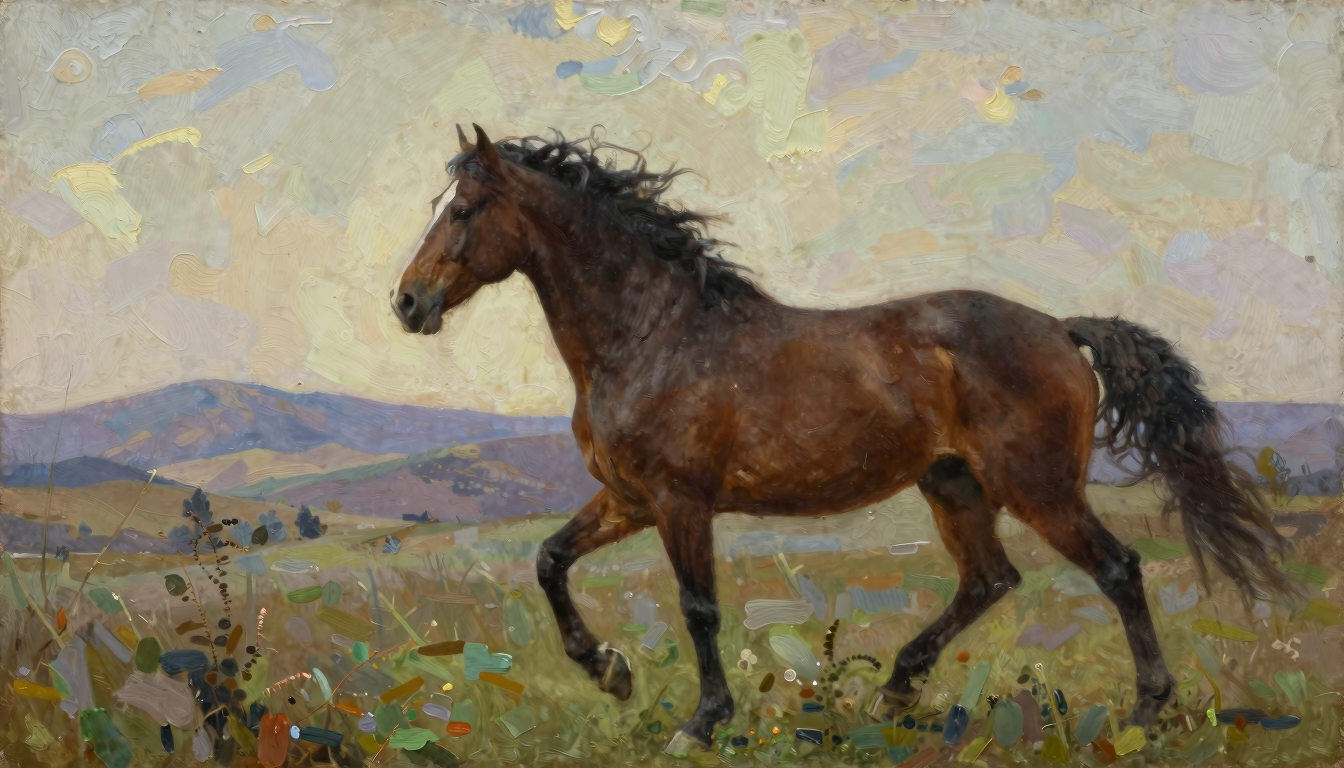
Write a short account before trying to explain it. Begin with the horse's action: it was running. Add only details you remember, including whether it moved away from you and whether you watched it or took part in the scene. Leave uncertain details open.
Then ask what made you describe the horse as free. Did you remember a specific detail, or did “free” name the feeling the movement gave you? Both belong in a journal, but they are different kinds of information. The action describes the dream; the word you chose may describe your response to it.
Keep three separate lines:
- Remembered scene: What did I see the horse do?
- Feeling: What did I feel while watching, and what do I feel now?
- Association: What does this scene bring to mind for me?
You do not have to find a connection. “Nothing comes to mind yet” is a complete answer. Avoid adding a destination, another person, or an ending just to make the entry feel finished.
Preserve the difference between free and away
A dream about a horse running away raises a different descriptive question from a dream about a horse running free. Away from whom or what? If that relationship was visible, record it. If you only saw motion, do not add an escape or separation that you cannot remember.
The distinction helps you keep the entry accurate; it does not supply a prediction. A horse moving away is not evidence that a person will leave. Calling its movement free does not establish that a restriction in your life is about to end.
The same care applies to seeing several running horses. Keep the group in the description instead of reducing it to one animal. If you remember several but cannot count them, write “several.” Do not assign meanings to a number you did not actually see or remember.
Work through the dream sentence you already have
Start with the words “a horse running free.” The decisive detail is the remembered action, running. “Free” needs a second look: retain it as your description, then note whether it refers to something visible or to your impression of the scene.
Next, check what the sentence does not tell you. It does not say the horse ran away from you. It does not give a destination, your reaction, or an outcome. Add those only if you remember them. Otherwise, the short sentence is your complete scene record.
Now write your own response beneath it. If the word freedom comes to mind, ask what you personally mean by it. Time to yourself? Room to choose? Leave the answer blank if neither fits. These questions explore an association; they do not reveal a hidden instruction from the horse.
Finish by recording the limit of your conclusion: you remember the movement, and you have either identified a personal association or left its meaning unresolved. That is a useful entry without a verdict about good luck, danger, or what happens next.
Bring an association back to ordinary life
If your entry brings up a current concern, name the concern directly. Instead of concluding that the horse means you must get away, ask what you want to change and what facts support that wish. Keep the reason for a decision separate from the dream image.
For a concern about having little choice, write down which part you can actually influence. Then identify one question to clarify or one small, reversible action to consider. An association with freedom does not require a dramatic change; it can remain a question about how you use your time or express a preference.
If no real concern connects to the scene, stop at the record. You do not need to manufacture an explanation. A later thought can be added as a new note without rewriting what you originally remembered.
Leave interpretation open without losing the details
A personal reading and a traditional interpretation require different support. Your journal can document what a horse means to you. It cannot establish a religious teaching or a universal symbolic result from the image alone. There is no supported traditional verdict to attach to this exact scene here.
When you reread the entry, distinguish the original memory from later associations. This keeps “I saw a horse running” from gradually becoming “the dream told me to do something.” The first records an experience; the second makes a claim that the scene does not establish.
Frequently asked questions
What does it mean to dream of a horse running free?
The image alone does not establish a fixed meaning or forecast. Record what the horse did and how you felt before choosing an interpretation. If you associate the scene with freedom, keep that as your personal association, not a promise of a particular outcome.
Is a horse running away the same as a horse running free?
No. Running away describes movement away from someone or something; running free describes how you understood the horse's movement. Write down what you actually saw. Neither description proves that someone will leave or that you will lose something.
How should I record a dream about several running horses?
Keep the plural in your entry. Record only the number you remember, and note whether you could follow individual horses or only the group. You do not need to assign a separate meaning to each horse or invent an exact count.
What if I only remember seeing a running horse?
That is enough for a short entry. Write that you saw a running horse and leave its destination, motive, and your role unspecified if you cannot remember them. A clear gap is more useful than an added detail.
Should I make a decision based on this dream?
Use the entry to identify a question you want to examine, then assess that question with waking facts. A horse running free does not tell you to leave a commitment, accept an opportunity, or expect a loss. Choose any next step for reasons you can explain without relying on the dream.