Summary
Food you cannot swallow differs from a similar dream because the difficulty occurs after something has reached you. Not receiving food concerns access; seeing food without eating may concern choice, timing, or participation. Being unable to swallow can symbolize difficulty taking an offer, expectation, or experience further into your life. It may suggest a mismatch between what is available and what you can accept. This is a symbolic possibility, not a diagnosis or proof of hidden rejection. The exact stage of the meal and your response help distinguish the readings.
At a glance
Food you cannot swallow differs from a similar dream because the difficulty occurs after something has reached you. Not receiving food concerns access; seeing food without eating may concern choice, timing, or participation. Being unable to swallow can symbolize difficulty taking an offer, expectation, or experience further into your life. It may suggest a mismatch between what is available and what you can accept. This is a symbolic possibility, not a diagnosis or proof of hidden rejection. The exact stage of the meal and your response help distinguish the readings.
Separates unavailable food, untouched food, inability and chosen refusal at different stages.
Record meal stage and desire; identify mismatch; clarify or adjust one term.
The point of difficulty changes the symbolic question
Food can symbolize nourishment, support, pleasure, or something offered for you to receive. A dream meal has several stages: finding food, reaching it, choosing it, tasting it, and taking it in. A difficulty at one stage is not identical to a difficulty at another.
If food never arrives, the image may concern access to what you need. If it is available but you do not eat, the image may concern readiness or choice. If it enters your mouth but will not go further, the emphasis may be on accepting something already close to you. The symbolic question is less about food in general than about where the exchange stops.
You do not need to make every blocked stage mean refusal. Delay, uncertainty, an unsuitable offer, and a limit in what you can carry are different possibilities. Notice whether you want the food and whether the scene gives you another option.
Being unable to swallow is different from refusing
Trying to swallow and finding that you cannot may symbolize a gap between willingness and acceptance. An opportunity may look useful while its demands do not yet fit your life. An explanation may be offered while you remain unsure whether it makes sense. The image can hold that gap without deciding that either you or the offer is wrong.
Refusing to swallow adds a clearer act of choice. It may symbolize a boundary around what you will accept. Spitting something out adds an action of returning or clearing it. These are different sequences from wanting to eat and encountering a block.
If someone pressures you to continue, the meal may symbolize expectation overriding your own response. If they offer a different dish, it may symbolize room to negotiate. The people’s actual actions matter; do not turn every shared meal into a story of coercion when the scene contains none.
Food without eating can leave the outcome open
Seeing food but not eating may symbolize an available possibility that you have not entered. You might be waiting for someone, preparing a meal for others, or simply looking. The absence of eating does not establish inability.
If the food is served to someone else, the image may emphasize witnessing rather than receiving. If it remains covered, it may symbolize an offer whose details are still unknown. If you leave it untouched with relief, it may symbolize a chosen boundary. A plate left untouched with disappointment may instead suggest a missed opportunity or unmet wish.
Dreams can include food and eating imagery; its presence alone does not establish anything unusual or significant about the dreamer. A single scene cannot tell you why the imagery occurred. Symbolic interpretation is optional, and an ordinary meal image may have no clear counterpart in waking life.
Not getting food concerns the route to support
Waiting for food that never comes may symbolize expecting support that remains unavailable. A closed kitchen, an empty serving bowl, and a meal offered only to others create different forms of absence. Read the obstacle actually present instead of assuming deliberate exclusion.
If you are hungry in the dream, the image may emphasize a felt need. If you are not hungry, the missing meal may concern participation or a social expectation more than nourishment. Neither detail proves deprivation in waking life.
Food that falls from a plate adds interruption after access has already been granted. It may symbolize losing part of what you hoped to receive or finding that an arrangement is difficult to hold together. Recovering the food, receiving another serving, or walking away gives each scene a different direction. Falling food does not predict waste, scarcity, or financial loss.
Texture and the setting refine the meaning
Food that is too dry, too large, or unfamiliar may symbolize something whose form does not suit you. A smaller portion or a drink offered alongside it can suggest an adjustment that makes receiving easier. The dream does not require you to force acceptance of everything placed before you.
A familiar dish you cannot swallow can carry the meaning of a known arrangement that no longer feels workable. An unfamiliar dish can emphasize uncertainty about something new. If you do not know what you are eating, the symbolic concern may be incomplete information rather than rejection.
A private meal places the emphasis close to your own response. A formal dinner adds an audience and expectations around manners or participation. A meal with family may bring familiar roles into the exchange. None of these settings identifies another person’s hidden intentions.
Keep a bodily image separate from a bodily conclusion
Being unable to eat in a dream can feel vivid, but the image does not establish a physical swallowing problem, illness, or a reason for treatment. A waking physical experience is a separate matter from a dream symbol. Do not use the dream to determine its cause.
Similarly, an image of acceptance should not become a rule that you must accept every offer to grow. A spiritual reading might consider what feels nourishing, what feels imposed, and what you want to receive more carefully. It does not establish a compulsory message or a guaranteed result.
The hopeful part of the symbolism may be the possibility of changing the form of an exchange. Receiving less, asking for clarity, or declining an unsuitable offer can all preserve agency. The dream’s block need not become a verdict that you are incapable of receiving good things.
Four ordinary exchanges to examine
At work, food you cannot swallow may symbolize a role you have agreed to take but cannot yet make workable. The title may be appealing while the hours or responsibilities remain unclear. Check the actual terms and ask for one adjustment or explanation before deciding whether the whole offer is unsuitable.
In relationships, a meal can symbolize care or an explanation offered by another person. If you want to accept it but cannot, consider whether something specific remains unresolved. Name the missing piece in a conversation rather than treating the dream as proof that the person is insincere.
At home, an overflowing plate may symbolize receiving more duty or help than fits your present routine. Support can be well intended while its form is inconvenient. Agree on a smaller, more useful arrangement, such as one task handled at a particular time.
With money, a tempting meal may symbolize an offer that looks nourishing before its costs are understood. Inability to swallow can be used as a metaphor for hesitation, but it is not evidence that the offer is fraudulent. Review known obligations and costs, then make the decision from those facts.
An offer whose shape needed changing
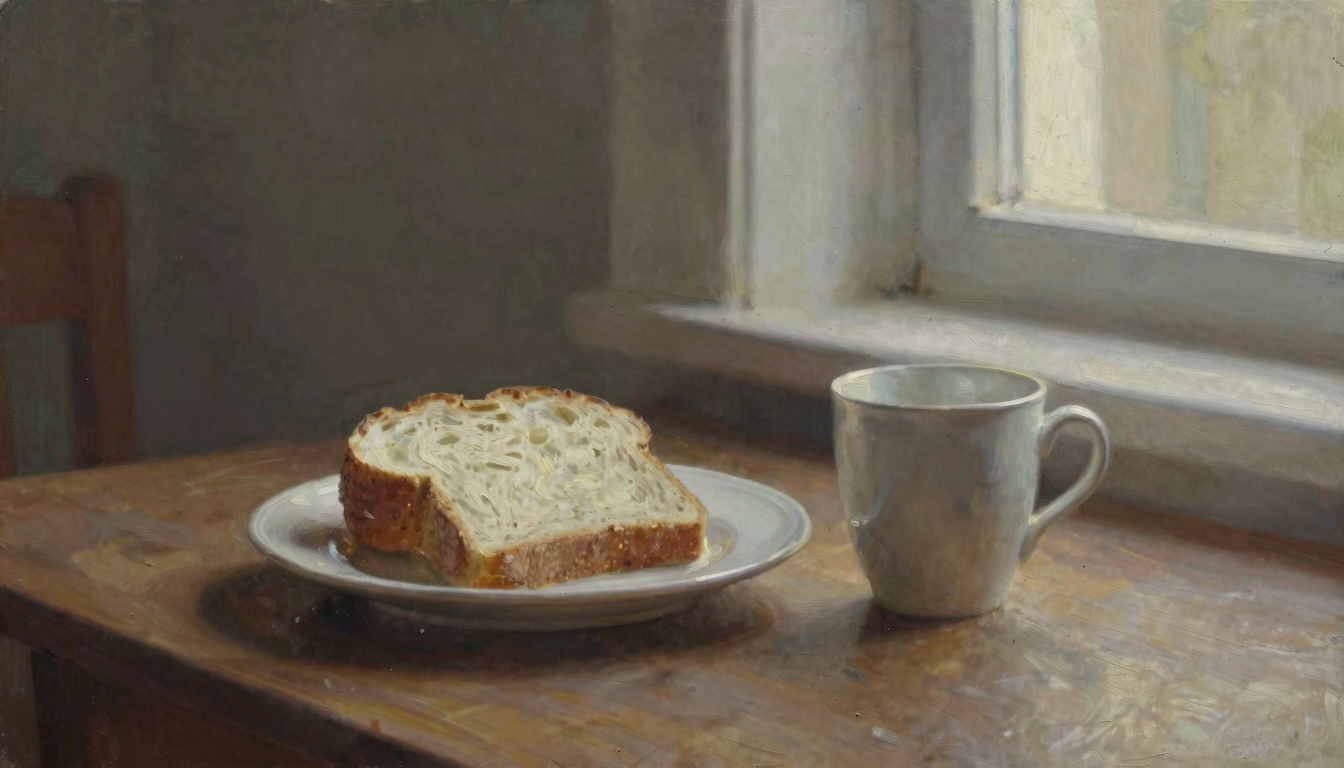
Consider Joel, who has accepted a short-term project while caring for his father. He dreams of sitting at a meal with a large piece of bread in his mouth. He wants to swallow it but cannot, and feels embarrassed when the host offers more.
Joel notices that he has agreed to a useful project without clarifying the evening meetings. He reads the large portion as a symbol of an offer whose shape exceeds his available time, rather than as proof that he cannot do the work. He asks the project lead to move two meetings earlier and confirms which tasks can be completed independently.
The lead agrees to one earlier meeting and replaces the other with a written update. Joel begins the work within a clearer schedule. The result is an adjusted exchange, not an effortless solution to every demand. The dream helps him notice a mismatch; the conversation establishes what can actually change.
Locate the block before naming the meaning
Record whether food was absent, out of reach, untouched, tasted, or difficult to swallow. Then note whether you wanted it, who offered it, and what alternatives were available. Those details keep a general food image from swallowing every possible meaning.
Compare the scene with one known offer or expectation. Ask whether the issue is access, information, form, timing, or a boundary. Choose one proportionate action: ask, adjust, wait, or decline. If there is no clear association, leave the dream open.
Food you cannot swallow may symbolize something available that is not yet possible to take in as offered. Its difference from a similar dream lies in the stage of receiving and the choices around it, rather than a fixed forecast about nourishment or loss.
Frequently asked questions
Can you dream about food?
Yes, dreams can contain food, meals, and eating imagery. That alone does not establish a special meaning or a cause.
Is it normal to dream about food?
Food can appear as ordinary dream imagery. One dream alone does not establish anything unusual about you, and you do not have to assign it a symbolic meaning.
What does seeing food in a dream mean?
It may symbolize support, pleasure, nourishment, or an available offer. The setting and whether you receive or eat it shape the reading.
What does not getting food in a dream mean?
It may concern access to a need or participation in an exchange. A missing meal does not prove deliberate exclusion or future scarcity.
What does dreaming about food but not eating mean?
It can leave readiness, timing, or choice open. Untouched food is not automatically food you are unable to eat.
What does not being able to eat food mean in a dream?
It may symbolize an obstacle in receiving or accepting something. Identify the stage of the obstacle rather than treating all inability as refusal.
Why can’t you eat food in a dream?
There is no single established cause here. As symbolism, the scene may picture a block in access or acceptance; it does not diagnose a physical condition.
What does food falling mean in a dream?
Falling food may symbolize interruption after access or difficulty keeping an arrangement intact. It does not predict waste or financial loss.
How does not swallowing differ from not receiving food?
Not receiving concerns access before the food reaches you. Not swallowing places the block after it is already close, and may concern the form or terms of acceptance.