Summary
An empty office differs from a similar dream because it places absence inside a setting of roles, work, and shared responsibility. An empty house may emphasize belonging or privacy; an empty classroom may emphasize learning or evaluation. In an office, unused desks and absent colleagues may symbolize a role without its usual support, a pause in shared activity, or freedom from demands. The meaning changes depending on whether only the people are missing, the furniture has been removed, or the room has become inaccessible. None of these details predicts dismissal, business failure, or abandonment.
At a glance
An empty office differs from a similar dream because it places absence inside a setting of roles, work, and shared responsibility. An empty house may emphasize belonging or privacy; an empty classroom may emphasize learning or evaluation. In an office, unused desks and absent colleagues may symbolize a role without its usual support, a pause in shared activity, or freedom from demands. The meaning changes depending on whether only the people are missing, the furniture has been removed, or the room has become inaccessible. None of these details predicts dismissal, business failure, or abandonment.
Separates absent people, removed furniture, locked access and different functions of office, house and classroom.
Identify room function, absence and movement; compare known situation; choose one clarification or rest action.
The room still holds a role
An office is organized around purpose. Desks, chairs, doors, and shared surfaces give people places to act and responsibilities to carry. When those people disappear in a dream, the structure can remain while the exchange that normally fills it is absent. Symbolically, the question may concern what your role means when nobody is there to recognize or support it.
A tidy office after hours can carry the meaning of rest. A room that should be busy but stands silent may instead suggest separation or uncertainty about participation. The visual emptiness is similar, yet its timing changes the reading. Ask whether the dream presents a natural pause or an unexpected absence before deciding that the silence is ominous.
If you feel relief, the office may symbolize release from observation, competition, or interruption. If you feel alarm, it may symbolize a role that seems to have lost its human context. If you feel curiosity, the vacant space may suggest room to decide how you want to occupy that role. The emotion gives the absence its direction.
Missing people and missing furniture are different
An office with desks still in place but no colleagues can symbolize interrupted contact. The shared arrangement exists, but the people who make it meaningful are unavailable. An unattended meeting table may suggest a conversation that has not happened rather than an organization that has ceased to exist.
An office stripped of desks may emphasize the removal of a role or its familiar supports. The image can represent transition: an old arrangement no longer gives you a place to sit, work, or belong. It does not establish that your job will end. Consider whether some known change has already altered how you participate.
A single empty desk inside an occupied office is more specific than an entirely empty room. It may symbolize one missing person, an unfilled responsibility, or your uncertainty about your own place. If the desk is yours, notice whether you are free to return to it. Access and absence are separate details, and they should not be merged into one general meaning of loss.
An empty office and an empty house
An empty house often invites a reading about personal belonging, shelter, or the private life held within its rooms. An empty office places the absence within a more public arrangement of function and responsibility. The distinction is less about the building’s appearance than about what the dream says the place is for.
A house filled with office desks may bring the two meanings together. Work may be occupying a space that should feel private, or a household may feel organized around duties rather than company. An office that feels like home can suggest that belonging has become closely tied to usefulness. These blended settings deserve attention to both associations.
If you cannot identify the room, avoid forcing a category onto it. Note what you are expected to do there. A desk where you must finish a task gives a different symbolic emphasis from a room where you expect someone to welcome you. Function can clarify the image when the architecture cannot.
An empty classroom and a deserted workplace
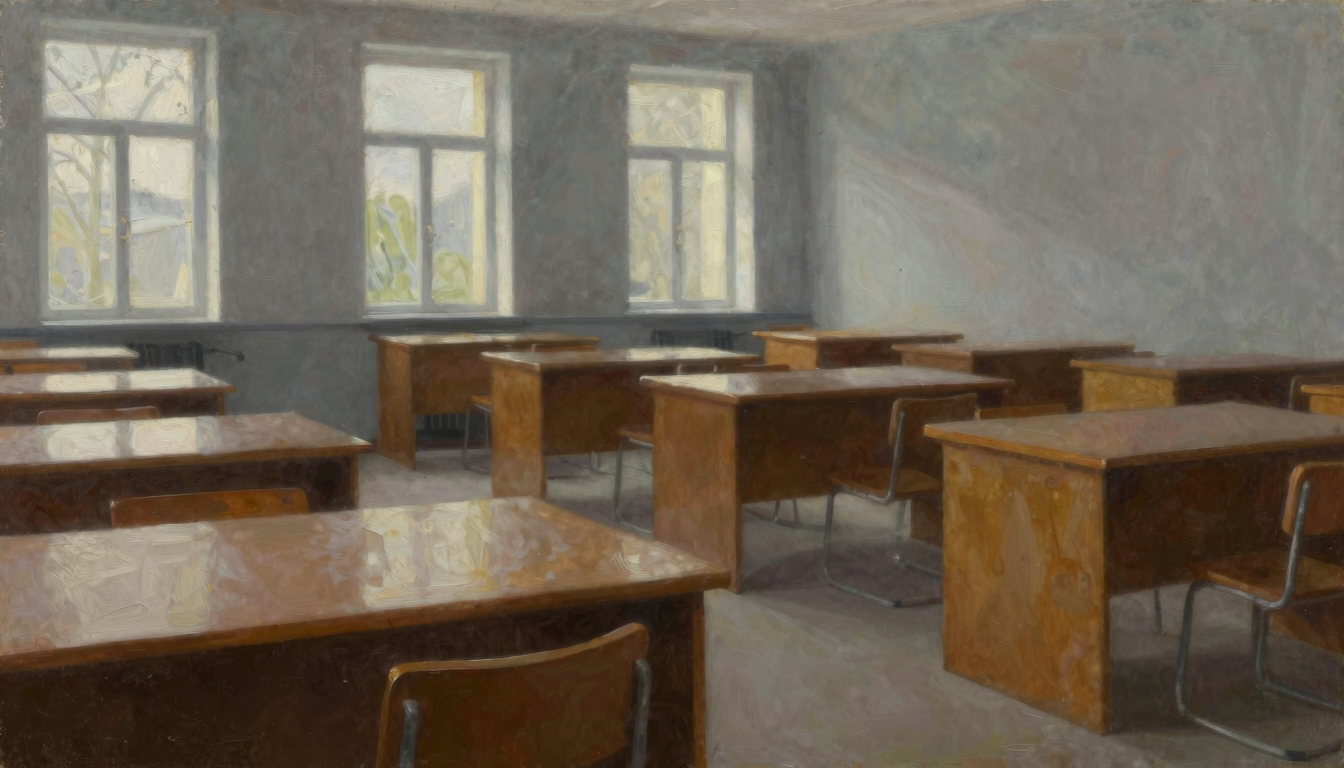
An empty classroom may emphasize learning, readiness, or a missing teacher and peers. Its silence can symbolize a lesson you must work through alone or a pause in evaluation. An office usually emphasizes applying a role and coordinating with others rather than preparing to earn a place.
A deserted workplace can include a factory, shop, or workshop rather than an office. The tools and activity matter. Idle machinery may symbolize a process that has stopped; a vacant office may symbolize a breakdown in communication, decisions, or shared organization. Neither interpretation supplies information about the actual future of a workplace.
If the dream includes signs of damage, the meaning differs again. A clean vacant room emphasizes absence; a damaged room adds disruption to the structure itself. Do not add destruction to a dream that only showed quiet desks. The distinction keeps the interpretation proportionate to what you saw.
A closed door changes the question
Entering an empty office means you still have access to the setting. Standing outside a locked office places the emphasis on exclusion, permission, or a boundary. Seeing no one through a window may symbolize uncertainty about contact without showing whether you belong inside.
If you have a key, the image may suggest that responsibility or access remains with you even when others are absent. If your key does not work, it may symbolize an old method that no longer opens the same role. The practical question is what has actually changed, not whether the dream confirms rejection.
An office that you can leave freely may offer a hopeful image of choosing when to participate. An office you cannot leave can instead symbolize obligation without company. The room’s emptiness matters, but the movement available to you can matter just as much.
Four places the symbolism can meet daily life
At work, an empty office may give shape to a task whose support has become difficult to find. Remote schedules, changed responsibilities, or an unanswered request can leave a familiar role feeling strangely unoccupied. Check who now owns the decision you need, and ask for a specific response rather than treating silence as proof that you have been excluded.
In relationships, the office can symbolize contact organized around tasks rather than warmth. Everyone may fulfill a role while a shared conversation remains absent. If this fits a known situation, arrange time for a conversation that does not revolve around solving a practical problem. The dream cannot tell you that another person intends to withdraw.
At home, the image may suggest a household running like an unattended workplace. Plans, care, and chores still need doing, but companionship feels thin. Notice whether the concern is too much duty or too little shared time; redistribute one task or protect one ordinary moment together accordingly.
With money, the vacant office can symbolize uncertainty about the structure supporting income or a shared commitment. It may reflect how a financial decision feels, without predicting a loss. Look at the known terms of an agreement, the actual due dates, and the person who can clarify them. Let facts supply what the symbolic room leaves open.
A familiar room with nobody to ask
Consider Priya, who has recently moved into a team that works across different schedules. She dreams of entering her familiar office, finding every chair empty, and carrying a folder from desk to desk. The lights are on, but nobody is available to answer her question.
Priya notices that she has been sending requests to a group inbox without knowing who approves her work. She reads the empty chairs as a symbol of missing contact within an intact structure, rather than as a prediction that her position will disappear. She asks her manager to name one contact for each kind of approval and agrees on a weekly time to review outstanding questions.
Her next request reaches a named colleague, who answers it before the deadline. The office has not become more crowded, but Priya has a clearer route through its responsibilities. The dream’s silence helps her recognize a difficulty; the changed arrangement resolves one concrete part of it.
Compare what is absent and what remains available
Start with three details: what kind of room it was, what was missing, and what you could still do. An intact office without people, a cleared room without furniture, and a locked room outside your reach express different kinds of absence.
Then compare the feeling with one known circumstance. Relief may fit a need for quiet; unease may fit a missing conversation; curiosity may fit a changing role. If no circumstance fits, you do not need to assign a hidden event to the room.
Choose one proportionate action that follows from the waking situation, such as clarifying a responsibility, contacting someone, or allowing a period of rest. An empty office can symbolize a pause, a gap in connection, or a role in transition. Its difference from a similar dream lies in the purpose of the setting and the choices still available within it.
Frequently asked questions
What does dreaming of an empty office mean?
It may symbolize a role without its usual contact or support, a pause in shared activity, or relief from demands. The timing, feeling, and ability to enter or leave shape the reading.
Is an empty office dream different from an empty house dream?
An office emphasizes roles, shared tasks, and public participation. A house more often invites reflection on belonging, shelter, and private life. A blended setting can carry both associations.
What does an empty office with furniture still in place suggest?
The structure remains while its usual participants are absent. Symbolically, this may concern interrupted communication or a missing exchange rather than the end of the role itself.
What does an office cleared of furniture suggest?
It may symbolize transition or the removal of familiar supports. It differs from an office whose desks remain ready for use, and it does not predict job loss.
Does a dream of an empty office predict dismissal?
No. Dream imagery does not establish employment decisions or future business events. Check actual communications and conditions before drawing conclusions about your work.
Can an empty office dream have a positive meaning?
Yes. A peaceful vacant office may symbolize rest, freedom from observation, or space to choose how you participate. Relief differs from fear, even when the room looks the same.
How does an empty office differ from an empty classroom?
A classroom may emphasize learning or evaluation; an office may emphasize carrying out a role and coordinating responsibilities. What you are expected to do in the room is a useful distinction.