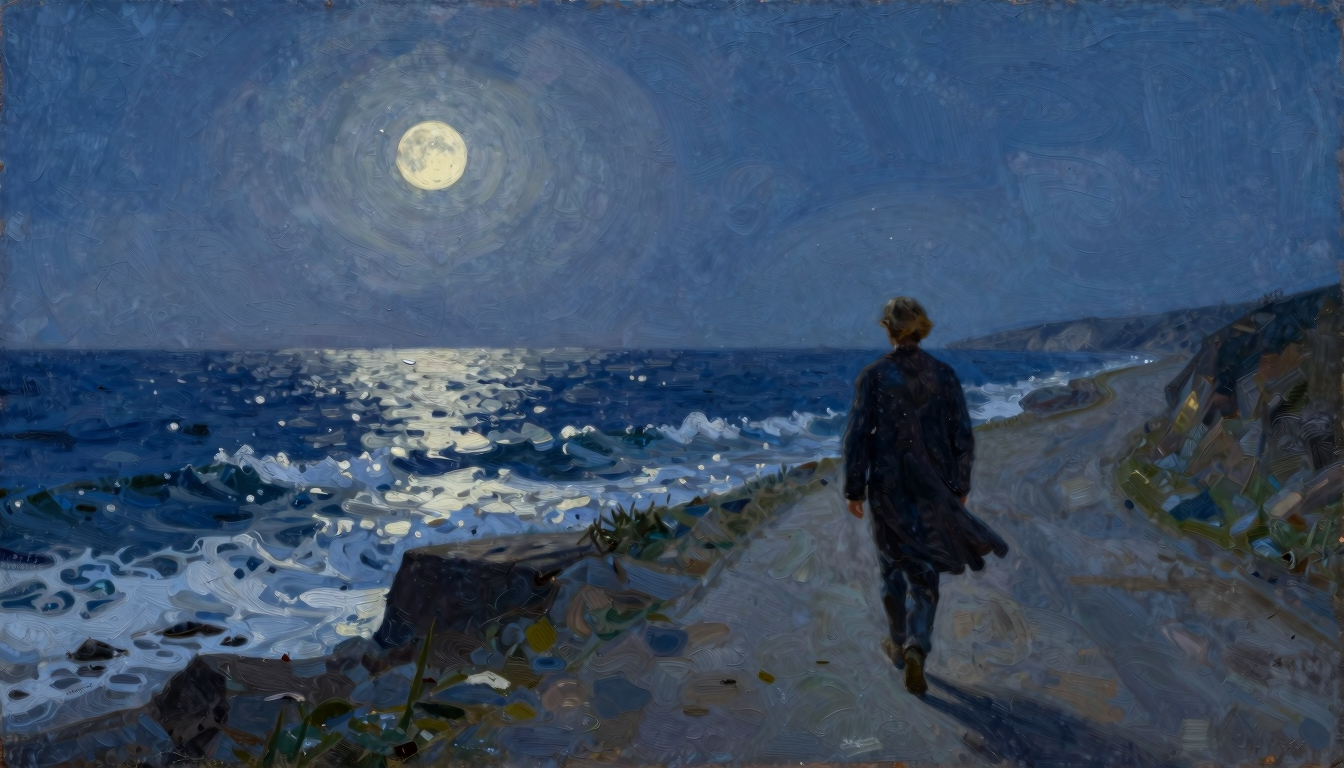
Summary
A pursuing wave turns emotional pressure into motion. Its meaning depends on fear, safety, cultural memory, and what happens after the wave passes.
At a glance
A wave that follows you often represents pressure, emotion, or transition that feels unavoidable. Cultural associations can add context, but the dream is not a guaranteed prediction.
Separates pursuit, overwhelm, cleansing, transition, and cultural framing.
Describe the wave motion; name the emotion; separate cultural association from evidence; choose one grounded response.
The short answer
When a wave follows rather than simply appears, the dream emphasizes pursuit. Something may feel too large to avoid: a difficult conversation, an overdue decision, grief, work pressure, or a transition already in motion. If you escape safely, the dream can reflect adaptability. If the wave overwhelms you, it may show fear of losing control. If you watch it with wonder, the same force may be experienced as renewal rather than danger.
Why culture changes the language
Water has different inherited associations. One family may connect the sea with travel and provision; another may remember storms, displacement, baptism, ritual washing, or ancestral stories. Those associations influence the emotional vocabulary of a dream. They do not prove that a wave predicts an event, and they should not be used to declare what every person in a culture believes. Ask which meaning is actually present in your own memory.
The direction of the water matters too. A wave moving toward you can make an approaching responsibility feel unavoidable. A wave behind you may express the sense that the past is still pursuing you. A receding wave can suggest that intensity is passing, while a clear horizon may show that the dream is not only about threat.
Pursuit, overwhelm, and transformation
A pursuing wave can symbolize an emotion that has not been given room: anger, longing, fear, or sorrow. The dream may be asking for acknowledgement rather than forecasting catastrophe. If you keep running without looking back, notice what you believe would happen if you stopped. That answer often identifies the waking-life pressure.
If the wave rises over a street, home, or workplace, the setting can locate the pressure. A flooded workplace may mirror a fear that demands are taking over your identity. A wave reaching a family home may bring attention to protection, belonging, or an unresolved household feeling. These are possibilities, not fixed dictionary entries.
Some cultural and spiritual frameworks treat water as cleansing or passage. That frame can be meaningful when it genuinely belongs to the dreamer's practice. It should remain a personal lens, not an invented consensus. A frightening wave can still mark a transition; a beautiful wave can still carry a warning about limits.
A practical judgment path
Write the scene in one sentence: “A wave followed me along the road, but I reached high ground.” Then ask four questions. What was the wave doing? What did I feel in my body? Which cultural or family association came to mind? What changed after the wave passed?
The sentence above contains pursuit, fear, safety, and an ending. Its grounded interpretation is that a pressure may feel unavoidable, yet the dreamer can find a stable response. That is different from claiming that a flood will occur. The next step might be setting a deadline, asking for help, speaking honestly, or allowing a feeling to be named before it grows.
One modern example
After receiving a message about a possible move, Maya dreamed that the same dark wave followed her through streets from her childhood neighborhood. She woke before it touched her, but remembered a family story in which the sea meant both migration and new work. She treated the dream as a prompt to examine ambivalence, not as a prediction. She listed what the move would change, asked her partner for a clear timeline, and chose a backup plan. The wave can be read as a warning about unexamined pressure, while the high ground in her dream reflected a practical way to regain choice.
Frequently asked questions
What does a wave following me mean in a dream?
It may reflect pressure, emotion, or change that feels impossible to ignore. Your response and the ending determine whether the emphasis is overwhelm, adaptation, or transition.
Does culture give the wave a fixed meaning?
No. Cultural stories shape associations such as cleansing, danger, travel, or renewal, but the dreamer's own experience matters more than a universal claim.
Is a pursuing wave a bad omen?
Not necessarily. Fear may signal overload, while reaching safety or feeling wonder can point toward resilience or change. A dream is not proof of a future event.
What if the wave never reaches me?
The distance may show anticipation rather than actual harm. Notice what you did while waiting and what helped you feel prepared.
What should I do after this dream?
Record the wave's motion, your emotion, the cultural association that arose, and one controllable action for the waking-life pressure.