Summary
Dreaming about an ostrich may symbolize moving quickly while staying close to practical reality, feeling conspicuous, or facing a large presence you do not yet know how to approach. A calm bird differs from one that chases you; riding it adds a question of direction and control. These are conditional symbolic readings, not predictions of danger, fortune, illness, or divine instruction. Notice who sets the pace, where the bird moves, and whether you face it or turn away. The image can concern how you respond to something large without automatically meaning that you are avoiding the truth.
At a glance
Dreaming about an ostrich may symbolize moving quickly while staying close to practical reality, feeling conspicuous, or facing a large presence you do not yet know how to approach. A calm bird differs from one that chases you; riding it adds a question of direction and control. These are conditional symbolic readings, not predictions of danger, fortune, illness, or divine instruction. Notice who sets the pace, where the bird moves, and whether you face it or turn away. The image can concern how you respond to something large without automatically meaning that you are avoiding the truth.
Avoids automatic denial stereotype; distinguishes pace, control and available space.
Record action pace and space; compare actual demand; clarify support boundary or milestone.
A striking presence can concern visibility
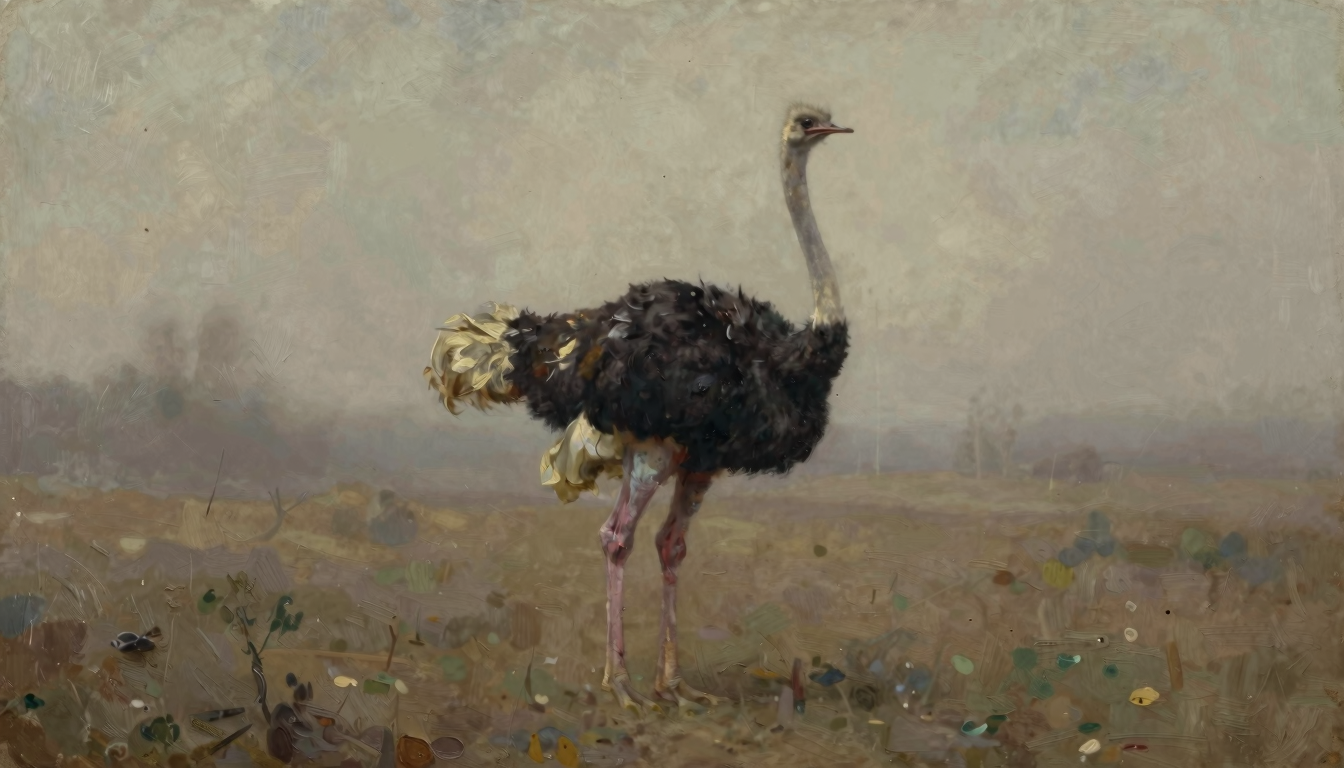
Seeing an ostrich from a distance may symbolize noticing something that occupies more space than you expected. Its size can make a concern, role, or possibility feel difficult to overlook. The bird may seem impressive, strange, calm, or intimidating depending on the encounter.
If you feel curious, the scene may concern approaching an unfamiliar way of doing things. If you feel exposed beside it, the image may emphasize how conspicuous you feel. If you simply watch, the dream can remain about observation without requiring a confrontation.
Size does not measure the seriousness of a future event. A large bird may give a modest concern a memorable form. Read whether its presence actually changes what you can do in the scene.
Movement can emphasize pace rather than escape
An ostrich moving across open ground may symbolize strong forward momentum. If you move comfortably alongside it, the scene may suggest finding a pace that suits your circumstances. If you struggle to keep up, speed may feel imposed rather than chosen.
A bird running away differs from one chasing you. The first may emphasize distance or a possibility you cannot easily catch. The second may emphasize pressure that remains present as you try to leave. Running by itself does not prove fear or avoidance.
A stopped bird can change the reading again. The pause may emphasize having room to observe before acting. Notice whether the dream allows a pause and whether you use it; that distinction can matter more than the speed alone.
Turning away does not automatically mean denial
The familiar image of an ostrich associated with hiding can influence how a dream feels. It should not be used as an automatic verdict about your character. If the dream actually includes concealment or turning away, read that action in its setting rather than assuming every ostrich means refusing reality.
Hiding may symbolize wanting less exposure, delaying a difficult response, or looking for shelter. It may also concern a temporary need for distance. The question is what you turn away from and whether returning changes the scene.
If no hiding occurs, there is no reason to add it. An ostrich standing calmly can remain a symbol of conspicuous presence or grounded movement. Interpretation should follow the encounter you remember rather than a ready-made accusation.
Chase and attack make pressure more immediate
An ostrich chasing you may symbolize a demand that feels too large or too fast to manage. Notice whether it gains ground, whether you find space, and whether the pursuit ends. An unresolved chase differs from one that stops when you change direction.
An attacking ostrich adds direct confrontation. It may symbolize an encounter in which boundaries feel under pressure. Fear, resistance, and finding a way out each create a different relationship with that pressure.
The dream identifies no waking enemy and forecasts no physical attack. Before applying the image to a person, check their actual conduct. The symbolism can concern the scale or urgency of a demand without proving hostile intentions.
Riding an ostrich adds a question of control
Dreaming about riding an ostrich may symbolize moving with powerful momentum that is difficult to steer. If the ride feels comfortable, it may emphasize confidence in an unusual approach. If you cannot choose the direction, the same image may emphasize being carried by a schedule or decision you did not fully set.
Holding tightly can suggest wanting security while the pace remains uncertain. Dismounting may symbolize choosing a slower or more manageable method. Falling can emphasize a mismatch between speed and support, without predicting failure.
Ask who controls the movement and what you are trying to reach. The dream does not instruct you to take a risk simply because the ride feels exciting. A lively image can invite reflection while practical decisions still depend on the actual route and resources.
Eggs and young birds concern different beginnings
Ostrich eggs may symbolize something developing out of sight whose scale feels significant. The large egg can make a beginning seem substantial before its needs are clear. It does not predict pregnancy, birth, money, or a successful venture.
An intact egg may emphasize patience and protection. A damaged egg may emphasize concern about the conditions supporting a possibility. A shell left after hatching differs from destruction: one can mark development, while the other can represent disappointment.
A baby ostrich may symbolize an emerging commitment that will need more space or support as it develops. Caring for it can emphasize preparation; watching it move independently can emphasize allowing growth. Read what the young bird needs rather than assuming it represents a literal child.
A dead ostrich may change the sense of momentum
A dead ostrich may symbolize the end of a forceful phase, disappointment around a large expectation, or a changed relationship with something that once seemed imposing. Its stillness can feel relieving or sad, and those responses differ.
If you find the bird after a journey, the scene may concern momentum no longer carrying you forward. If you try to help it, the image may emphasize care and limits. Neither action establishes a future loss or a duty to rescue someone.
The dream predicts no death or illness. Compare the feeling with an actual change in pace, interest, or responsibility. Symbolic stillness can concern a process that has stopped without determining what follows.
Black and white change the atmosphere
A black ostrich may make the encounter feel less readable or more imposing. That can support a conditional interpretation about uncertainty, especially if the bird remains distant. Black does not establish evil, a curse, or misfortune.
A white ostrich may appear unusually conspicuous or unfamiliar. It can emphasize a large presence that stands apart from its surroundings. White does not guarantee purity, blessing, or a favorable event.
Read the color with the action. A calm dark bird and a threatening light bird deserve different interpretations. Color adds atmosphere; it does not erase behavior or your response.
Spiritual and Islamic reflection need room for uncertainty
A spiritual reading may consider how to remain grounded while moving with energy, or how to face a large matter without rushing. A hopeful scene may suggest confidence with practical footing. A difficult one may invite attention to pace and boundaries.
For an Islamic meaning, no universal religious ruling is established here. The bird does not guarantee provision, punishment, or a divine warning. Reflection on restraint and responsibility can remain personal without becoming a claim about what God intends.
The useful question is what the encounter makes visible about your relationship with movement and exposure. You can consider that question without treating the image as authority over your decisions.
Pace and exposure in four everyday settings
At work, riding an ostrich may symbolize a project whose momentum exceeds your control. Check which deadlines are fixed and which were assumed. Confirm one realistic next milestone and the resources needed before accepting more speed.
In a relationship, a chase may symbolize pressure to answer before you feel ready. Check whether the urgency comes from an actual request or your own expectation. Name when you can respond and what you need to understand first.
At home, a large bird in a small space may symbolize an arrangement that has outgrown its surroundings. Check whether the difficulty concerns belongings, routines, or shared responsibilities. Agree on one change that creates usable space rather than treating someone as the problem.
In personal plans, an egg may symbolize a substantial idea still needing conditions for development. Check what time and support it would require. Try one bounded first step before building your schedule around an imagined outcome.
A fast plan became workable when its pace was agreed
Consider Arun, who dreams of riding an ostrich across a wide path. The bird moves quickly until the path narrows, and he gets down to walk beside it. He is organizing a weekend trip with friends while several bookings remain undecided.
He reads the change of pace as a possible image of needing more control over the next step. The dream gives him no information about travel conditions. He asks the group to confirm the budget and arrival time before making the remaining reservations.
They choose one destination, drop an extra stop, and divide the booking tasks. The trip happens within the agreed budget. The ordinary result comes from making the plan manageable, while the dream remains a memorable way of thinking about momentum and direction.
Read the pace before assigning an omen
Record whether the ostrich stands, runs, pursues, attacks, or carries you. Then note its color, stage of life, and the space available. Separate a large presence from an actual threat and chosen movement from being carried along.
Compare one detail with a real demand or beginning. If the connection fits, clarify the pace, boundary, or support needed for the next step. If it does not, allow the dream to remain uncertain. The bird can give movement and visibility a striking form without forecasting what comes next.
Frequently asked questions
What does seeing an ostrich in a dream mean?
It may symbolize grounded movement, conspicuous presence or a large matter you are learning to approach. The action and your response distinguish meanings.
Why did I dream about an ostrich?
There is no single established cause. Personal associations and remembered feelings can help reflection without proving why the image appeared.
Does an ostrich dream mean I am avoiding reality?
Not automatically. Read concealment only if it actually occurs; a calm visible bird can concern pace or presence instead.
What does an ostrich chasing you mean?
A chase may symbolize a demand that feels too fast or large. It establishes no waking threat or hostile intention.
What does an ostrich attack mean in a dream?
An attack may symbolize immediate pressure on a boundary. It predicts no physical attack.
What does riding an ostrich mean?
It may symbolize moving with strong momentum. Comfortable steering and being carried without control deserve different readings.
What do ostrich eggs mean in a dream?
Eggs may symbolize a substantial undeveloped possibility needing suitable conditions. They predict neither pregnancy nor success.
What does a baby ostrich mean?
A young bird may symbolize an emerging commitment whose needs will grow. It need not represent a literal child.
What does a dead ostrich mean?
It may symbolize changed momentum or disappointment around an expectation. It predicts no death or illness.
What does a black ostrich mean in a dream?
Black may emphasize uncertainty or an imposing presence. It establishes no curse or misfortune.
What does a white ostrich mean in a dream?
White may make the bird feel conspicuous or unfamiliar. It guarantees no blessing or favorable event.
What is an ostrich dream meaning in Islam?
No universal Islamic ruling is asserted. Reflection on responsibility and restraint does not establish divine warning, punishment or promised provision.
What is the spiritual meaning of an ostrich dream?
A personal reflection may concern staying grounded while moving with energy. It provides no supernatural command or guaranteed result.