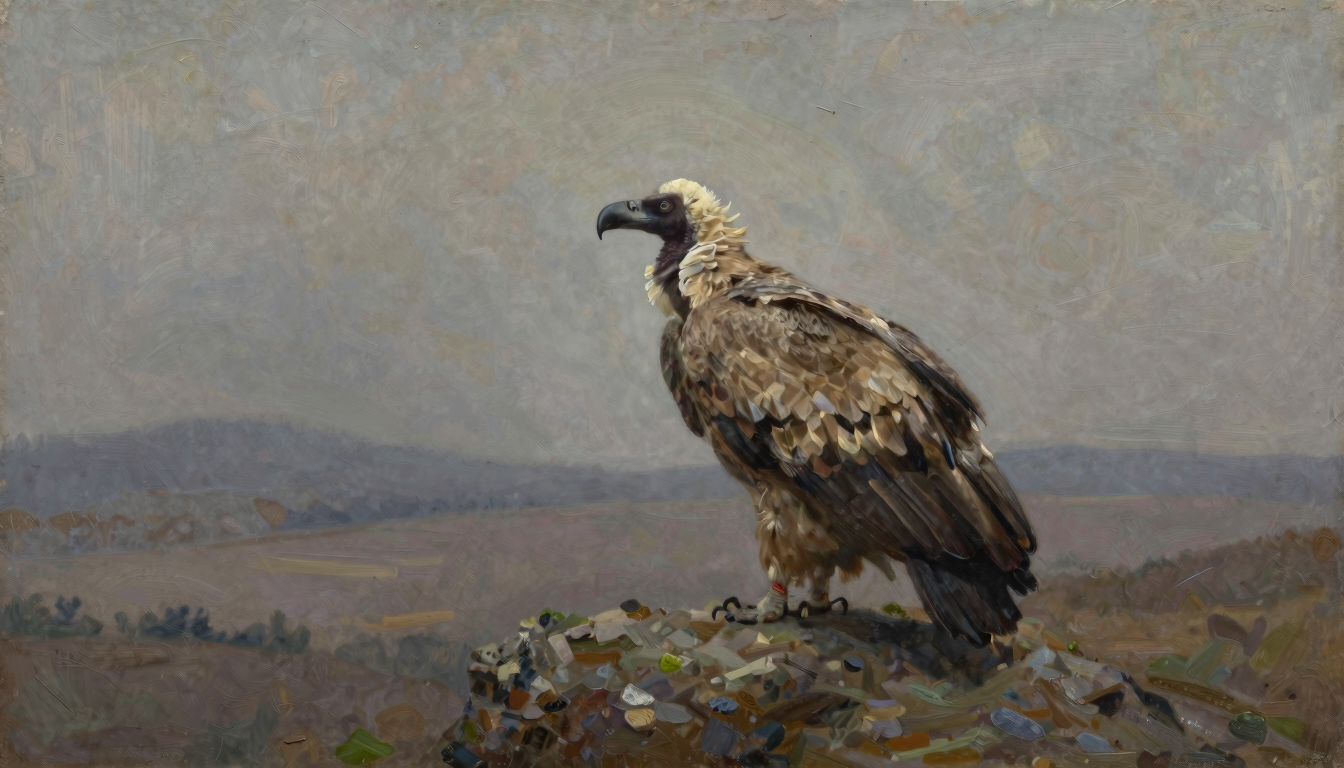
Summary
Dreaming about a vulture may symbolize waiting around an unresolved ending, noticing what remains after a change, or unease about someone benefiting from a vulnerable situation. A distant bird may emphasize observation; an attacking one may make pressure feel personal. These are conditional symbolic readings, not predictions of death, illness, betrayal, or bad luck. Notice what the vulture watches, whether it approaches, and how you respond before deciding whether the scene concerns patience, unfinished business, or unwanted attention.
At a glance
Dreaming about a vulture may symbolize waiting around an unresolved ending, noticing what remains after a change, or unease about someone benefiting from a vulnerable situation. A distant bird may emphasize observation; an attacking one may make pressure feel personal. These are conditional symbolic readings, not predictions of death, illness, betrayal, or bad luck. Notice what the vulture watches, whether it approaches, and how you respond before deciding whether the scene concerns patience, unfinished business, or unwanted attention.
Separates ending from aftermath and observation from actual interference.
Record action and remains; compare actual open obligation; name owner or clarify ending.
The association with endings does not predict death
A vulture may bring endings into the dream's atmosphere because of the associations you have with the bird. Symbolically, that can concern a completed role, an old arrangement, or something that no longer functions as it once did. An ending in meaning is not the same as a forecast of a death.
If the bird remains near an empty place, the scene may emphasize what has been left behind. If it waits beside something still active, the question may concern anticipating an ending before it has happened. Those situations deserve different comparisons with waking life.
Do not search for a person who must be in danger. The dream can remain about your relationship with change, waiting, and remnants without identifying a future event.
Watching can suggest patience or uncomfortable scrutiny
Seeing a vulture from a distance may symbolize observing a situation you cannot yet influence. The bird's stillness can feel patient, watchful, or ominous depending on the scene. The feeling matters without proving that the bird has a hostile intention.
If you feel calm, the image may emphasize allowing a process to finish. If you feel exposed, it may symbolize concern about being watched while something is unsettled. If you are curious, the encounter may remain about an unfamiliar presence.
Ask what is being watched and whether anyone acts. Observation alone is different from interference. That distinction can keep the interpretation from turning every waiting figure into an enemy.
Circling can give unresolved matters a visible pattern
Vultures circling overhead may symbolize returning attention to the same uncertainty. The movement can make waiting feel active even when nothing changes on the ground. You may notice a concern repeatedly without having a decision that settles it.
Several birds may emphasize different expectations around one unfinished matter. A quiet group differs from one that crowds the scene. Their number does not count future losses or people working against you.
If the birds move away, the scene may suggest attention shifting after a change. If they remain, the ending may still be unresolved. Neither outcome guarantees that a waking concern will disappear or become worse.
What remains can matter as much as what ends
A vulture near discarded objects may symbolize attending to the residue of a change. An old commitment can end while paperwork, possessions, or unspoken expectations remain. The dream may place attention on that aftermath rather than the ending itself.
If the scene includes feeding, it may emphasize something continuing through what is left behind. That image can feel unsettling, but it need not mean exploitation. Read whether the action harms anyone or simply belongs to a process already underway.
Symbolically, the useful question may be what still has a place and what can be released. It does not require treating every remnant as a sign or every new use as a betrayal.
Attack and pursuit make the pressure direct
A vulture attacking may symbolize attention that feels intrusive when you are vulnerable or uncertain. The scene changes from being observed to being directly affected. Notice what the attack prevents you from doing.
A vulture biting you may emphasize unwanted contact or a concern that has become personal. Being chased may symbolize pressure that remains present as you try to move away. These images establish neither a medical condition nor a waking threat.
Your response can clarify the relationship. Seeking support, finding distance, or confronting the bird suggest different ways of handling the same pressure. The dream supplies no instruction to accuse someone or act violently.
Killing can symbolize an extreme wish to end the encounter
Killing a vulture in a dream may symbolize a forceful wish to remove uncomfortable scrutiny or stop a recurring concern. Relief afterward differs from regret or further disturbance. The action's meaning depends on what it changes within the scene.
If the bird had done nothing except wait, the act may raise a question about responding to uncertainty before understanding it. If it was attacking, the scene may emphasize intense resistance. Neither version proves a waking intention to harm.
The dream is not a prescription for action toward animals or people. Compare the symbolic relationship with actual facts before deciding whether any waking response is needed.
A dead or young bird can alter the emphasis
A dead vulture may symbolize an end to waiting, a changed relationship with a feared image, or sadness about a presence that once occupied the setting. The dream does not predict death, and the bird's own ending need not stand for someone else's.
A baby vulture may make an unsettling association appear vulnerable or unfinished. It may symbolize an emerging concern that needs understanding rather than immediate rejection. If you care for it, the scene may concern responsibility toward something you do not fully understand.
Young and dead birds describe different stages. Read what the scene actually shows instead of combining them into one general omen about misfortune.
Kind and color can shape the atmosphere
A turkey vulture may bring the image closer to a familiar kind of bird. If you recognize it, the scene may be less mysterious than one involving an unknown animal. Familiarity can change the feeling without determining the outcome.
A black vulture may intensify an association with what remains unseen or unresolved. A white vulture may make the same presence conspicuous or unusual. Neither color automatically means evil, purity, danger, or blessing.
The word vulture can also carry a figurative association with benefiting from another's difficulty. That association may be relevant if the scene shows such behavior, but it is not evidence that a real person is exploiting you. Action provides more information than the label alone.
Spiritual reflection can consider endings without declaring a fate
A spiritual reading may consider the vulture as an image of making room after an ending or discerning what remains useful. A peaceful scene may invite acceptance of change; an intrusive one may raise a question about how attention is directed toward vulnerability.
For Islamic or Biblical meaning, no fixed religious ruling or scriptural result is asserted here. The image does not establish punishment, a curse, a prophecy, or a person's moral character. A chosen reflective practice can support attention without becoming a ritual required by the dream.
A Hindu or Hinduism framing likewise does not determine a universal forecast. Hindi is a language in which an interpretation may be discussed, not proof of a separate omen. Cultural associations can inform reflection while action and feeling remain necessary.
Four ordinary settings can clarify the unfinished matter
At work, circling may resonate with a project that has ended without a clear handover. People may continue asking questions because ownership has not changed. Check what remains open and name one person responsible for closing it.
In relationships, watchfulness may symbolize unease about another person's attention during a difficult transition. Check what they actually do and what you need. State one request for privacy or support without using the dream as evidence of exploitation.
At home, remnants may symbolize possessions or routines left over from a change. A room may hold items nobody uses but nobody has decided about. Check who owns the decision and agree on one small area to sort. An ending becomes concrete through an ordinary arrangement.
With personal commitments, the bird may symbolize waiting for permission to release something that no longer fits. Check the actual obligation and whether anyone depends on it. Clarify one ending or next step instead of assuming that uncertainty must continue indefinitely.
An ending can need a final owner
Consider Mira, who dreams that a vulture waits above a courtyard filled with empty boxes. She tries to carry them away but keeps finding more beside the doorway. The bird does not attack; it simply remains while the courtyard stays unfinished.
Mira has helped run a community sale. The event is over, but leftover items and unanswered collection requests remain in a shared storage room. She reads the scene as a possible image of an ending with an unresolved aftermath rather than a warning that something bad will happen.
She asks the organizers to confirm which items will be collected and sets a final date. They assign two people to handle the remaining donations and update the owners of reserved items. The room is cleared on the agreed weekend. The result is ordinary closure: a finished event stops generating new requests because its remaining responsibilities have been named.
Read waiting and interference separately
Record whether the vulture watches, circles, feeds, approaches, or attacks. Then note what remains in the setting and how you respond. Distinguish patience, unresolved business, vulnerability, and unwanted contact through the actual encounter.
Compare one detail with a real arrangement. Check what is known and what you fear. When a connection fits, name an owner, clarify an ending, or ask for privacy. When it does not fit, allow the dream to remain uncertain.
A vulture may give waiting and aftermath a striking form. Its useful symbolic meaning can concern how you relate to what is unfinished while waking judgments remain grounded in actual obligations and conduct.
Frequently asked questions
What does it mean when you dream about a vulture?
A vulture may symbolize waiting, unfinished aftermath or unease about attention during a vulnerable situation. Action and feeling distinguish these possibilities.
What does it mean to see vultures in your dream?
Seeing them from a distance may emphasize observation. Several birds can suggest different expectations around one unresolved matter, not a count of future losses.
Does a vulture dream predict death?
The dream predicts no death or illness. Symbolic endings can concern roles, arrangements or obligations rather than a literal life event.
What does a vulture attacking you mean?
An attack may symbolize intrusive pressure when something feels unsettled. It establishes no waking threat or another person's intention.
What does a vulture biting me mean in a dream?
A bite may symbolize unwanted contact or a concern becoming personal. The sleeping image provides no medical information.
What does being chased by vultures mean?
A chase may symbolize pressure remaining present as you move away. Read what changes the pursuit without predicting danger.
What does killing a vulture mean in a dream?
Killing may symbolize a forceful wish to stop scrutiny or uncertainty. Relief and regret differ; it supplies no waking instruction to harm.
What does a dead vulture mean?
A dead bird may symbolize an end to waiting or a changed relationship with a feared image. It does not predict anyone's death.
What does a baby vulture mean?
A young bird may symbolize an emerging or vulnerable concern. Notice whether you care for it or reject it; it does not predict a birth.
What does a black vulture mean in a dream?
Black may emphasize what remains unseen or unresolved. It does not establish evil or misfortune.
What does a white vulture mean in a dream?
White may make an unfamiliar presence conspicuous. It does not guarantee blessing or a favorable event.
What does a turkey vulture mean in a dream?
Recognizing a familiar kind may change the atmosphere of the encounter. Its action and your response matter more than a fixed species-based result.
What is a vulture dream meaning in Islam?
No fixed Islamic ruling is asserted. Reflection can consider endings and restraint without claiming punishment, a curse or a prophecy.
What is a Biblical vulture dream meaning?
No scriptural result or divine instruction is established here. A reader may reflect on change without treating the image as revelation.
What do vultures mean in Hindu or Hinduism dream interpretation?
The bird does not determine a universal Hindu forecast. Cultural associations can inform reflection while the scene's details remain necessary.
What is a vulture dream meaning in Hindi?
Hindi identifies a language rather than a separate omen. Conditional distinctions about waiting, aftermath and interference remain useful.
What is the spiritual meaning of a vulture dream?
A spiritual reflection may consider making room after an ending and discerning what remains useful. It establishes no supernatural warning or guaranteed renewal.
What can I do after a dream about a vulture?
Compare one detail with an actual unfinished obligation. Clarify an ending or name an owner if the connection fits; otherwise allow uncertainty.