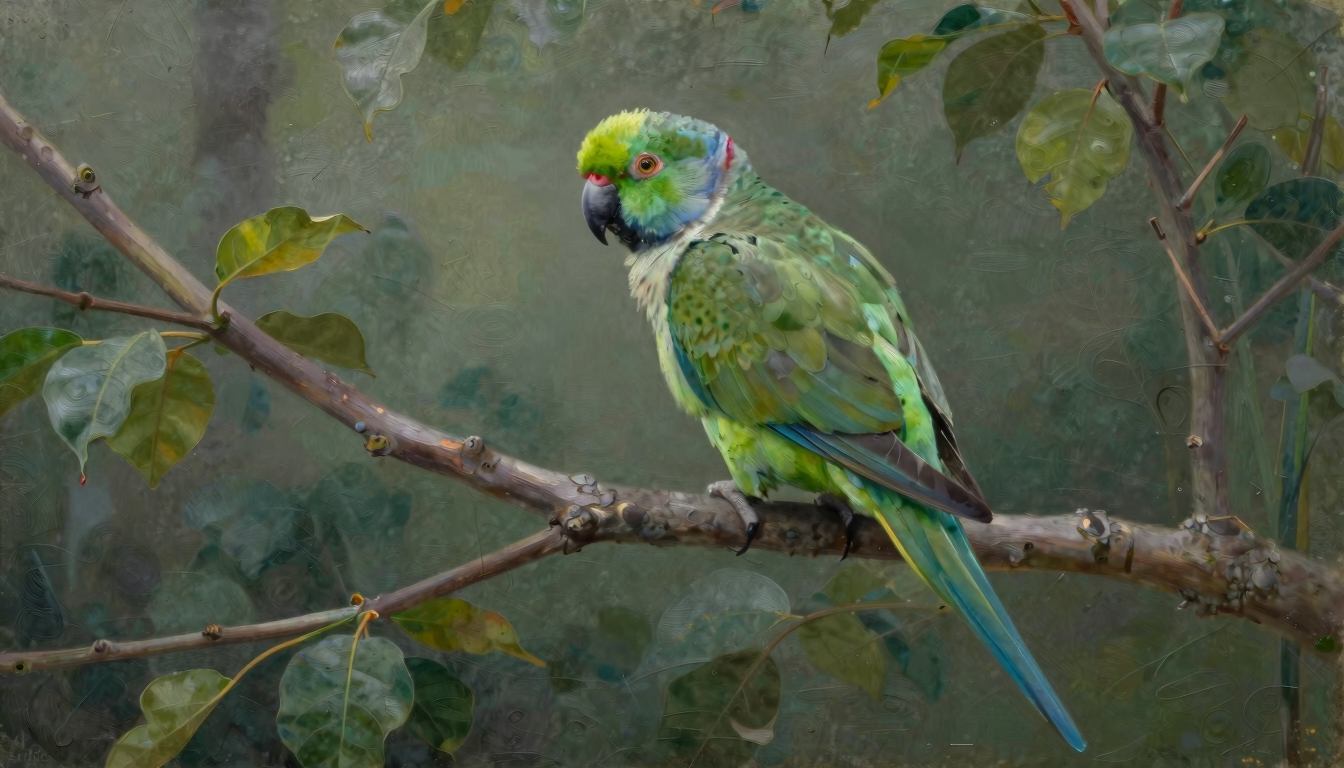
Summary
Dreaming about a parrot may symbolize repeated words, a lively exchange, or the difference between saying something familiar and expressing what you actually mean. A talking parrot may draw attention to a phrase that keeps returning; a flying one may emphasize expression with room to move. Biting or confinement can change the relationship. These are conditional symbolic readings, not proof of gossip, betrayal, or a future message. Notice the bird's action, any remembered words, and your response before assigning its voice to a real person.
At a glance
Dreaming about a parrot may symbolize repeated words, a lively exchange, or the difference between saying something familiar and expressing what you actually mean. A talking parrot may draw attention to a phrase that keeps returning; a flying one may emphasize expression with room to move. Biting or confinement can change the relationship. These are conditional symbolic readings, not proof of gossip, betrayal, or a future message. Notice the bird's action, any remembered words, and your response before assigning its voice to a real person.
Separates repetition as learning play or empty commitment and finding from controlling a voice.
Record words action and feeling; compare actual communication; confirm one agreement.
Repetition can carry several meanings
A parrot in a dream may make repetition visible. A familiar phrase can be reassuring, irritating, empty, or useful depending on how it appears. The bird's presence may invite you to notice what repetition does rather than assume it is dishonest.
If the phrase helps you remember something important, the image may emphasize learning or continuity. If it continues after the situation has changed, it may symbolize an explanation that no longer fits. If everyone laughs, the repetition may belong to play rather than conflict.
Seeing a parrot without hearing it speak can keep the meaning closer to attention, companionship, or colorful presence. The animal does not have to represent gossip simply because speech is associated with it.
A talking parrot may separate words from intention
A parrot talking to you may symbolize words that reach you without a clear sense of their origin or intention. The dream can make a statement memorable while leaving its meaning uncertain. Remembered wording is worth recording, but it is not automatically a message to obey.
If the bird repeats your own sentence, the scene may emphasize hearing yourself from outside. You may notice a habit of saying yes, dismissing a concern, or using a phrase before considering what you want to express.
If the parrot uses someone else's voice, the image may concern an expectation you associate with them. It does not prove what that person currently thinks. Compare actual conversation with the dream before treating the repeated words as their hidden position.
A bite changes expression into unwanted contact
A parrot biting may symbolize friction within an exchange or the feeling that a familiar interaction has become uncomfortable. A hand extended toward the bird differs from a bite that comes unexpectedly. The preceding action helps define the symbolic relationship.
If you try to handle the bird against its resistance, the scene may raise a question about trying to control expression. If you are caring for it and it bites, the emphasis may concern a response you did not expect from something familiar.
The bite does not establish betrayal or injury in waking life. Read your response and what happens afterward. Moving back, asking for help, or continuing calmly can suggest different ways of relating to the same difficulty.
Flight can give expression space
A flying parrot may symbolize words, ideas, or companionship moving beyond a familiar setting. If you watch with pleasure, the scene may emphasize freedom. If you fear losing it, the question may concern wanting to keep a valued presence close.
A bird returning voluntarily may suggest connection that does not require constant control. One that flies out of view may leave the scene unresolved. Neither ending predicts abandonment or reunion.
Notice whether the bird's movement opens the setting or disrupts it. The useful distinction may be between allowing an exchange to develop and trying to keep it exactly as it was.
Catching and finding are different encounters
Catching a parrot may symbolize trying to hold a lively idea, recover an exchange, or control something difficult to keep still. A gentle rescue differs from a chase that frightens the animal. The method changes what possession means within the scene.
Finding a parrot may symbolize encountering an unexpected voice or taking on a new responsibility. You may be pleased by the discovery while uncertain about what it needs. The scene can hold opportunity and obligation together.
A pet parrot may emphasize a familiar relationship sustained by regular attention. Notice whether care is mutual in its own way, whether the bird is ignored, or whether its noise occupies the whole setting. Familiarity does not remove the need to consider the terms of an arrangement.
Young and dead birds can suggest stages of expression
A baby parrot may symbolize a voice or habit still developing. The scene may emphasize learning, vulnerability, or care before something has become independent. It does not predict a child or announce a new relationship.
A dead parrot may symbolize an exchange that has stopped, a repeated phrase losing its place, or sadness about something once lively. Relief and grief create different readings. The image does not predict anyone's death.
If a silent bird seems alive and resting, do not treat it as the same image as a dead bird. A pause can leave expression available, while an ending changes the relationship. The dream's actual detail is more useful than a broad label.
Color can shape the feeling without deciding the result
A green parrot may feel connected with growth or familiarity, especially within vegetation. A blue parrot may emphasize quiet distance or an unusual tone in the scene. These associations depend on what the colors mean to you and how the bird behaves.
A red parrot may make the encounter feel vivid, urgent, or noticeable. A white parrot may emphasize contrast, simplicity, or an unfamiliar presence. Neither color guarantees a favorable or unfavorable event.
A colorful parrot may symbolize lively expression or several impressions competing for attention. If its colors delight you, the scene differs from one in which they distract you from something important. Read color with action rather than replacing the whole encounter with a color dictionary.
Religious and language framing should remain conditional
A spiritual reflection may consider the parrot as an image of listening carefully and speaking with intention. Repeated words can invite a question about what you have absorbed and what you choose to express. The dream does not establish a supernatural messenger.
For an Islamic meaning, personal reflection may include care with speech and caution in judging others. No fixed Islamic ruling about this image is asserted here. It does not prove gossip, punishment, or another person's wrongdoing.
A Hindu framing likewise does not establish one universal result from a parrot dream. Hindi and Tamil describe languages in which an interpretation may be discussed; they do not by themselves determine an omen. Cultural associations can inform reflection while leaving the specific action and feeling necessary to understand the scene.
Four ordinary settings can clarify repeated words
In relationships, a talking parrot may symbolize a phrase that substitutes for a clearer conversation. You may say everything is fine while an expectation remains uncertain. Check what you actually want to communicate and state one specific preference. The dream supplies a question about speech, not evidence of another person's motives.
At work, repetition may resonate with an explanation circulated without checking whether it is still accurate. A team may repeat an old deadline after the plan changes. Check the current agreement and ask the decision maker to confirm it. A familiar sentence becomes useful when its status is clear.
At home, a pet parrot may symbolize a recurring demand that everyone hears but nobody owns. A reminder may be repeated until it becomes background noise. Check who can complete the task and agree on one owner and time. Care becomes less noisy when responsibility is explicit.
In creative life, a colorful parrot may symbolize a voice shaped by admired examples. You may repeat a familiar style before knowing what you want to say. Check the purpose of the work and revise one passage into your own specific observation. Influence can support expression without deciding it entirely.
A familiar phrase can become a clear agreement
Consider Owen, who dreams that a green parrot keeps saying tomorrow while he tries to open a door. He asks the bird what will happen tomorrow, but it repeats the same word. The scene feels amusing at first and then frustrating.
Owen has been coordinating a small design project. The team repeatedly says the feedback will arrive tomorrow, but no one has named the reviewer or confirmed a time. He reads the parrot as a possible image of repeated language without a settled agreement, rather than a warning that a colleague is lying.
He asks who owns the review and what date is realistic. The reviewer confirms a two-day deadline and identifies the sections that need attention. Owen updates the schedule and completes another task while waiting. The feedback arrives on the agreed date. The result is an ordinary clarification: repetition gives way to a named commitment that the team can act on.
Read the exchange before assigning a speaker
Record what the parrot does, whether it speaks, and any words you remember. Then note your feeling and the setting. Distinguish playful repetition, learning, friction, freedom, and responsibility through the actual encounter.
Compare one detail with a waking exchange. Separate what people have said from what you assume they mean. When a connection fits, clarify a phrase, confirm an agreement, or express a specific thought. When it does not fit, allow uncertainty.
A parrot may give repeated language a vivid form. Its useful symbolic meaning can concern how words become an exchange, while waking judgments remain grounded in actual communication and conduct.
Frequently asked questions
What does seeing a parrot in a dream mean?
A parrot may symbolize repeated words, companionship or lively expression. Seeing it without speech can keep the focus on presence rather than gossip.
What does a parrot talking to me mean?
A talking parrot may emphasize remembered words whose intention remains uncertain. Record the phrase, but do not assume a real person or supernatural source sent it.
What does a parrot biting mean in a dream?
A bite may symbolize friction or unwanted contact in a familiar exchange. Read what precedes it and your response; it does not prove betrayal.
What does a flying parrot symbolize?
Flight may symbolize expression with room to develop or concern about losing a valued presence. It does not predict abandonment or reunion.
What does catching a parrot mean in a dream?
Catching may symbolize holding an idea, recovering an exchange or trying to control expression. Gentle rescue and frightening pursuit suggest different relationships.
What does finding a parrot mean?
Finding may symbolize an unexpected voice or new responsibility. Notice what it needs and whether the discovery feels welcome.
What does a pet parrot mean in a dream?
A pet may emphasize familiar companionship and recurring care. Read attention, noise and responsibility within the arrangement.
What does a baby parrot symbolize?
A baby parrot may symbolize a developing voice or habit that needs care. It does not predict a birth or new relationship.
What does a dead parrot mean in a dream?
A dead parrot may symbolize an exchange ending or a repeated phrase losing its place. The scene does not predict death.
What does a green parrot mean in a dream?
Green may suggest growth or familiarity within the setting. The association remains conditional and does not guarantee good luck.
What does a blue parrot mean in a dream?
Blue may emphasize quiet distance or an unusual tone. Read the action and feeling rather than assigning a fixed outcome.
What does a red parrot mean in a dream?
Red may make the encounter feel urgent or vivid. It does not establish danger or predict a particular event.
What does a white parrot mean in a dream?
White may emphasize contrast, simplicity or unfamiliarity. It does not guarantee purity, blessing or good news.
What does a colorful parrot symbolize?
Several colors may symbolize lively expression or competing impressions. Delight and distraction give the image different emphases.
What is a parrot dream meaning in Islam?
Personal reflection may include care with speech and restraint in judging others. No fixed Islamic ruling is asserted, and the dream proves neither gossip nor punishment.
What does a parrot mean in a Hindu dream interpretation?
No universal Hindu result is established from the image. Cultural associations may inform reflection, while the bird's action and your response remain necessary.
What is a parrot dream meaning in Hindi or Tamil?
Hindi and Tamil are languages in which meanings can be discussed, not separate proof of an omen. The same conditional distinctions about speech and action remain useful.
What can I do after having a dream about a parrot?
Compare one detail with an actual exchange. Clarify a phrase or confirm an agreement if the connection fits, without using the dream as evidence of hidden motives.