Summary
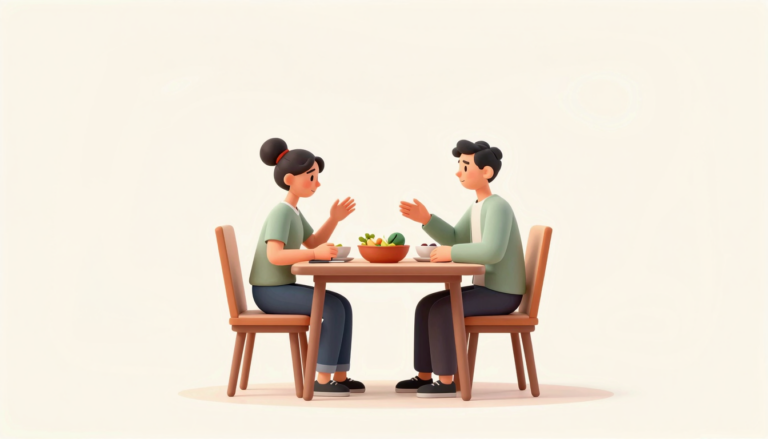
Keeping bad news to ourselves can feel protective. Research on couples suggests that discussing difficulties outside the relationship creates an opportunity for support, with possible benefits that depend on the situation.
At a glance
Sharing an outside difficulty can open a conversation in which a partner offers comfort. In one study, younger and older couples showed few differences in negative emotion, while older couples expressed more togetherness. A supportive response is possible, but disclosure does not guarantee immediate relief or greater closeness.
“I… haven’t been doing well. I don’t want you to know.”
We often share the good news and keep the bad news to ourselves. Sharing joy with someone close can make it feel twice as great. When something upsetting happens, though, we may hesitate: “Maybe I shouldn’t tell them. Why make them worry too?” But what happens when we share our pain?
What we feel and how we express it depend strongly on who we are with and what is happening. Friendships, romantic partnerships and family relationships bring us close to people who matter to us. Researchers have long been interested in how we navigate these relationships—and whether our established ways of relating to one another change as we grow older.
Earlier laboratory research examined how couples experienced and expressed negative emotions during conflict. Researchers found that older couples both felt and expressed less negative emotion than younger couples in that setting.
Socioemotional Selectivity Theory offers a possible explanation. Older adults often perceive their future time as limited, which may lead them to give greater priority to close partnerships. They may place more emphasis on positive interactions and try to limit negative effects within those relationships, seeking more pleasant emotional experiences.
Some recent research has emphasized how much emotional responses depend on context. What if the distress arose from something outside the relationship, offering an opportunity for comfort? If an upsetting experience prompted a partner to offer support and strengthened the couple’s sense of belonging and intimacy, how might that change the negative emotions they felt and expressed? Would older and younger couples still differ?
To examine this setting, researchers recruited 37 younger couples, with a mean age of 24.33 years, and 41 older couples, with a mean age of 70.27 years. One person in each couple was asked to recount a recent upsetting experience or difficulty that did not involve their partner.
The researchers assessed negative emotional experience and expression by combining several measures: all participants’ reports of how intensely they felt negative emotions, their facial expressions during the interaction, and their use of personal pronouns in conversation, including how often they said “we.”
Rohr, Nestler and Kunzmann’s 2019 study found few age differences in emotional experience and expression during these conversations. The authors suggested that age contrasts may be less evident when difficult feelings can invite support. This is a finding about the setting studied, not evidence that younger and older couples respond identically.
Older couples did, however, display a greater sense of belonging and intimacy during their conversations—a finding consistent with the earlier research on couples in conflict.
Talking about trouble outside the relationship can give a partner an opportunity to listen and offer support. The study does not establish that disclosure itself increases trust or intimacy across friendships and families. A useful starting point is to ask whether the other person has time to listen and say what kind of support you would welcome.
These possible benefits do not mean both people will feel better immediately. Sharing distress may initially leave both feeling worse. Under favorable conditions, however, each may regulate their own emotions after the conversation, or they may help one another do so. Either process may help them recover more quickly from those difficult feelings.
Offer comfort when someone is hurting, and let yourself accept it when you are struggling. Share your life with the people close to you. Shared joy can feel twice as great; with support, shared pain can begin to ease.
Still, sharing only the good news can become a habit without our noticing. Sometimes we don’t want to trouble anyone. Sometimes we don’t want to seem weak. Letting ourselves depend on others takes courage, too.
Frequently asked questions
Did older and younger couples respond differently when sharing difficulties?
There were few age differences in emotional experience and expression in these conversations. Older couples perceived and expressed more togetherness. The findings concern this particular setting, rather than identical responses at every age.
Does sharing distress make both people feel better immediately?
Sharing distress may initially leave both feeling worse. Under favorable conditions, individual or joint emotional regulation after the conversation may help them recover more quickly.