Summary
Family pain may appear in recurring reactions, emotional obligations or a sense of identity shaped around earlier generations. Recognizing these patterns can open space to reconsider what you carry and gradually explore your own way of living.
At a glance
Intergenerational family trauma refers to psychological trauma passed down within families, potentially through symptoms, inherited tasks and identities. Repeating a parent's behavior does not by itself establish trauma transmission, and its continuation is not inevitable. Observing relationship patterns, understanding earlier generations' circumstances, reconsidering inherited obligations and seeking support may help people develop more independent lives.
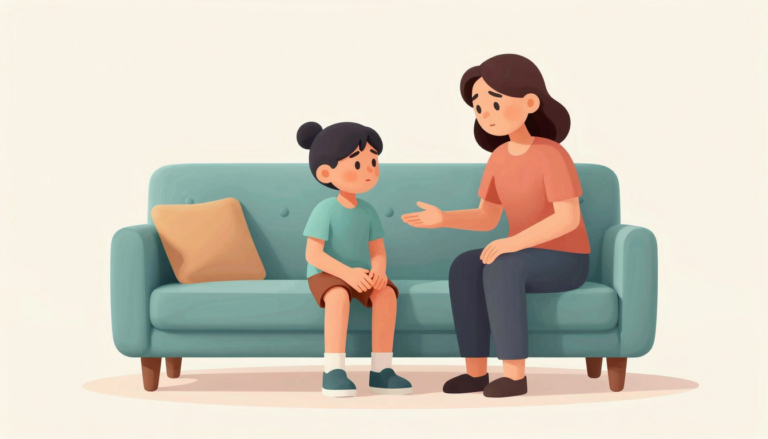
Do you sometimes recognize your parents in yourself? Consider someone who hated the way their parents lost their temper with family members. Years later, after starting a household of their own and having children, they find their anger just as difficult to control.
Even after years away from home, with little contact with parents or grandparents, the family's influence may still feel strong. When painful feelings surface or something goes wrong, familiar patterns can seem to take over automatically. A person may find themselves repeating their parents' behavior and perhaps passing it on to their own children.
Some of these patterns may be connected to intergenerational family trauma, though recognizing a parent's behavior in yourself does not, by itself, establish that connection.
What passes between generations?
APA (1994) characterizes traumatic events as involving actual or threatened death or serious injury, with exposure associated with fear, terror and helplessness. Experiences considered here include abuse, a relative committing a crime, loss and accidents, as well as collective experiences such as war and natural disasters.
The passing of trauma from one generation to another is called the intergenerational transmission of trauma. Within families, this refers to psychological trauma passed down through generations (Bowen, 1966). Transmission may occur directly between parents and children or across nonadjacent generations, as described by the authors of a 2013 research account.
Research on descendants of Holocaust survivors and other groups has been reported as supporting the existence of intergenerational family trauma (Mallory & Rachel, 2016). A separate finding reported by Fossion (2003) concerned third-generation descendants of Holocaust survivors: their rate of seeking child psychiatric help was three times that of the general population. The comparison concerns help-seeking rather than the prevalence of psychiatric disorders.
The authors of that 2013 account distinguish three kinds of content that may pass between generations: symptoms, tasks and identities. Symptom transmission is described as a principal form (Schwerdtfeger et al., 2007). In everyday life, patterns can feel like a family fate repeating itself, taking similar or even opposite forms across generations. Consider a woman who grows up in a family that favors sons over daughters and later shows the same preference toward her own children. Such repetition can feel like destiny without being inevitable.
A related research claim concerns the risk of mental disorders. Mallory & Rachel (2016) report that when either parent has experienced extreme stress severe enough to result in post-traumatic stress disorder (PTSD) or another mental disorder, that parental experience is one risk factor for mental disorders in descendants.
Descendants may also take on family tasks, commonly the work of managing an earlier generation's painful emotions. This account of inherited tasks, which draws on Wardi & Goldblum (1992), includes helping parents deal with trauma-related guilt and shame. Descendants may struggle to separate their own emotional lives from their parents' or try to compensate for their parents' suffering. Such compensation might take the form of entering a helping profession, such as medicine, psychological counseling or law.
Revenge is described as another common inherited task. Parents who have experienced trauma may suppress intense anger and endure their circumstances without expressing it. Their descendants may then express that anger on their behalf or attempt to bring about change.
Identity, too, may become caught up in these burdens. Descendants of survivors may struggle to establish a sense of who they are, overidentify with their parents' role as victims and try to compensate excessively for what their parents have lost. They may find it difficult to develop an independent sense of self, leave their parents and form ordinary relationships with other people.
How might transmission happen?
Epigenetic research offers one possible biological explanation. The perspective discussed by Yehuda & Bierer (2009) proposes that stress may produce lasting changes in a parent's biological systems that can be transmitted to offspring. An illustration of this account concerns children whose parents experienced trauma and developed PTSD: those children may be more susceptible to PTSD themselves and more likely to show its characteristic symptoms. Greater susceptibility does not mean that they will inevitably develop the disorder.
The psychodynamic model centers on unconscious emotions. In this account, grandparents who do not recognize their own trauma-related fear and guilt may nevertheless convey those feelings through their words and behavior. Their descendants may absorb these emotions without being aware of it and develop physical or psychological symptoms, or experience substantial mental suffering.
The family-systems perspective considers transmission through parenting practices (Kitamura, 2009), attachment patterns (Miljkovitch, Danet, & Bernier, 2012) and ways of communicating (Giladi & Bell, 2013). Within this perspective, the authors of the 2013 account describe blurred boundaries between parents and children. Parents may unconsciously keep their children close, while children care for their parents with a mixture of anger and guilt. Some children may even become their parents' “psychological parent,” taking on a parental role in the emotional relationship.
Finding room to choose
Learning that trauma may pass between generations does not mean its continuation is unavoidable. Recognizing trauma responses you may have received from earlier generations can be a key step toward reducing or preventing their transmission to your own children. One way to begin developing that awareness is to observe your feelings, thoughts and behavior in everyday life, paying particular attention to habitual patterns in your relationships.
If you suspect that some of the trauma you carry comes from your parents or grandparents, try imagining yourself in the historical circumstances and living conditions they faced. What might life have been like for you then? Considering that context may help you understand their limitations and the suffering caused by what they experienced. Their pain may have been so intense that it was unbearable, remaining buried outside conscious awareness and gradually passing down through the family.
Understanding that background can accompany a reconsideration of what you have taken on. When you recognize that some of the tasks passed down by your parents feel especially burdensome, you have an opportunity to pause. You can choose whether to accept those tasks or refuse them.
Trying to interrupt the transmission of family trauma on your own can be difficult. Feedback from people who matter to you, arising through your interactions with them, can play an important part in recognizing and coping with these patterns. A psychological counselor or family counselor may also offer support and companionship along this difficult path.
Some of the pain you experience may carry your parents' suffering, or the suffering of your family, alongside your own. You do not have to carry the family's traumatic burden, nor do you have to shape your life around going against them. You can allow yourself to become an independent person and gradually explore a way of living that is your own.
Frequently asked questions
Does repeating a parent's behavior prove intergenerational trauma?
Some of these patterns may be connected to intergenerational family trauma, though recognizing a parent's behavior in yourself does not, by itself, establish that connection.
Is intergenerational family trauma inevitable?
Learning that trauma may pass between generations does not mean its continuation is unavoidable. Recognizing trauma responses you may have received from earlier generations can be a key step toward reducing or preventing their transmission to your own children.
Can support help people recognize inherited family patterns?
Feedback from people who matter to you, arising through your interactions with them, can play an important part in recognizing and coping with these patterns. A psychological counselor or family counselor may also offer support and companionship along this difficult path.