Summary
Why can equally long film clips feel different in duration, and why can an unchanged face seem emotionally different? Editing and the Kuleshov effect offer two ways into the psychology of watching films.
At a glance
A gripping film can draw attention away from tracking time, while editing can also change perceived duration. In one study of three-second clips, all conditions were underestimated, but edited clips seemed longer than unedited footage. Context can also change judgments of an unchanged neutral face, as illustrated by the Kuleshov effect; the mechanisms discussed remain partly unresolved or tentative.
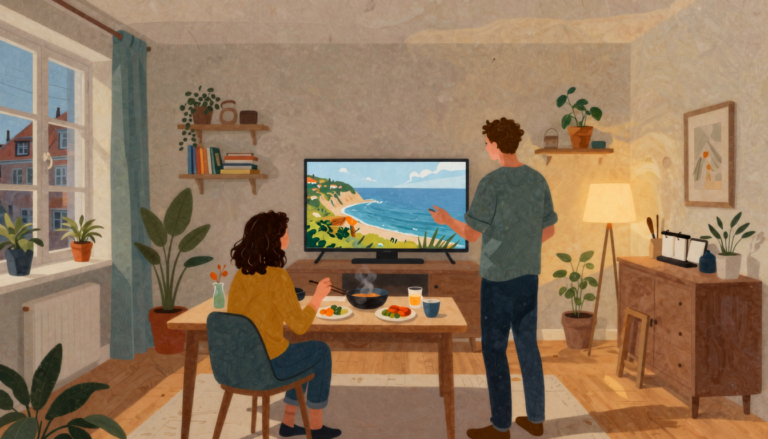
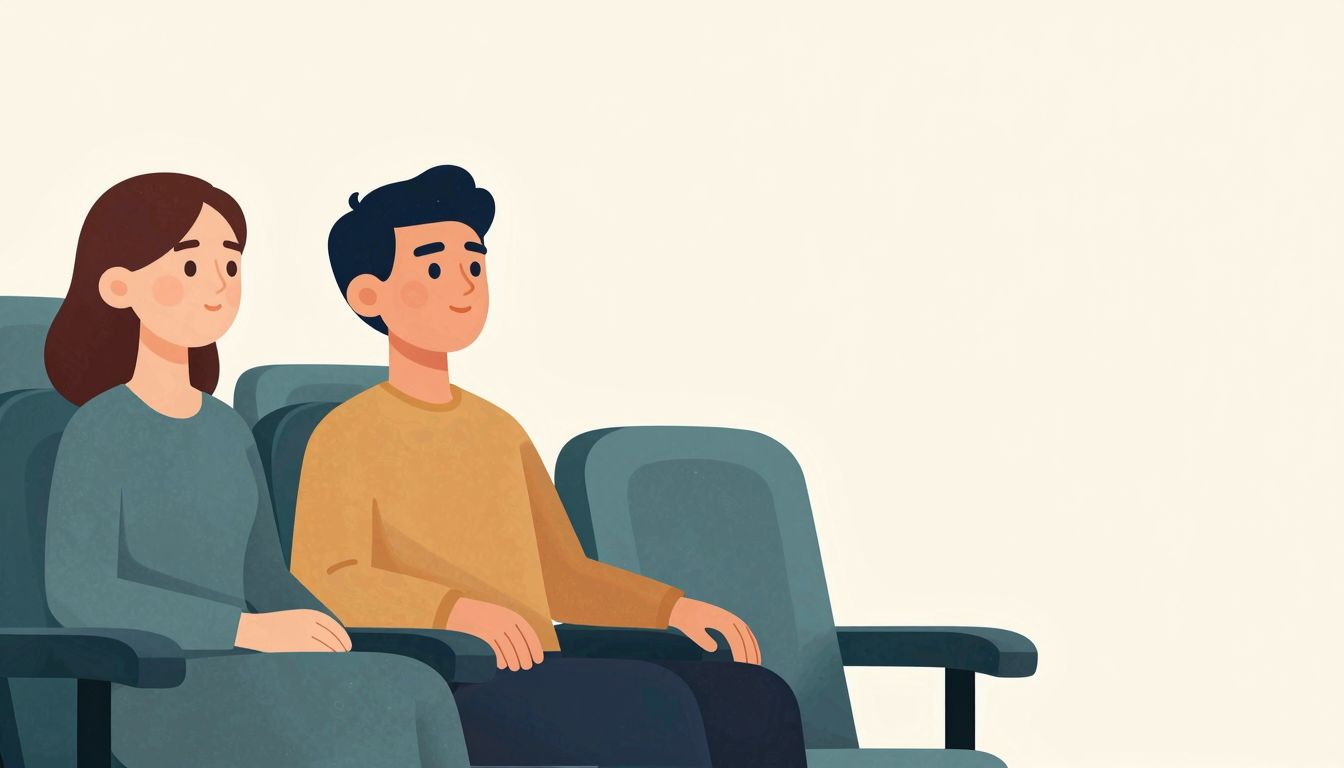
What was the last film that drew you into a movie theater? The lights dim, the screen lights up, and you settle in, ready to put everyday concerns aside for the next hundred-plus minutes. Your brain, though, keeps working.
The original article’s writer recalls a joke adapted from a memorable film line that struck a chord with many people, connecting that recognition to the feeling of being drawn into a vortex of time. Where does that altered sense of time come from? And what is your brain doing while you watch?
How editing changes perceived time
Attention offers a starting point. Recalling an earlier discussion of gaming, the writer explains that when something deeply interests us or demands intense concentration, less attention remains available for tracking time itself. A gripping film plot may work much the same way, drawing our attention into the story until we become less sensitive to time passing.
The viewer’s attentional state is only part of the explanation. Filmmaking techniques also shape perception, and editing is a particularly common example. How does the way shots are joined affect how much time we feel has passed?
In one study, researchers asked participants to watch three kinds of clips—continuous editing, discontinuous editing and no editing—and estimate how long each lasted.
Continuous editing changes shots while preserving continuity of time, space and action. Picture a boy looking at a red balloon outside a window, followed by a shot from outside. The viewpoint changes, but the shots still make sense as parts of one continuous scene. Discontinuous editing joins different situations without continuity in time, space or action. Unedited footage simply presents a continuous passage without cuts.
Before looking at the results, which of these three types would you expect to feel longest, and which shortest?
Every clip lasted three seconds, yet participants underestimated the duration of all three types. Continuous-edit clips seemed longest, followed by discontinuous-edit clips, with unedited clips seeming shortest. Both edited conditions were judged significantly longer than the unedited condition.
How might we explain that pattern? A classical model of time perception links perceived duration to the attention available for processing time. Applying this model, the writer suggests that attention devoted to visual content leaves fewer resources for tracking time, which could explain why all three types seemed shorter than three seconds.
But this reasoning runs into a difficulty. Connecting content across cuts should require more cognitive resources than watching footage without cuts. In the writer’s application of the model, edited clips should therefore seem shorter than unedited ones. The experiment found the reverse. Attention alone leaves part of the result unexplained.
Event segmentation theory offers another approach. In this account, we detect a boundary between events when our predictions about what will happen next no longer fit what we see. Perceiving more events is associated with feeling that more time has passed.
The writer suggests that the sensory changes introduced by cuts could therefore help explain why both edited conditions seemed longer than footage without cuts: those changes may make viewers perceive more event boundaries within the same span of time. Yet discontinuous editing should make boundaries easier to detect than continuous editing does, so by this reasoning, discontinuous-edit clips should feel longer. Again, the observed ordering was the reverse. Event segmentation may explain part of the pattern, but it does not adequately account for the difference between the two edited conditions.
The writer offers a further possibility: the difference may lie in how we reconstruct continuity across cuts. Under this hypothesis, continuous editing calls for greater sensory processing to connect separate shots into a continuous event. Discontinuous editing, meanwhile, involves top-down inhibition—suppressing that same process of building continuity between what we see. The proposed increase in processing activation during continuous editing, and deactivation during discontinuous editing, may help explain why the continuous-edit clips seemed longer. This remains a possible explanation for the pattern, rather than an established mechanism.
How context changes a face
The relationship between shots can also shape the emotion we read into them. What happens when cinema meets psychology—psycho-cinematics?
Consider a face with a neutral expression, followed a moment later by a shot of a coffin. What would you think the person was feeling? Now imagine the identical face, this time followed by a bowl of soup. How might you interpret the expression then?
The face has not changed, but connecting it to different subsequent images can change the emotion viewers attribute to it. This contextual effect is known in filmmaking as the Kuleshov effect. It has also drawn the interest of psychological researchers investigating how context alters our interpretation of facial expressions.
In one experiment, participants first saw a neutral face, then a neutral, fearful or happy emotional stimulus, and finally the same neutral face again. They rated the person’s emotional arousal on a scale from calm to excited and, separately, emotional valence from positive to negative. Researchers also used EEG to record electrophysiological responses.
Compared with a neutral context, a fearful context led participants to rate the unchanged face as expressing greater arousal and more negative emotion. Yet the EEG responses, as described in the writer’s account of the study, remained consistent with a neutral facial expression.
The writer interprets this as a puzzle: processing of the face itself appeared unaffected by the preceding context, yet viewers’ conscious judgments changed. How could those two responses coexist?
The proposed explanation centers on whether the context and the expression agree. A fearful context carries a negative emotional valence, while the face remains neutral. Detecting that mismatch may prompt a different signal, which could in turn lend a negative cast to the viewer’s conscious assessment of the face.
For the writer, a film presents both the world as a director sees it through the camera and situations people encounter in life. This makes cinema valuable naturalistic material for psychological research, offering a way to investigate how people respond to and process multiple sources of information in situations resembling everyday experience.
Filmmaking techniques and psychological effects meet in these investigations, giving researchers a reason to study how cinematic choices shape the viewer’s experience. The writer describes a growing body of research in psycho-cinematics, where cinema and psychology come together to deepen our understanding of both science and art.
Frequently asked questions
Which editing condition seemed longest in the three-second clip study?
Continuous-edit clips seemed longest, followed by discontinuous-edit clips and then unedited clips. Participants underestimated all three conditions, and both edited conditions were judged significantly longer than the unedited condition.
What is the Kuleshov effect?
The Kuleshov effect describes how connecting the same face to different surrounding images can change the emotion viewers attribute to it.
Does attention alone explain the editing study's results?
Attention offers an explanation for why all three clip types seemed shorter than their actual duration. In the writer’s application of the model, however, it does not explain why edited clips seemed longer than unedited footage.