Summary
A calmer school morning can begin the evening before. Make the next step clear, share preparation with your child, and gradually adjust the routine together.
At a glance
Build a consistent morning routine together, prepare school items the night before, and agree on a few steady screen boundaries ahead of time. Adapt the checklist and your support to your child’s age, and keep any morning chore small enough that it won’t delay departure. Begin with a week focused on evening preparation and following tasks in order; this is a starting period, not a deadline for solving every difficulty.
Picture a school morning: it’s 7 a.m., breakfast is on the table, and your child is still turning over in bed. You call once and hear, “In a minute.” After a few more reminders, they sound irritated. When they finally get up, the search begins—for socks, then the red scarf they wear to school. Their schoolbag hasn’t been packed, and their homework still needs your signature. The last ten minutes before leaving dissolve into chaos. You end up shouting, your child ends up crying, and the upset can color the rest of the day.
For many children, this kind of delay isn’t a deliberate attempt to annoy a parent. A morning can involve more tasks than they can readily keep track of, especially when they have little sense of how much time is passing. Preparation left undone the night before adds to the scramble, while a phone or television can pull their attention away. These possibilities won’t explain every child’s difficulties, but they offer a useful place to begin: work out a consistent routine for getting out the door together.
Make the next step clear
Repeating “Hurry up!” is exhausting for a parent, while a child often feels the pressure without knowing exactly what to do next. Tonight, try writing out the morning routine together and posting it by the bedroom door or beside the dining table. A simple sequence might be: get up, get dressed, wash and brush teeth, eat breakfast, check the schoolbag, then put on shoes and leave.
For an elementary school child, simple pictures can illustrate the tasks, with a box to check after each one. A middle schooler may find a posted picture checklist childish and prefer to write their own sticky note or keep the list in their phone’s notes app. The phone option comes with a condition: no scrolling through short videos or playing games in the morning.
A mother could introduce the idea by saying, “I don’t want to chase you around like an alarm clock every morning. Let’s write down what needs to happen before we leave. Then I can remind you to follow the routine instead of prompting you through every single task.” This shifts the conversation from blaming a child for being slow to working out how the morning can run more smoothly together. That shared task may make cooperation easier.
Move preparation to the night before
Some of the work can happen before the morning begins. An unpacked schoolbag, a school uniform that hasn’t been found, an unwashed water bottle, or homework left out of the bag can each become urgent when it’s time to leave. Preparing these things in the evening can take much of the scramble out of the morning.
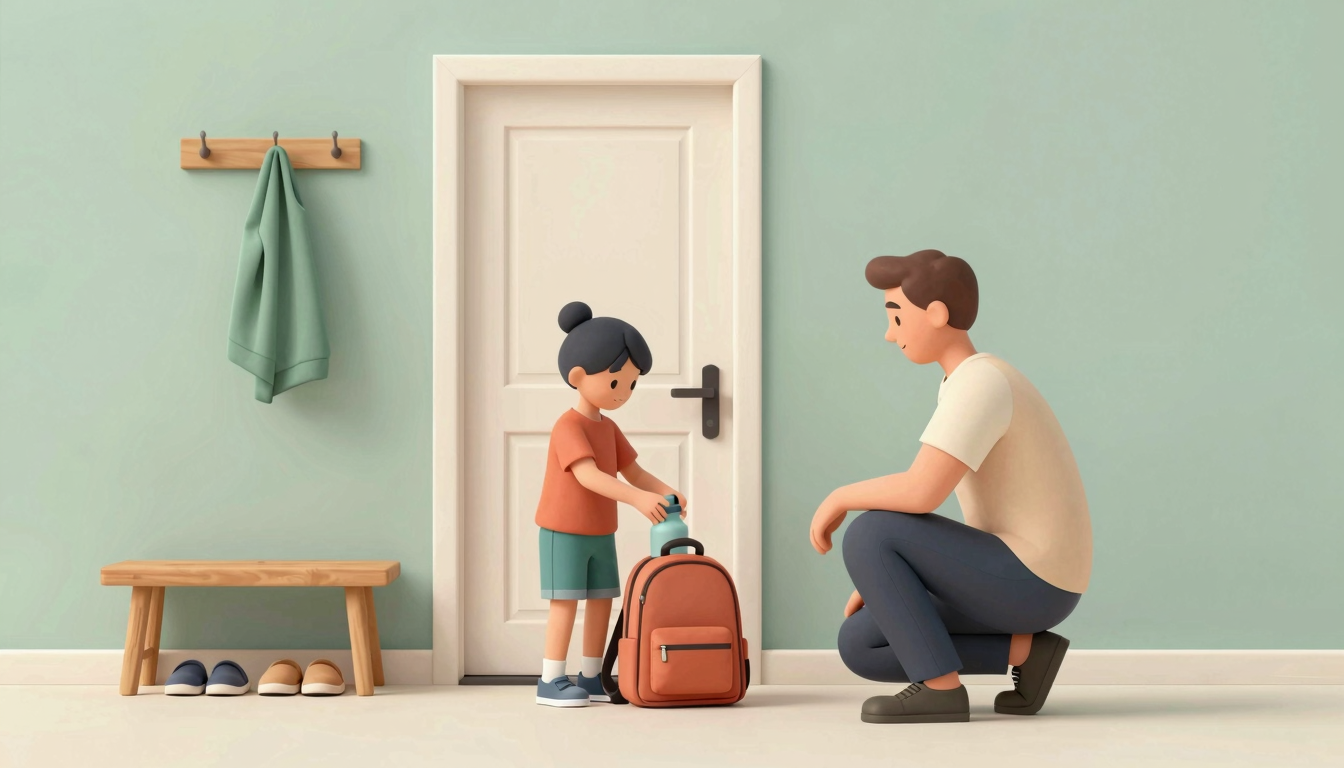
Try setting aside the last ten minutes before bed as a regular time to get ready for tomorrow. Let your child do the preparation, with you taking a quick look alongside them. For an elementary school child, a simple arrangement could be to put the packed schoolbag by the door, lay clothes beside the bed, and keep the clean water bottle and eating utensils in a fixed place.
You might encourage them by saying, “Let’s spend ten minutes getting ready tonight so tomorrow morning’s ten-minute rush can feel less frantic. You pack, and I’ll stay beside you while we check.” The point is to make the value of preparing ahead concrete. Your child does the organizing; you provide a brief check.
By middle school, gradually hand more responsibility back to your child. You can replace looking through their schoolbag with three questions: “Is your homework packed? Is everything you need to hand in tomorrow ready? Have you set out your uniform or sports gear?” Once you’ve asked, stop there instead of continuing with more reminders. You’re still offering support while leaving more of the checking to them.
If your child occasionally forgets something, resist the urge to take over all the preparation again. Gently work through what happened together: “Did it never make it into your bag, or did you miss it because you hadn’t checked the class schedule? Which step should we change?” The aim is to help your child learn how to adjust the routine, so that what stays with them is more than the memory of being scolded.
Agree on screen boundaries before the rush
Even with everything prepared, screens can be especially disruptive. Checking a message, scrolling through a video, or playing a game for a couple of minutes can eat into the time left before departure. Grabbing the phone away just as you need to leave can turn the rush into an argument. Agree on the boundaries beforehand, while you have time to discuss them calmly.
For an elementary school child, one option is no television or tablet before leaving. If everything is ready and they are sitting by the door five minutes before departure, they can choose one song to listen to. Keep the reward brief and easy to manage, so it doesn’t delay leaving.
With a middle schooler, discuss an arrangement that respects their growing wish for independence while keeping departure time clear. You might say, “You can use your phone, but we need to leave on time. Wash your face, brush your teeth, eat breakfast, and check your schoolbag by 7:20, and you can decide how to use the time that’s left. If your phone use or how you manage that time makes you late, the phone stays in the living room the next morning.” Choose a time that fits your household; 7:20 is simply an example. The consequence is tied to a delay caused by that phone use or time management.
Keep the rules few and consistent. Banning a screen one day and giving in the next because your child protests makes the boundary harder to understand. Following through steadily can help make expectations clear, even if your child still objects sometimes.
Give your child a small share of the work
Getting out on time is one purpose of a morning routine; practicing responsibility can be another. If children are always woken up, served breakfast, and prompted out the door, they may have little opportunity to develop their own sense of time. A small morning chore gives them something to take charge of, provided it stays manageable enough that it won’t delay departure.
For an elementary school child, that could mean putting away their pajamas, taking their bowl to the sink after breakfast, or turning off the bedroom light before leaving. A middle schooler could fill their own water bottle, tidy one corner of the breakfast table, or check that everything they need to take from beside the door is there. Choose a task that fits; these are options, not a list to complete every morning.
Opening with “You’re old enough to do this” can put a child on the defensive. Instead, you might describe how you’ll share the work: “We each have a small part to take care of in the morning. You handle your water bottle and schoolbag, and I’ll handle breakfast. We’ll keep things running together.”
When the result isn’t perfect, acknowledge what your child has done before pointing out the detail that needs attention. For example: “You filled your water bottle yourself today—that was good. Tomorrow, remember to screw the lid on tightly.” Noticing these small efforts may help your child feel willing to keep doing them.
The whole family’s rhythm needs to change, and that takes more than asking your child to move faster. A checklist won’t solve every difficulty overnight. Start by sticking with two things for a week: preparing the night before and following the morning tasks in order. A week gives you somewhere to begin, without becoming a deadline for getting everything right. With less shouting in the rush and more familiar steps to follow, your child may gradually come to know what they need to do without waiting for each reminder.
Frequently asked questions
What should a school morning checklist include?
A simple sequence is getting up, getting dressed, washing and brushing teeth, eating breakfast, checking the schoolbag, and putting on shoes to leave. Make the checklist together and adapt its format to your child’s age and preferences.
How much should parents help with evening preparation?
Let your child prepare while you provide a brief check. For middle schoolers, gradually replace checking inside the schoolbag with questions about homework, items due tomorrow, and clothing or sports gear, then stop instead of adding more reminders. If something is occasionally forgotten, review which step needs changing together.
Can a middle schooler use a phone for the morning checklist?
A phone notes app is an option, with the condition that the morning does not include scrolling through short videos or playing games. Discuss screen boundaries beforehand. In the separate example allowing control over remaining time after preparation, keeping the phone in the living room the following morning applies if phone use or that time management causes lateness; 7:20 is only an example preparation deadline.
Should a morning routine work within one week?
A checklist won’t solve every difficulty overnight. Use the first week to practice preparing the night before and following morning tasks in order. The week is a starting period, not a deadline for getting everything right.