Summary
An old account and memories of a shared pet turn a boyfriend’s distant past into present distress. The article explores comparison, uncertainty, and the search for reassurance that can keep jealousy alive.
At a glance
Retroactive jealousy concerns a partner’s previous romantic relationships, even when an ex has no involvement in the present relationship. Social media can make the past vivid, encourage comparison, and deepen uncertainty; searching for reassurance may supply more material to dwell on. The article suggests stopping online evidence gathering and returning attention to the present relationship, with open conversation that avoids excessive questioning about past details.
One night, I was idly scrolling through social media when curiosity got the better of me. I found my boyfriend’s ex-girlfriend’s account. What I saw kept me awake.
My boyfriend and I met playing badminton. He is a few years older than I am, but conversation came easily, and we went out for a meal afterward. We have now been together for three months. Although we have known each other only a short time, the relationship has been especially sweet. He understands my feelings and the way I see things. Naturally, I wanted to know about the life he had lived before we met.
Following his likes and looking through photo albums on Weibo eventually led me to his ex’s account. Perhaps the posts explicitly about their relationship had long since been deleted. Even so, the details that remained formed a remarkably clear picture of their life together.
I already knew they had dated for three years and lived together for one. Until then, those facts had felt abstract. They had broken up long ago and had already removed, unfollowed, or blocked each other across their social media accounts.
Then I found the photographs and updates about the rabbit they had raised together: bringing it home, watching it grow, caring for it when it became sick, and eventually losing it. That was what undid me.
I could not stop imagining their life. Had they shared so much? Had they been deeply intimate while living together? Had they made all kinds of promises about their future?
Soon those imagined scenes began intruding on our present. When my boyfriend suggested taking a trip together, my first thought was that he must have traveled with his ex, too. Had they been closer then than we are now? When he carefully remembered the flavors I liked, I wondered whether he had been just as thoughtful and tender with her.
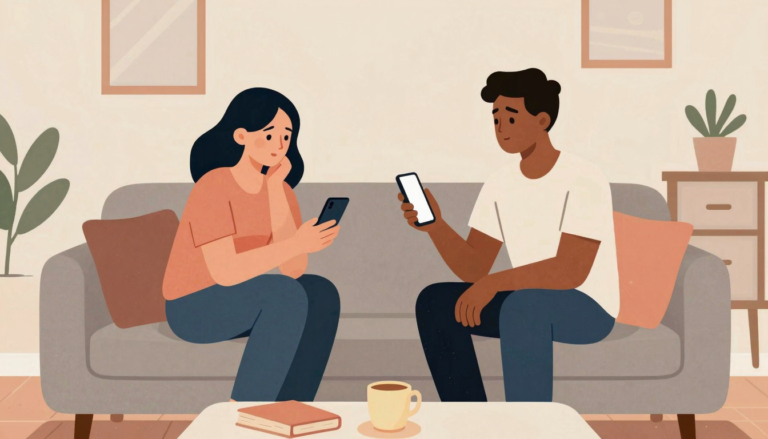
My emotions became difficult to manage. Thinking about everything they had experienced together hurt so much that I sometimes cried. There was a precise word for what I felt: jealousy. It ate away at me.
On the surface, I might have seemed to be making an unreasonable fuss over a past nobody could change. But other people may recognize the feeling. Jealousy focused on a partner’s previous romantic relationships has a name: retroactive jealousy.
The ex does not have to reappear or interfere in the current relationship. Social media can faithfully preserve a love that has already ended, allowing it to keep affecting the present.
Why a partner’s past can feel threatening
Exclusivity and the sense of belonging uniquely to one another are central to romantic relationships. Becoming aware of a former partner can unsettle that feeling of being specially chosen. Avoiding jealousy is one reason people often hesitate to discuss their exes or previous sexual experiences.
Three processes help explain why the past can carry so much emotional weight.
Comparison can undermine your sense of worth
Suppose you discover that your girlfriend’s former boyfriend is handsome and highly educated. You may begin asking questions that have little to do with his actual place in her life now: What does she see in me? If she used to date someone so impressive, are we really suited to each other? Am I good enough to deserve her love?
Research has found that a partner’s ex can readily become a target of social comparison. People compare education, work, interests, and other qualities. Physical attractiveness stands out as the most important comparison dimension in the research described here. An ex with an attractive face or body may leave someone feeling especially threatened or inadequate.
The relationship can feel less unique
A relationship can feel like a private world of affection, closeness, and shared confidences. What happens when you imagine your partner doing all those same sweet things with somebody else?
You may have understood your partner’s love as a response to the qualities that make you who you are. Remembering that your partner once loved another person just as intensely can make that understanding painful to hold on to.
Awareness of an ex may therefore reduce the perceived uniqueness of the current relationship. What felt intimate and special can begin to seem less so.
Uncertainty can spread
Photographs of a partner and an ex can prompt questions about the present: Are we as happy as they were? Could we take pictures that look that affectionate? Is our relationship somehow less close or less fulfilling?
Other doubts concern feelings that might remain: After everything you went through together, have you really moved on?
Still others reach into the future: If that relationship eventually ended so unceremoniously, what makes me think ours will last?
These questions can gradually weaken confidence in the relationship you actually have.
How social media gives jealousy more to work with
When people feel they do not know enough about a partner, they may look for ways to close that gap. Social media seems to offer the perfect route into the missing parts of someone’s life. It also offers fertile ground for jealousy.
Four features make it particularly easy to keep looking.
Access. A few taps can reveal someone’s past and an entire network of relationships.
Vividness. The information is not limited to words. There are photographs, videos, audio recordings, and links. Knowing that your partner dated someone for three years may feel remote. Seeing a photograph of a gift your partner gave that person can make the relationship suddenly, painfully real.
Persistence. Deleting affectionate posts from one platform does not necessarily erase the traces elsewhere. Old likes on Weibo or Zhihu may remain after romantic updates on WeChat are gone. Small digital footprints can bring a distant moment vividly into view and disturb the present.
Concealment. With enough care, someone can search extensively through a partner’s social media without the partner knowing. The search may lead to an alternate account the partner never mentioned, then to an ex’s account, and even to the account of the ex’s current partner. The internet lets people stay out of sight while indulging a curiosity that can become dangerous to their peace of mind.
Yet while social media satisfies the urge to look, it is easy to forget how different it is from everyday life. People tend to post their most polished, memorable, and emotionally powerful moments. Those selections can make both an ex and the former relationship seem more ideal than they were, increasing the sense of threat.
When searching for reassurance deepens the hurt
After finding something that triggers jealousy, some people respond by searching for more.
One research respondent explained the hope behind that impulse: “I want to know why, how it happened, and when. Then I can forget about it.”
But curiosity does not necessarily settle down once it has more information. Following one trace after another can generate greater uncertainty and jealousy. At first, you may have seen only fragments of a shared life. Then you discover how the couple got together, how many people knew about the relationship, and other details that provide still more material to dwell on.
The search intended to put the past to rest can give it a larger presence.
Jealousy can also have consequences beyond the search itself. For the individual, it can bring depressive feelings and a sense of inferiority. Within a relationship, it can lead to threats, surveillance, and intimate partner violence, including accusations and verbal abuse, physical violence, and forced sexual activity. It may ultimately contribute to a breakup.
There can also be an opening for honest conversation. Some people respond to their own or their partner’s jealousy by initiating discussions or sharing phone passwords. Such strategies can, to some extent, reduce distrust and help partners understand each other better.
Returning your attention to the relationship you have
Imagining a partner’s former relationship, then living with the suspicion and jealousy those images provoke, is exhausting. It can also make it harder to recognize the sincerity of the affection being offered now.
The first step toward change is acknowledging that the relationship between your partner and an ex belongs to a past you cannot alter.
Everyone has a history. Some of it may be beautiful, some painful or difficult to face, and some full of regret. Your partner’s past deserves the same respect—and the same chance to be left behind—as your own. What matters is the heart and the choices each of you brings to the present.
It also helps to recognize that you and the ex are not competitors. Comparison may happen almost automatically, but every relationship is unique. A person’s worth cannot be measured by the seemingly objective indicators displayed on social media.
Let what happened in the past belong to the past.
That may mean stopping the online gathering and checking of evidence. When curiosity swells and you find yourself reaching for the search box, turn your attention to the partner and relationship in front of you. Consider how far removed the events troubling you are from your life together now. If the urge to search is too difficult to resist, temporarily uninstalling the app is one possible step.
When jealousy will not subside, speaking openly with your partner remains the best choice. But take care not to pursue every detail of the past. The answers may hurt you afresh and give jealousy more room to continue.
Cherish the present. Love lives in fleeting moments whose warmth can linger long after they pass.
Frequently asked questions
Can retroactive jealousy happen when an ex is no longer involved?
Yes. Jealousy about a partner’s previous relationships can arise even when an ex has neither reappeared nor interfered. Social media can preserve reminders that continue to affect the present.
Why can searching a partner’s past make jealousy worse?
Following more online traces can supply additional details to dwell on, increasing uncertainty and jealousy. Social media also tends to show polished, memorable moments that may make a former relationship appear more ideal than it was.
What does the article suggest when the urge to search is hard to resist?
The article suggests stopping online evidence gathering and redirecting attention to the present partner and relationship. If the urge to search is too difficult to resist, temporarily uninstalling the app is one possible step.
How does the article suggest discussing persistent jealousy?
It recommends speaking openly with your partner while avoiding excessive questions about past details, since those answers may cause fresh hurt and prolong jealousy.