Summary
An open stance can take effort when you are already concentrating on what to say. The article explores why rehearsing body language after learning your content may help it feel more natural.
At a glance
The article recommends becoming familiar with your presentation content, then rehearsing open posture and body language until they require less conscious attention. Deliberately monitoring posture during delivery may compete with attention to your message. Audience responses to openness and proximity are complex, and subsequent studies did not reproduce Cuddy’s original hormonal findings, although participants still reported feeling better.
The source author recalls a friend turning to them in a panic just before he was due to give a presentation.
“I can’t do this. I’m too nervous.”
“This is going to be a disaster. I’m not ready.”
The author thought he might freeze onstage and never recover. But the moment he stepped up to speak, he seemed to become a different person. He radiated confidence. So much for all that modesty, the author thought.
Afterward, he told the author quite sincerely, “Somehow, I wasn’t as nervous while I was talking. It was amazing.”
“Maybe the posture really helped,” he added. “I’m definitely going to try it again before my next presentation.”
Then, with the air of someone revealing a secret weapon, he pulled out a TED video. The speaker was Amy Cuddy, the Harvard social psychologist, discussing the surprising influence of something we often overlook: body language.
It can affect whether an audience likes us, whether a boss hires us, and even whom we go on a date with. But does that mean standing tall with your hands on your hips is enough to make a presentation succeed?
What body language can do
Research on body language and public speaking has largely explored two questions: how our posture affects our own feelings, and how it affects other people.
The first brings us to what Cuddy calls a “power pose.” Stand upright, smile, and put your hands on your hips like Wonder Woman, taking up more space.
The proposed mechanism is a message you send yourself: “I’m confident.” When your mind registers that you are standing and smiling confidently, you can begin to feel more composed and self-assured. Your posture, in other words, can influence your emotional state.
Cuddy’s initial research reported that simply adopting a powerful stance increased testosterone and reduced the release of stress hormones. Subsequent studies did not reproduce those original findings, although participants still reported subjectively that they felt better.
The second line of research looks outward, asking how a speaker’s posture and movements influence the audience.
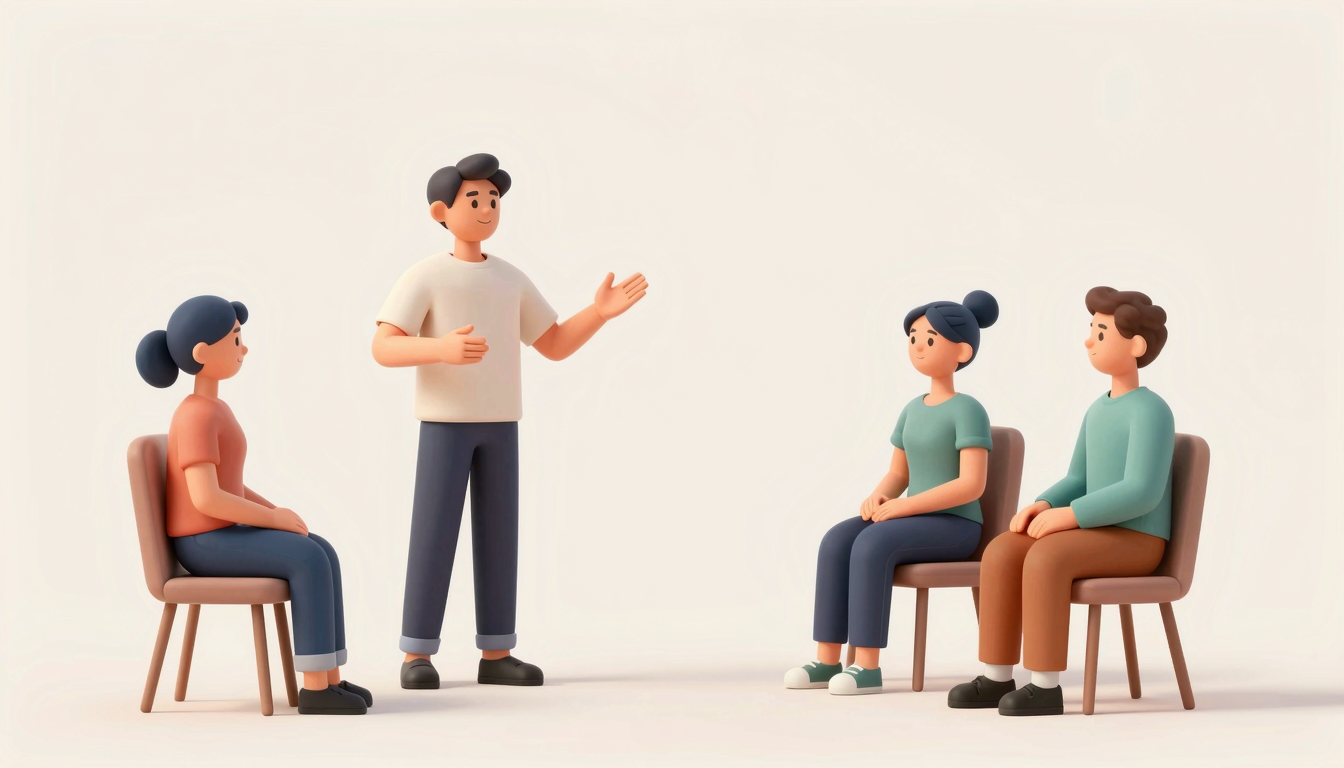
Here the findings are more complex and subtle. Overall, though, audiences tend to respond more favorably to speakers who use open body language—extending their limbs and occupying more physical space—and stand closer to their listeners.
So all you have to do is stand at the podium with your chest out, and you’ve won the room?
It is not that simple.
Thinking about your posture takes attention
A recent study involving mathematics tasks found that students performed better when they relaxed their bodies, for example by reclining comfortably on a sofa. Relaxing their posture freed more cognitive resources for solving the problems.
When students were required to expend effort maintaining an upright position at a desk, they performed worse on the test.
The implication is that consciously monitoring posture can interfere with the task you are trying to complete. Much of the time, we manage our posture without thinking about it. Once we begin deliberately controlling it, some of the attention available for the main task goes toward managing the body instead.
Conscious information processing is relatively slow: approximately 40 bits per second, with 8 bits making up 1 byte. Unconscious processing, by comparison, is put at roughly 1.1 × 10^7 bits per second. Much of our everyday activity—moving, walking, speaking, and chewing gum—therefore happens without conscious control.
If an open stance and closeness to your audience were already your automatic way of presenting, you could devote your attention to what you wanted to say. Speaking in public would become a little easier.
Unfortunately, facing a large crowd often brings out a very different impulse. We want to retreat, put distance between ourselves and the group, and keep ourselves safe. Instead of spontaneously striking a power pose, we may immediately want to hide in a corner like a small child.
This withdrawal response is described as a capacity our ancestors evolved to cope with danger, one that became an unconscious default.
That leaves a speaker with a problem. To benefit fully from body language, you need to change the tendency to shrink back, which means deliberately paying attention to your posture and movements. Yet doing so may distract you from the presentation itself.
The way through is to practice until openness becomes your default.
Rehearse until it feels natural
The more familiar an action becomes, the more likely it is to happen without conscious effort. Before a presentation, you can deliberately rehearse your posture and body language. Over time, remaining open and close to your listeners should require less of your attention.
Think back to learning to ride a bicycle. At first, staying upright, keeping moving, and avoiding obstacles took everything you had. There was little attention left for anything else.
Once you became comfortable riding, it no longer demanded your full concentration. You could enjoy the scenery or chat with a friend riding alongside you.
The same familiarity is at work when you walk, brush your teeth, or get dressed. You do not usually have to think carefully through each movement. You have performed those actions so often that they run almost automatically.
Body language deserves a place in presentation rehearsal for the same reason. With enough practice, using an open posture and standing closer to your audience can become things you do without continually reminding yourself.
The order of practice may help, too. First become familiar with what you plan to say. Then add posture and body language to your rehearsal. You may find it easier to succeed when the content is already comfortable and you are no longer trying to learn everything at once.
Before your next presentation, give your body language some rehearsal time. With practice, you too could become the speaker whose presence fills the room.
Frequently asked questions
Can a power pose guarantee a successful presentation?
No. The article describes audience responses to posture as complex and subtle. Cuddy’s initial research reported hormonal changes, but subsequent studies did not reproduce those findings, although participants still reported subjectively feeling better.
Why might consciously controlling posture be distracting?
Deliberately controlling posture uses attention that could otherwise go toward the main task. The article illustrates this with a mathematics study and applies that reasoning to presentations; it does not describe a direct public-speaking experiment showing the same effect.
When should you add body language to presentation rehearsal?
First become familiar with what you plan to say. Then add posture and body language to your rehearsal. The article suggests this order may make practice easier because you are no longer trying to learn everything at once.