Summary
A reported airport mishap opens a discussion of eldest-daughter responsibilities, shared family anxiety and the possibility of leaving a stressful event without a scapegoat.
At a glance
Family expectations can become deeply internalized, while anxiety can spread among relatives and concentrate on one person. Xibei’s account shows that recognizing responsibility boundaries does not necessarily remove the emotional burden. The article suggests that family ease may involve relative emotional independence and allowing discomfort and conflict without insisting that someone must be at fault.
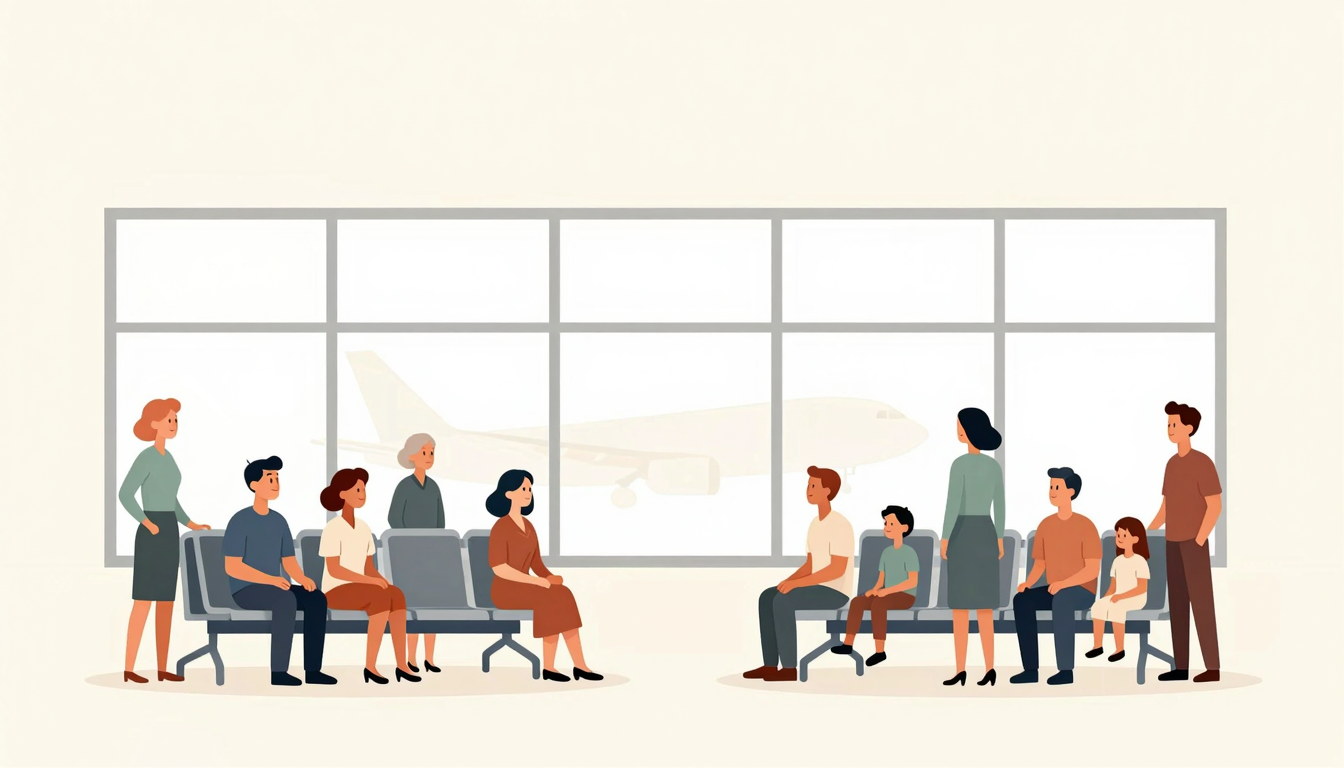
A family encounters a last-minute problem at the airport. Their plans unravel, yet nobody erupts. Some of them head off on vacation without any luggage—and remain cheerful about it.
That was the scene described by Weibo user “Black Cat, White Socks” in a post that received more than 460,000 likes. The post became the starting point for a viral conversation about songchi gan: a sense of ease, of being able to relax rather than remain constantly on edge.
Some readers immediately thought of the tension in their own families. Others could only say how much they envied what they had read. Soon, this sense of ease was being discussed across the internet.
But the appeal of the phrase leaves deeper questions. What does it feel like to be unable to relax? Why is ease so hard to come by? And what does it actually mean within a family?
When being the eldest means never relaxing
Xibei, an eldest daughter who longs for that ease, says she has never really experienced it, from childhood onward.
In her family, being the eldest meant being entrusted with serious responsibilities. Two pressures have followed her since elementary school, when she first became conscious of them: guilt about costing her parents money for her education while being unable to help shoulder the family’s burdens, and a strong conviction that she must take good care of her younger brother and sister.
Before her siblings arrived, she had enjoyed being an only child. Back then, it felt as though everything good in the household was hers. If there was only one apple, her parents would save it for her. Afterward, her feeling shifted to the opposite extreme: nothing in the household seemed to belong to her.
That enormous change left her walking on eggshells. What had she done wrong? Why did it seem as though her parents no longer loved her? What could she do to earn their love?
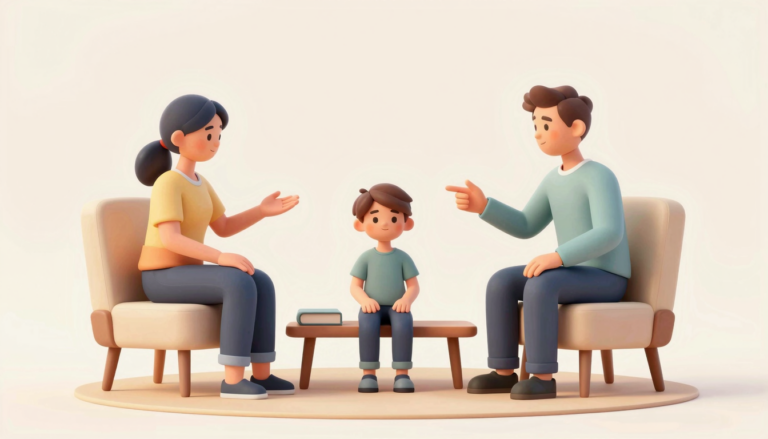
She felt the difference in their standing most sharply when the three children fought. Whether she argued with her brother or her sister, and whatever the argument was about, appealing to her parents brought the same response: “You’re the eldest.” As she remembers it, they never asked what had happened.
Those few words were enough to condemn her as the one in the wrong, every time. The eldest should give way to the younger children. The eldest should look after them. The eldest should know better. The eldest should do more of the work.
For Xibei, ease came to feel like a luxury. Her parents had so many expectations of her that, gradually, she absorbed them. Their expectations and the responsibilities attached to them became part of her sense of who she was.
The responsibility, pressure and anxiety have stayed with her. Today, she can distinguish between what is her responsibility and what is not. She has also recognized and accepted the fact that she struggles to relax. Neither realization has made the burden disappear.
How anxiety travels through a family
Psychology practitioner Liu Xiangyu approaches the airport story through a different question: what might have happened if the same disruption had occurred in many other families?
Liu imagines another version of events.
The mother discovers that her child’s identification document has expired and immediately feels overwhelmed by guilt. “Why did I forget to check it?”
Already blaming herself, she calls the relatives on the plane to explain. They panic. One needs a computer that is still in the luggage: “How am I supposed to work without it?” Another worries that, with two people unable to come, the entire itinerary will have to be rearranged.
Their anxiety spreads through the family and reaches the mother over the phone. Hearing their reactions makes her more anxious and more self-critical.
Beside her, the child picks up on all of it and feels responsible for holding everyone back. If the mother can no longer bear her anxiety, she might turn to the child and say, “Didn’t I ask you to show me your identification the other day? How could you forget? I had so many things to prepare. Couldn’t you have been a little more sensible?”
If the situation unfolded this way, Liu suggests, the whole family’s anxiety would end up concentrated on the child. The child could become intensely distressed, left with a single belief: “Everything is my fault.”
Liu connects this pattern with what psychologist Bowen described as projection onto a child, referring to it as “triangulated anxiety.” In Liu’s explanation of Bowen’s family systems theory, emotions operate across the family, rather than being contained within separate individuals.
Liu recounts Bowen’s image of a herd of cattle: when one animal becomes frightened, the whole herd becomes agitated. Something that affects one person also affects other people within the family system.
That helps explain why a family’s sense of ease can be so rare. It depends on most members maintaining a relatively high degree of differentiation—a measure of emotional independence within the family.
Each person faces different uncertainties and difficulties. In Liu’s imagined airport scene, however, the relatives lose sight of those differences. Their distinct emotional experiences are swallowed by the collective reaction, and everyone becomes fused with the anxiety of the family as a whole.
A mishap without a scapegoat
Gao Wenjie, a graduate student in clinical and counseling psychology, also envies the family in the airport story. For Gao, the most moving part is that nobody went looking for a scapegoat.
The fuller account of the incident makes the disruption clear. Just before boarding, the family discovered that a child’s identification document had expired, and none of the luggage could be checked in. The mother accompanied that child home. The remaining relatives decided to leave all the luggage behind and went cheerfully on vacation.
Scapegoating means blaming something bad that has happened on one family member’s behavior, thereby preserving the family’s image. One person becomes the explanation for what has gone wrong.
It is a familiar pattern: a father sees the child’s fixation on online games as “the problem.” A mother sees the father’s lack of involvement in family life as “the problem.” The father sees the mother’s inability to raise the child properly as “the problem.” Someone must occupy that position and bear responsibility for the unhappiness of the whole family.
Yet putting a person in that position may bring no peace of mind. It may instead heighten the tension and anxiety in the relationships around them.
Seen this way, there is something endearing about the airport family. Nobody blamed the child whose identification had expired. Nobody blamed the mother who had forgotten to check it. Nobody became angry with airport staff because the luggage could not be checked. Nobody reproached themselves—or anyone else—for failing to pack more belongings in their carry-on bags.
They could let the situation be what it was.
Their ease came precisely from collectively allowing an event that was anything but easy to happen.
Allowing room for discomfort
We seem to find it difficult to accept that sometimes bad things simply happen.
Within a family, people occupy different roles and see things from different positions. Uncomfortable friction, the distribution of power and shifts in that power are normal and necessary parts of family life.
So what might ease mean? Perhaps it means accepting these realities without insisting that they must be someone’s fault. Allowing conflict and contradiction to exist within the relationship.
Perhaps that can be enough.
Frequently asked questions
What does songchi gan mean in this article?
Songchi gan describes a sense of ease: being able to relax rather than remain constantly on edge. Within a family, the article tentatively connects it with allowing discomfort and conflict without insisting that someone must be at fault.
Does understanding responsibility boundaries make family pressure disappear?
In Xibei’s account, it has not. She can distinguish her responsibilities from those of others and accepts that she struggles to relax, yet the responsibility, pressure and anxiety remain.
What does differentiation mean in the article’s discussion of family anxiety?
In Liu Xiangyu’s explanation, differentiation means relative emotional independence within the family. Most members maintain enough independence to recognize their different uncertainties and difficulties, rather than becoming fused with the family’s collective anxiety.
Does family ease mean having no disagreements?
The article allows room for conflict and contradiction. Its tentative conclusion is that ease may mean accepting uncomfortable friction and differences within family relationships without insisting that they must be someone’s fault.