Summary
Holding back happiness and absorbing a cinema audience's sadness illustrate different ways social life can shape emotion. The article explores learned emotional expectations, power and the individuality that remains.
At a glance
Social construction theory emphasizes how culture shapes the beliefs, judgments, desires and learned expectations involved in emotional experience and expression. It does not deny inherited or physiological foundations. Social standards influence emotions without inevitably determining them: individual experiences and judgments continually reshape how people feel and express themselves.
After a full year of hard work, you finally win the scholarship you have wanted for so long. You are delighted. Then you notice your roommate, who did not receive one, and hold back your excitement.
Or you are watching a movie. The couple on screen are pouring out their hearts in an anguished farewell, facing separation and death. At first, you feel nothing. But as people around you begin to cry, your own mood somehow sinks along with theirs.
We tend to think of emotions as private possessions. Yet, like chameleons, we change our emotional colors with our surroundings, often without noticing. We may imagine that our feelings exist independently of the setting, only to discover that a friend from another culture experiences the same situation very differently.
Why do other people have so much influence over what we feel? The social construction theory of emotion offers an account.
Where our emotions come from
It is easy to connect emotions with bodily responses. Anger can make our faces flush; fear can make our breathing short and quick. These familiar experiences encourage us to see emotion as a physiological process. Psychologists have long studied that relationship and developed numerous theories to explain it.
Basic emotion theory goes further, proposing that each basic emotion has a distinct neural foundation in the brain. But are emotions simply products of physiology?
A research analysis attributed to the scientist Barrett examined numerous papers and found that emotions did not each belong to a particular neural structure. Instead, different emotions involved coordinated activity across different brain regions. The precise relationships remain a subject of debate. Meanwhile, research reporting cultural differences in emotional responses to the same event has drawn attention to the influence of environment and culture.
The social psychologist Mead argued that a social group's experiences and behavior influence how individual experience forms and develops. Imagine that you have always liked fried chicken with cola. Then, somehow, you step into a Korean drama, where everyone around you prefers fried chicken with beer. You might try that combination and gradually come to love it. What the people around you enjoy can help reshape your own behavior and experience.
How might a similar process shape emotional experience and expression?
Some psychologists suggest that humans and other animals may share basic emotions, such as joy, anger, sadness, and fear. Many of our more complex feelings, however, may be learned through social and cultural life, which also gives us ways to understand and name them.
To follow this argument, it helps to begin with cognitive theories of emotion. These describe emotion as a set of bodily changes, behaviors, and feelings arising from beliefs, desires, needs, and expectations.
Suppose you argue with your partner and become furious. You find yourself wondering why you should stay in the relationship at all. The object of your anger is the behavior that upset you. Your belief is that the behavior was directed at you. Your appraisal is that it shows your partner does not love you enough. Your resulting desire is to break up. Together, these beliefs, appraisals, and desires make up the experience of being angry.
Social construction theory builds on this account. It locates the origins of emotion in attitudes that include beliefs, judgments, and desires, while emphasizing how strongly those attitudes are influenced by cultural ideas.
Psychologists who support this approach often describe an emotion as a “syndrome”: a constellation of components, including physiological responses, subjective experience, and particular behaviors. Here, the term refers to those components occurring together.
The theory does not deny that emotions have inherited and physiological foundations. Its emphasis is that we acquire ways of experiencing and expressing emotion through culture. In this account, emotions can be understood as temporary social roles, enacted according to learned rules and standards of judgment.
Consider giving a friend a watch. A physiological account might focus on the gift activating the nervous system, producing internal bodily changes through which excitement or anger is felt. Social construction theory pays particular attention to the cultural meaning of the gift.
A friend from another culture might be delighted to receive it. A Chinese friend might instead associate it with “giving a clock,” an expression with an ominous funerary resonance in Chinese, and become angry. These are possible reactions: the point is that the cultural meaning attached to a gift can change the emotional experience of receiving it.
Our tendencies to respond emotionally can therefore differ according to the societies and cultures in which we grow up.
Learning which feelings belong where
Imagine laughing loudly at a funeral or sobbing inconsolably at a wedding. Even picturing these scenes may make you cringe.
The thoughts behind that discomfort are familiar: “Someone has died. How could I laugh at something so sad?” Or: “This is their wedding day. Wouldn't my crying cast a shadow over it?”
We carry an expectation that certain occasions call for certain emotions. Our cultures have already established many of these matches between situations and feelings. Through daily life, we learn the conventions that others recognize, allowing emotional expression to communicate in ways they can understand.
There is also a strategic dimension to emotion. We consider which feelings to express, to whom, and under what circumstances, seeking to avoid punishment or win acceptance. We try to make our emotional presentation fit the moment.
That is why we can be dancing with excitement inside while keeping our faces perfectly still. Within these social expectations, envy and distress may be treated as undesirable feelings that should not be displayed too openly to strangers. Two people who cannot stand each other may still maintain an outward peace.
Power also matters. As an employee, you might be furious about work yet hold back from showing your anger to the boss. Otherwise, you imagine, you could arrive the next morning and be fired for the outrageous offense of stepping through the door with your left foot first. The absurd pretext captures a recognizable fear: someone with power over you might retaliate if you let your anger show.
Culture does more than link emotions to occasions. It also supplies expectations about which emotions members of particular groups should display.
When a child cries, we might say, “Don't cry, sweetheart. Be strong.” When a young adult cries, the response might be, “You're old enough to know that crying won't solve this.”
Shouting, irritability, and sobbing may lead us to describe an adult as out of control. The same behavior in a baby is easier to understand and forgive. Babies are immature and do not yet have much capacity to regulate themselves. Their lack of composure fits the emotional expectations we attach to their age. We might still become irritated or criticize the behavior, yet we do not necessarily see it as inappropriate for a baby.
We learn these distinctions through encounters with other people. We experience emotions, observe their expression, and gradually internalize rules that our social world already takes for granted.
Very early in life, even smiling can be a biological response without substantive meaning. As we grow, we come to understand more complex feelings, including emotions that are hidden or disguised, and expressions adopted to fit a situation or role. The scenes we witness become models. Social rules and moral expectations gradually become part of our own emotional standards.
How emotions help organize social life
If emotions are so closely connected with society, what does that connection do?
Social and moral rules teach us when particular emotional responses are expected. In this sense, emotions have a moral function. Social construction theory holds that they participate in forming social, cultural, and moral rules, and help maintain the resulting order.
If you wrongly blame a close friend, you feel guilty because you know you have done something wrong, and that guilt prompts you to put it right. Public anger over inconsiderate seat occupation helps explain the popularity of a figure nicknamed the “Subway Warrior”—though this is no encouragement to resolve disputes through violence. Laws and punishments, meanwhile, are intended in part to make people fear the consequences of crime and keep their distance from it.
The same use of fear appears in a much smaller, familiar scene: telling a child who refuses to sleep, “If you don't go to bed, a bad person will come and take you away.”
Emotion's social character also plays an important part in development, especially socialization. Research cited in this account found that children who expressed more positive emotion were more likely to show socially welcomed behavior and to be preferred by their peers.
The influence therefore runs in both directions. Society shapes emotions, while the ways we regulate and express emotion help us participate in society. This is emotion's social adaptation function. Across a lifetime, society and emotion continually influence and adjust to one another, helping form a coordinated relationship.
Still, social standards do not inevitably determine what we feel or how we express it. Our distinctive experiences—the people we meet, the paths we take, and the moments we live through—continually reshape our perceptions of the world and our individual emotional expression.
Different versions of you can all be real
As we move through daily life, we sometimes feel obliged to wear an emotional mask. At times, that can leave us wondering whether we are still ourselves.
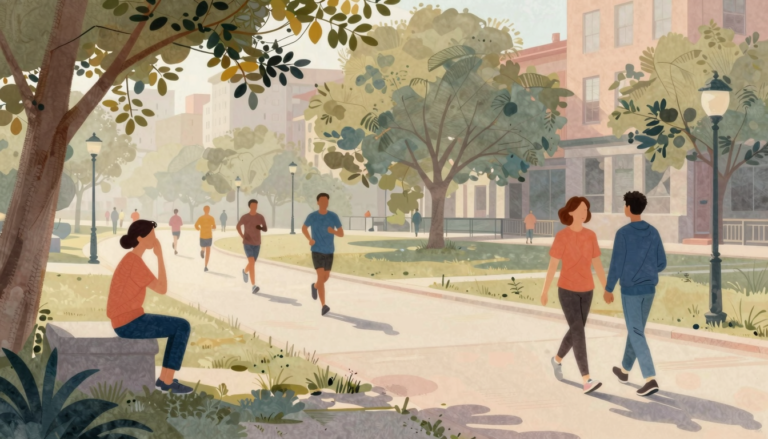
But which version would count as the purely authentic one? You are the person lying at home, unwilling to do anything. You are also the person who runs downstairs from the dorm in cartoon pajamas to pet a cat. And you are the capable, calm, dependable person at work.
Even when life leaves us with limited freedom, our decisions still carry our own judgments. Our choices emerge from experiences that have accumulated in ways particular to us.
Society and culture leave their marks on us. Yet we can still believe that every bright quality we recognize in ourselves belongs to us—to the particular person each of us has become.
Frequently asked questions
Does social construction theory deny the biology of emotion?
The theory does not deny that emotions have inherited and physiological foundations. It emphasizes how culture shapes the ways people experience and express emotion.
Why do people hide emotions in some situations?
People may adjust which feelings they express, to whom and under what circumstances to avoid punishment or gain acceptance. Social expectations and power relationships can influence these choices.
Does society completely determine how we feel?
Social standards influence emotional experience and expression without inevitably determining them. Distinctive experiences and individual judgments continually reshape how people perceive the world and express emotion.
Can different emotional versions of ourselves all be authentic?
The article suggests that different versions of a person can all be real. Even within social constraints, choices carry individual judgments and reflect experiences accumulated in ways particular to that person.