Summary
High sensitivity can involve sensory overload alongside deep enjoyment of subtle experiences. Understanding its continuum and responsiveness to different environments offers a fuller picture of the trait.
At a glance
High sensitivity is not inherently a bad thing. Sensory processing sensitivity involves deep processing, easy overstimulation, emotional responsiveness and empathy, and awareness of subtle stimuli. Differential susceptibility theory proposes stronger responses to both negative and positive environments: adverse circumstances can bring greater difficulty, while supportive conditions and positive experiences may bring greater benefit.
Before reading further, take a moment to consider these questions:
- Do you feel flustered when you have many things to do in a short time?
- When you have to compete with someone or perform a task while being watched, do you become so tense or shaky that you do much worse than usual?
- Do intense stimuli, such as loud noises or chaotic scenes, distress you?
- Do bright lights, strong smells, or rough fabrics easily overwhelm you?
- Do you notice and enjoy delicate scents, flavors, sounds, and works of art?
- Does art or music move you deeply?
These questions are drawn from the Highly Sensitive Person Scale, or HSPS. If every item feels fairly true of you, you are likely to be highly sensitive. How does that possibility make you feel? Have you already begun blaming yourself, or does it seem unimportant?
In everyday conversation, “sensitive” often carries a negative meaning. But is high sensitivity really a bad thing?
What high sensitivity means
High sensitivity is the everyday term for what researchers call sensory processing sensitivity, or SPS. It describes a stable, enduring personality trait. Its main features are often summarized by the acronym DOES:
- Depth of processing: Processing information deeply, which may mean taking longer to make decisions.
- Overarousability: Becoming overstimulated easily and feeling overloaded.
- Emotional responsiveness and empathy: Responding more strongly emotionally and with greater empathy to what is happening around you.
- Sensitivity to subtle stimuli: Noticing details in your surroundings that are hidden, subtle, or difficult to detect.
How common is it? Early research estimated that about 15–20% of people were highly sensitive. Later, more detailed research identified approximately 31% as highly sensitive, 40% as moderately sensitive, and 29% as low in sensitivity.
These findings point toward a continuum rather than a simple division between sensitive and insensitive people. Individuals differ in how sensitive they are and how they respond to their environments. A popular metaphor describes highly sensitive people as orchids, moderately sensitive people as tulips, and people with low sensitivity as dandelions.
Does the concept offer more than reassurance?
Books presenting high sensitivity as a gift or an advantage are now common. Their promotional language can be striking: a self-care book for highly sensitive people, or even a book promising to “save the souls of 1.5 billion people worldwide.” Such language shows how widely the idea has spread among the public and in the media.
Yet some readers find these books hollow: comforting self-help that sounds plausible without saying much. That criticism raises a reasonable question. Do we actually need high sensitivity as a distinct concept?
One common objection is that it simply gives introversion another name. But surveys indicate that about one-third of highly sensitive people are extroverted. Findings involving the Big Five personality traits also suggest a more complicated picture. High sensitivity has a small-to-moderate negative correlation with extraversion and small-to-moderate positive correlations with neuroticism and openness. It has no clear association with agreeableness or conscientiousness. Those relationships do not make it interchangeable with introversion.
Research also points to a biological basis. Genetic studies have estimated moderate heritability, at approximately 47%. Genetic research also reports that the serotonin transporter gene (5-HTTLPR) can increase sensitivity to environmental stimuli, particularly negative stimuli.
Brain research has also found stronger activation during tasks in regions involved in information processing, sensory integration, and empathy among highly sensitive individuals. These findings are consistent with the features described by DOES.
Environment matters as well. Childhood emotional neglect and traumatic experiences can make someone more likely to exhibit high sensitivity. Taken together, these findings support treating high sensitivity as a distinct concept that deserves further exploration and research.
Greater vulnerability—and greater benefit
High sensitivity was initially understood as a vulnerability. That view echoes familiar remarks: “You’re too sensitive. That’s not good.” “You’re upset over something so small? You’re so fragile.” “You need to be stronger. It will pass.”
There is evidence behind some of the concern. Highly sensitive individuals are more likely to report poor physical health and symptoms of anxiety, depression, and panic. One possible explanation is that the sensory information they receive gives rise to negative thoughts and emotions.
But further research has also revealed a positive side.
In research involving adolescents with depressive symptoms, highly sensitive participants were better able to learn skills for adjusting their thinking through counseling. At the 12-month follow-up, they showed fewer depressive symptoms. Adolescents with low sensitivity, by comparison, showed no clear improvement in those symptoms.
One possible explanation is that highly sensitive people perceive and understand external information more deeply, helping them learn through observation and absorb new knowledge.
Favorable experiences may also have a stronger positive effect. In one study, highly sensitive adults experienced more positive emotion after watching video clips intended to induce positive feelings than adults with moderate or low sensitivity.
The difficulties and benefits belong in the same picture. Differential susceptibility theory proposes that highly sensitive individuals respond more strongly to both negative and positive environmental conditions and stimuli. Greater responsiveness can bring greater difficulty in adverse circumstances, but it can also mean benefiting more from supportive conditions and positive experiences.
Understanding yourself differently
Returning to the opening question, high sensitivity is not inherently a bad thing. For highly sensitive people, that answer can matter deeply.
Without a way to understand their experiences, they may feel discouraged and frustrated, convinced that they do not fit in. They may struggle to change themselves, hoping to become less sensitive and more readily accepted by others.
After learning about high sensitivity, some highly sensitive people report greater self-acceptance and relief from a sense that something is wrong with them. They recognize that many others experience the world in similar ways. From that perspective, high sensitivity can be understood as a gift that helps improve the quality of life, rather than a weakness or defect.
We do not have to long for a different world. There can be enough beauty in the world we already inhabit.
Activities to enrich everyday life
The following activities offer ways for highly sensitive people to improve their quality of life:
- Find inspiration. Read a book, watch a film, or attend a concert.
- Spend meaningful time with others. Go out and share experiences with people.
- Move when you feel overstimulated. Try activities that support physical well-being, such as yoga or Pilates.
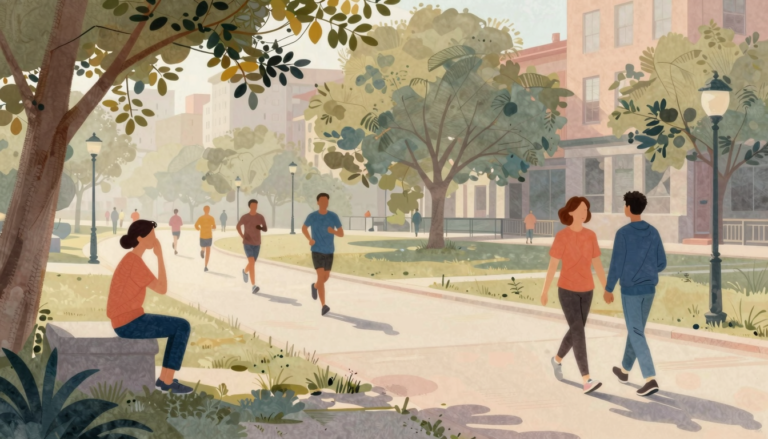
- Get close to nature. Grow flowers or plants, walk in a park, or have a picnic outdoors.
- Express yourself. Sing or write poetry.
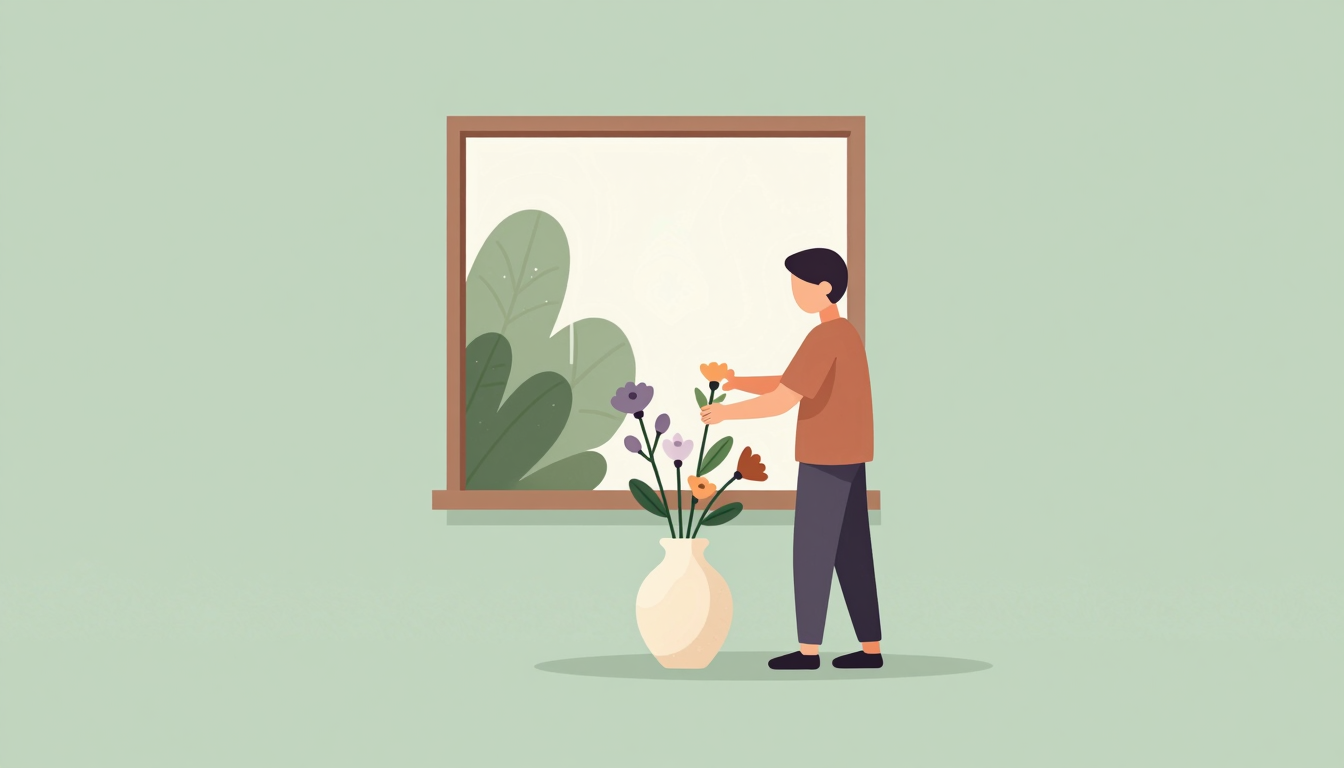
- Make something. Try flower arranging, pottery, or sculpture.
- Enjoy your senses. Place a bouquet or an essential-oil lamp in your home.
- Make room for relaxation. Practice mindfulness or meditation.
- Spend time with animals. Enjoy a simple activity such as playing with a cat.
Frequently asked questions
What does DOES mean in high sensitivity?
DOES summarizes depth of processing, overarousability, emotional responsiveness and empathy, and sensitivity to subtle stimuli.
Is high sensitivity the same as introversion?
High sensitivity is not interchangeable with introversion. The article reports that about one-third of highly sensitive people are extroverted and describes only a small-to-moderate negative correlation with extraversion.
How common is high sensitivity?
Early research estimated that 15–20% of people were highly sensitive. Later research identified approximately 31% as highly sensitive, 40% as moderately sensitive, and 29% as low in sensitivity. The article describes sensitivity as a continuum.
Can highly sensitive people benefit more from supportive environments?
Differential susceptibility theory proposes stronger responses to both adverse and favorable environments. In the adolescent counseling example, participants had depressive symptoms: highly sensitive participants showed fewer symptoms at the 12-month follow-up, while those with low sensitivity showed no clear improvement.