Summary
Using scenes from The Bad Kids, this article explores parental conflict, teenage friendships, autonomy and the emotional weight of parental sacrifice after divorce.
At a glance
The article recommends keeping teenagers out of adult conflicts, maintaining parental connections, taking friendships seriously and allowing growing autonomy. It also encourages parents to attend to their own emotional needs and seek support when divorce-related pain keeps returning. Its examples come from the fictional drama The Bad Kids; healing is presented as an ongoing process.
Persistently high divorce rates in recent years mean that more children are growing up with separated parents. Divorce breaks apart a previously intact household and can be devastating for adults. For adolescents, already undergoing rapid physical and psychological changes, it can be especially likely to leave lasting negative effects.
In the television drama The Bad Kids, Zhu Chaoyang is an ordinary thirteen-year-old middle-school student whose parents have divorced. He lives with his mother; his father has remarried and has a younger daughter. Beneath Zhu’s quiet manner and introverted personality lies an intense longing for an intact family. His father favors his little sister, while his overbearing mother seems concerned only with his studies. Caught between these relationships, his own complicated desires and a series of chance events, he gradually veers away from an ordinary path through life.
Details from the drama bring some of the hidden struggles within divorced families into view. They also offer a starting point for thinking about how parents can reduce the harm children experience after a separation.
Keep children out of adult conflicts
In one episode, Zhu’s father takes him shopping for shoes. Zhu is delighted at the prospect of spending time with him. Once they reach the store, however, his father immediately leaves him behind to join his current wife and daughter. Zhu is heartbroken. His stepmother’s disdainful expression and his spoiled younger sister’s behavior deepen the hurt of a child desperate for his father’s love. Within the story, the scene foreshadows his later descent.
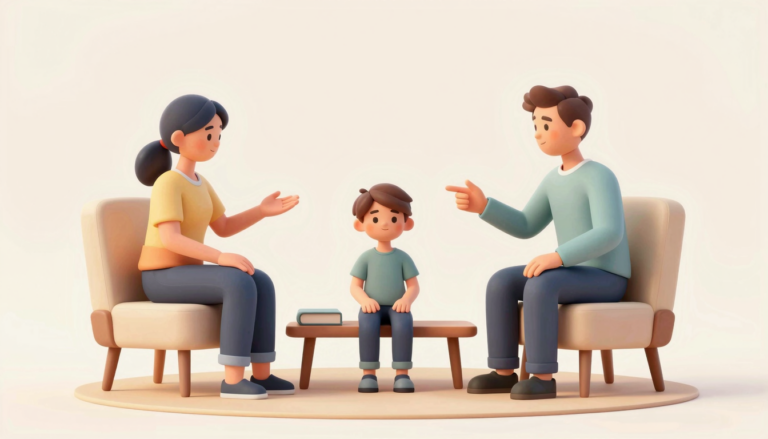
Parental love is what children long for most and what gives them their strongest sense of security. After divorce and remarriage, children can become entangled in the new households their parents have formed. They may find themselves without a clear sense of belonging, making security even harder to sustain. Parents need to give them particular attention and protection, keeping them out of conflicts between the two families.
Some behaviors are especially damaging. A parent may try to punish an ex-partner by speaking badly of them, encouraging the child to pull away from them or even demanding that the child choose sides. This can leave children tense, frightened, helpless and afraid that loving one parent means betraying the other. Their sense of security suffers profoundly.
Children need love from both parents, especially when the relationship between those parents changes. The marriage and the parent–child relationships need to be treated separately: the adults are divorced as spouses, but both remain parents. Each should do what they can to ensure that the child continues to receive love from both of them.
The child needs to understand that divorce does not diminish that love. The aim is to preserve their sense of security even as the family changes.
Preserve the connection with the parent living elsewhere
As adolescents mature physically and psychologically, they begin to feel more grown-up and want some of the rights that come with adulthood. Their relationship with their parents subtly changes. They stand on a more equal footing, spend noticeably less time together and create distance as they pursue greater independence.
Parents should not mistake this outward distance for an absence of need. Family and parents still hold an important place in a teenager’s inner life. The longing for both parents remains. At its deepest level, attachment to parents reaches beyond reason; it is a human survival instinct.
A mother or father raising a child alone should therefore support the child’s connection with the parent who lives elsewhere, actively creating opportunities for that relationship to continue.
Children need to feel that divorce concerns a problem in the adults’ marriage, rather than a defect in the parent–child relationship. It did not happen because the child did something wrong, and it does not mean their parents have stopped loving them. Whatever difficulties they face, and whichever parent they live with, they should feel able to turn to both parents for understanding, trust and support whenever they need it.
Take friendships and isolation seriously
During adolescence, dependence on parents gradually decreases while the need for peers grows. Teenagers want acceptance and a sense of belonging among people their own age. When conflict persists at home, they may look outside the family for emotional support.
That can be a constructive way to cope with their parents’ marital crisis. It can also bring risks: a teenager may become involved with harmful peers and engage in antisocial behavior to win their approval and acceptance.
One memorable scene in The Bad Kids shows Zhu’s attentive homeroom teacher telling his mother that he has no friends and is even being isolated by other students. His mother brushes the concern aside. Whether he has friends is unimportant to her, so long as he studies well. She appears invested in his development, yet overlooks his actual feelings and emotional needs.
Children in every society have a powerful desire for companionship and friendship with their peers. Zhu takes in Yan Liang and Pupu, and the three become close friends. Their friendship also begins to send his life spiraling out of control.
The relationship offers something real and valuable. Yan Liang and Pupu share his experience of missing a father’s love and living under family pressure. As the three talk and share their experiences, they receive recognition from one another and, to some extent, begin to heal.
Yet Zhu’s longing to hold on to that friendship also pushes him repeatedly beyond the limits of the help he can give. Even after capturing photographic evidence of a crime, he chooses not to report it to the police for the sake of his friends. Step by step, events spiral further out of control.
His story holds both sides of friendship together: the comfort of finally being understood and the danger of crossing boundaries to preserve that connection. A child’s social life cannot be reduced to a distraction from schoolwork.
Give care without taking over
Adolescents seek freedom yet can also be timid. They need to overcome difficulties through experience and discover that they are capable of doing so. That is how confidence develops.
Parents’ role changes accordingly. Instead of controlling every detail of a teenager’s life, they need to allow exploration and practice, offering companionship, guidance and encouragement along the way. This helps young people develop appropriate autonomy and the ability to adapt, preparing them for independent life.
After divorce, however, many single parents respond with control or an urge to make up for what the child has lost. They attend to every detail, sometimes suppressing their own ordinary emotional needs to provide the best possible conditions for the child’s studies and daily life.
When the child becomes the parent’s entire purpose and focus, the child’s need to be respected, heard and understood cannot be met. Autonomy and independence cannot develop.
The scene in which Zhu’s mother forces him to drink milk makes this pressure painfully clear. Before bed, she heats a cup of milk, brings it into his bedroom and sits beside his bed. She wants him to finish it so she can wash the cup immediately afterward.
Zhu has something on his mind and does not want the milk just then. He gently asks to drink it later. His mother tells him to hurry because she needs to wash the cup. He takes two small sips. She snatches it from him, tastes it herself and says, “It isn’t hot at all. Hurry up and drink it!”
Hurt and anger show in the eyes of this usually obedient, considerate child. Even so, he forces himself to finish the milk.
His mother cannot see the pressure created by the weight of her love. She cannot see how suffocating and painful her forceful care feels to him. From her perspective, everything she does is for his good.
Make room for your own growth
Cheri Huber has expressed the thought that parents cannot give children what they have not given themselves. The point reaches beyond daily caregiving to a parent’s own emotional life.
In The Bad Kids, Director Ma wants to marry Zhu’s mother and is willing to accept her son. She fears that Zhu will be unhappy, however, and chooses to keep seeing Ma in secret rather than acknowledge their relationship openly.
Many single mothers and fathers make similar sacrifices, giving up their own happiness for their children. Yet that sacrifice can become so heavy that the child cannot bear its weight.
Raising a child alone is difficult. A single parent carries the demands of making a living while also attending to the child’s education and development. Pain suppressed over a long period, together with accumulated resentment, can make emotions unstable. A seemingly small incident may trigger an outburst, and the child becomes the outlet for the parent’s anger and distress.
Parents may recognize afterward that they have hurt their child. They may feel regret and heartache, yet still find themselves unable to prevent it from happening again. A harmful cycle takes hold.
The original Chinese-language parenting article on which this English adaptation is based asserts: “We all know that children raised in warm, intact families are certainly happier than children raised by single parents. The former grow up nurtured by love, while the latter grow up carrying wounds.”
For the sake of their children’s healthy development, single parents are urged to move beyond a victim mentality and an ingrained pattern of suffering. Self-care matters. Divorce, painful as it is, can also become an opportunity for growth.
Beginning that journey takes courage. It is a process of reconnecting with yourself, with the promise of bringing greater understanding and harmony into life with your child. As you grow, you will discover a better version of yourself and be able to become a better parent.
If the pain of divorce keeps returning, seeking help promptly is a courageous and sensible step. Friends, counselors and therapists can offer support. Healing pain rooted in the past takes time.
Regret may remain, and old wounds can be difficult to heal. Change is only the first step toward a new life; the work of rebuilding yourself has just begun, and there is still a long way to go.
Frequently asked questions
What should parents explain to teenagers about their divorce?
The article recommends explaining that divorce concerns the adults’ marriage, is not the child’s fault and does not mean parental love has ended. It distinguishes the marriage from the continuing parent–child relationships.
Why should parents pay attention to teenage friendships after divorce?
Friendships can provide recognition, belonging and emotional support when home life is difficult. The article also describes the risk of harmful peer influence and crossing boundaries to preserve acceptance; its fictional example includes both comfort and danger.
How does the article suggest supporting teenage independence?
Parents are encouraged to allow exploration and practice while offering companionship, guidance and encouragement. The article warns that managing every detail can leave a teenager feeling unheard and restrict developing autonomy.
When does the article recommend seeking support for divorce-related pain?
It recommends seeking help when the pain of divorce keeps returning. Friends, counselors and therapists are named as possible sources of support, with the qualification that healing takes time and change is only the beginning.