Summary
From a quiet breath before getting up to choosing one small goal, this routine sets out ten morning steps and explains the traditional reasoning behind several of them.
At a glance
The routine moves through breathing, stretching, abdominal and facial massage, scalp combing, eye movements, plain warm water, bedside movements, a seated pause and a small daily intention. It specifies 150–200 milliliters of plain warm water, excluding iced water, honey water and salt water for the first drink. Its health benefits and traditional Chinese medicine explanations are the source article’s claims; the supplied material does not independently substantiate them.
The warmth of the Year of the Horse celebrations is still lingering, even as everyday life settles into its new rhythm. If mornings have you feeling foggy and slow, a few simple actions may offer a more deliberate way to begin. This ten-minute wellness routine promises renewed energy for both your body and your day, without elaborate preparation.
Minute 1: Give yourself a gentle start
Before opening your eyes, stay lying down. Take a deep breath, let it out slowly and gently tell yourself, “Time to get ready to get up.” Allow a little space between waking and moving into the day.
The routine describes the sleeping body as being in “energy-saving mode.” Its explanation is that abruptly opening your eyes and sitting up sends blood pressure soaring and can leave you dizzy or lightheaded. The purpose of this first minute is to give the body a comfortable buffer after sleep.
Minute 2: Stretch from fingertips to toes
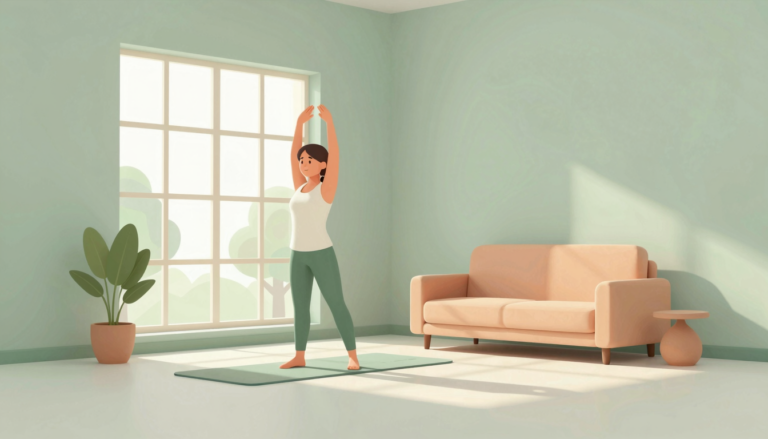
Reach both hands overhead and push your toes downward, lengthening your whole body as fully as you can—as though you were a noodle being stretched out. Hold for five seconds, relax and repeat once.
The article presents this stretch as a key step in waking the body. It attributes morning stiffness to muscles becoming rigid and the spine being compressed by body weight during sleep. It claims that stretching lengthens the spine, gets qi and blood flowing smoothly and clears away morning fatigue.
Minute 3: Massage your abdomen clockwise
Begin at the lower right side of your abdomen. Using moderate pressure, massage in clockwise circles, completing 36 rounds.
The traditional Chinese medicine reasoning behind this step identifies 5–7 a.m. as the period when the large-intestine meridian is most active. Within that framework, abdominal massage is presented as a simple way to wake the digestive system and ease constipation. A gurgling belly is described as a signal that the intestines are waking up, and the article promises a noticeable improvement in bowel regularity after one week of practice.
Minute 4: Warm your hands and refresh your face
Rub your hands together until they feel warm. Gently sweep upward from your chin toward your forehead ten times, then lightly tap across your entire face with the pads of your fingers.
Invoking the many acupuncture points on the face, the routine credits this massage with promoting circulation, increasing alertness and caring for the skin. It further claims that continued practice improves the flow of qi and blood through the face, producing a naturally clear, luminous complexion even without makeup.
Minute 5: Comb your scalp about 50 times
Use the pads of your fingers or a wooden comb. Work backward from your hairline to the back of your head, then comb from the sides of your forehead toward your ears. Aim for approximately 50 strokes across the whole head.
In the article’s traditional Chinese medicine framework, the head is where the yang channels meet, and scalp acupuncture points connect with meridians throughout the body. Combing is therefore presented as a simple, effective practice that stimulates the scalp and helps yang qi rise. The article also claims that it improves dry hair and shedding and is more effective than indiscriminately taking supplements.
Minute 6: Move your eyes, then look into the distance
With your eyelids closed, rotate your eyes clockwise ten times, then counterclockwise ten times. Next, open your eyes forcefully and look into the distance for a few seconds.
The explanation draws on the traditional Chinese medicine saying that the eyes are “the windows of the liver.” In that account, staying up late harms the liver and can lead to dry eyes and blurred vision, while morning eye movements awaken liver qi. The article presents this exercise as a way to relieve eye fatigue, nourish liver qi and protect eye health.
Minute 7: Sip plain warm water
Prepare 150–200 milliliters of plain warm water and drink it slowly in small sips. For this first drink, the routine explicitly excludes iced water, honey water and salt water, describing plain warm water as the gentlest choice.
It calls the drink an internal wake-up signal. Its stated reasoning is that a night without drinking leaves the blood viscous, and that warm water thins the blood and stimulates metabolism, bringing the body to life from within.
Minute 8: Ease the tension in your neck and back
Sit on the bed and slowly turn your neck to the left and right, holding for five seconds on each side. Then use both hands to hold your knees and gently draw them toward your chest, again allowing five seconds on each side.
The routine addresses the stiffness and tightness that can settle into the shoulders, neck and lower back after sleep. It presents these simple movements as a way to release tense areas, reduce soreness throughout the day and prepare for activity.
Minute 9: Pause at the edge of the bed
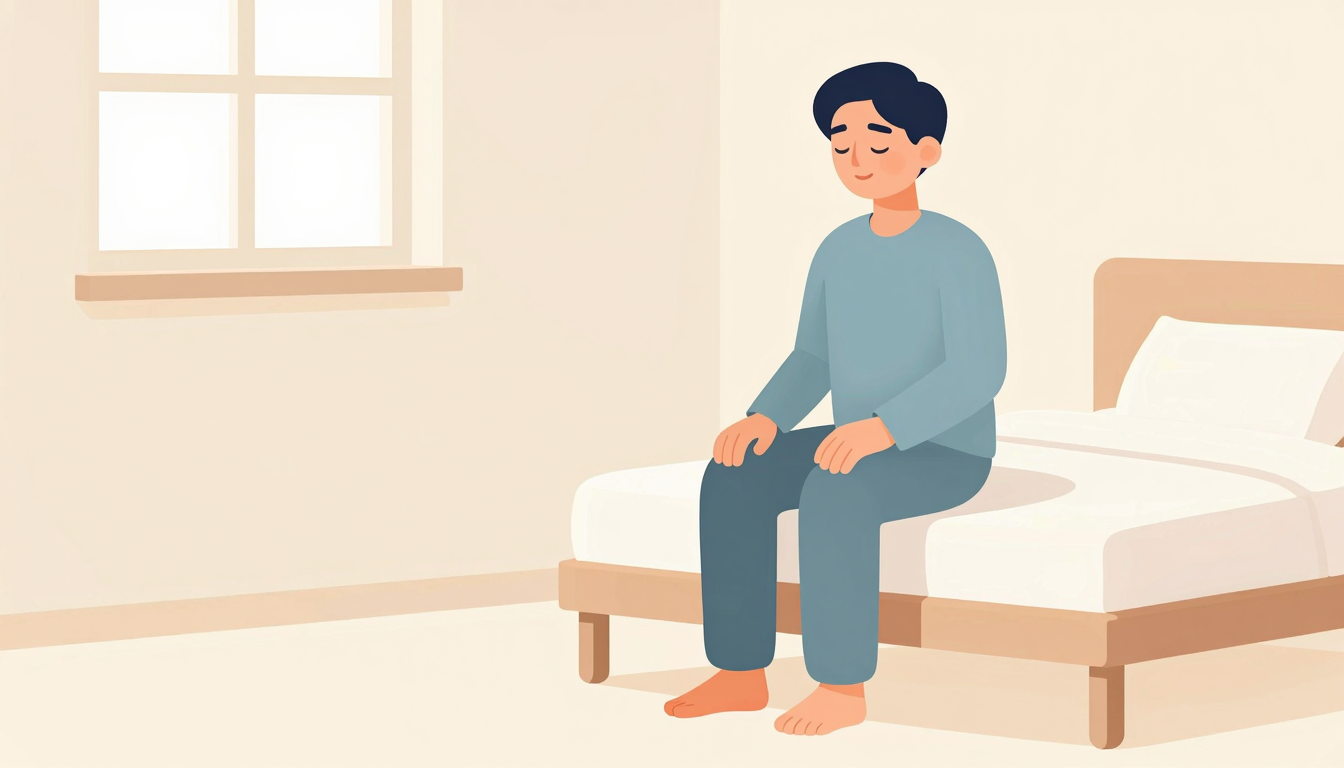
Sit quietly at the bedside with both feet planted firmly on the floor. Close your eyes, take three deep breaths and notice how your body feels before standing.
The article explains that blood pressure needs time to adapt as the body moves from lying down toward standing, and that standing after prolonged sitting can cause dizziness. It presents this brief pause as an important part of a safe, steady transition: give the body time to adjust before taking your first steps.
Minute 10: Choose one small intention
Once you have given your body some attention, give the day a little direction. Set a small goal: make an anti-inflammatory breakfast, for example, or read ten pages of a book. The task need not be ambitious to give the day a clear focus.
The article supports this suggestion with a claim that psychological research shows an 80% increase in completion rates when small goals are set in the morning.
Another option is to look in the mirror and tell yourself, “Today will be another day full of energy.” Whether you begin with a modest intention or an encouraging phrase, the final minute carries the routine’s promise beyond physical wakefulness: a more purposeful start to a full day.
Frequently asked questions
What kind of water does the routine specify?
The routine specifies 150–200 milliliters of plain warm water, taken slowly in small sips. It explicitly excludes iced water, honey water and salt water for this first drink.
What does the bedside pause involve?
The routine calls for sitting quietly at the bedside with both feet firmly on the floor, closing your eyes, taking three deep breaths and noticing how your body feels before standing.
Does the supplied material support the claimed 80% increase in goal completion?
The article attributes an 80% increase in completion rates to unnamed psychological research. The supplied material identifies no study, population, baseline or measurement method, and does not clarify whether the increase is relative or absolute.