Summary
Feeling comfortable without a partner can coexist with anxiety about other people's judgments. The article explores how social beliefs and attachment concerns relate to that fear and to relationship choices.
At a glance
Fear of being single involves worry, anxiety, or distress about having no romantic partner now or in the future. Attachment concerns, social pressure, and beliefs that romance is essential to happiness may help explain it. Research links greater fear with lower satisfaction and less desirable relationship choices, but these associations do not establish causation. Reconsidering romance-centered beliefs is presented as a possible way to ease the fear.
Single life is becoming increasingly common around the world. People are marrying for the first time later, fewer are marrying, and more are divorcing. Whether by personal choice or because of other circumstances, more people are spending part—or even all—of their lives without a romantic partner (Schweizer, 2020).
Many single people are happy (DePaulo, 2023; Girme et al., 2023). Yet a substantial body of research also finds that, on average, single people report lower well-being than people in stable romantic relationships (Purol et al., 2021). Both findings can be true: an average difference does not describe everyone's experience.
Why, then, do some people enjoy being single while others struggle with it? One possible explanation is fear of being single.
What does it mean to fear being single?
Fear of being single refers to worry, anxiety, or distress about having no romantic partner, either now or in the future (Spielmann et al., 2013). Among single people, greater fear tends to be associated with lower well-being (Spielmann & Cantarella, 2020).
Earlier research often approached this fear through an individual-deficit lens, emphasizing its close connection with insecure attachment. People with high attachment anxiety frequently worry about whether others love them and strongly desire intimacy (Mikulincer & Shaver, 2016). Fear of being single partly overlaps with these concerns: it can involve anxiety about being alone forever, as well as worries about potential or existing partners.
But an explanation centered entirely on personal characteristics has a cost. It can reinforce negative stereotypes about single people and contribute to further harm (DePaulo, 2023). Understanding this fear also requires looking at the social world in which people experience it.
How the fear can affect relationship choices
Fear of being single matters whether someone currently has a partner or not.
Among single people, higher levels of this fear are associated with greater loneliness, less satisfaction with single life and life overall, poorer mental health, and a higher risk of depression (Adamczyk, 2017; Spielmann et al., 2013). It is also linked to less desirable dating outcomes, including greater willingness to accept a low-quality partner (Spielmann & Cantarella, 2020) and a higher likelihood of contacting an ex (Spielmann et al., 2016).
For people already in relationships, greater fear of being single is associated with more dependence on their current partner. Even when dissatisfied with the relationship, they tend to be less willing to initiate a breakup (Spielmann et al., 2013). Remaining in a negative relationship may, in turn, gradually wear down their sense of self-worth.
The potential consequences therefore extend across relationship statuses. Being partnered does not necessarily remove the fear, and the fear may be bound up with choices that make life less satisfying.
When being partnered becomes a measure of success
Social beliefs offer another part of the explanation. A widely held view treats romantic relationships as central to happiness and well-being. This “ideology of marriage and family” presents having a partner as more important and desirable than being single.
In many societies, finding a partner is treated as a major life goal and achievement (Ko et al., 2020). Once people reach an age their family or society considers appropriate, they may face pressure to find someone and marry as soon as possible.
Within this environment, single people can encounter what researchers call singlehood stigma. Studies have documented discrimination against them: compared with people who have partners, they are perceived as less warm, outgoing, and agreeable; less satisfied with their lives and relationship status; lonelier; and more emotionally unstable (Greitemeyer, 2009; Girme et al., 2022; Hertel et al., 2007). These are judgments directed at single people, not a description of what single people are actually like.
Single people also recognize that society views them more negatively (Dupuis & Girme, 2024). That awareness helps explain why personal comfort with being single can coexist with anxiety about it.
Research by Dennett and Girme (2024) found that, among both single and married people, stronger beliefs that romantic relationships are central to happiness were associated with greater fear of being single. This association held independently of age, gender, relationship length, and attachment anxiety. Greater fear was also associated with lower daily life satisfaction and relationship satisfaction.
These findings broaden the picture beyond attachment insecurity. The beliefs people absorb about what makes a life happy and successful may also be relevant to their fear of having no partner.
Making room for a fulfilling life
Entering and maintaining intimate relationships is a nearly universal basic human need. Such relationships play an important role in fostering security and intimacy (Ko et al., 2020; Mikulincer & Shaver, 2016).
Even so, the research suggests that fear of being single is a poor reason to enter—or struggle to preserve—a relationship that does not suit you. That fear might take the form of not wanting to disappoint your parents, worrying about other people's judgments, or being afraid of abandonment. Giving in to it and entering or maintaining a relationship for the wrong reasons may have negative consequences that reach into the rest of your life.
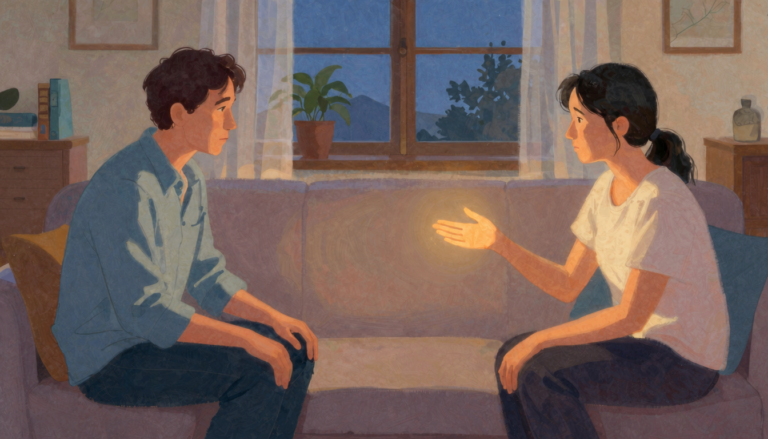
Being single does not mean you are unworthy of love. Much of the fear can come from concern about how family, friends, colleagues, or even strangers see you. You may feel comfortable without a partner and still worry that others will judge you negatively. Anticipating their disapproval can turn imagined critics into a source of pressure you place on yourself. When these beliefs stir fear and anxiety about being single, well-being and relationship satisfaction may suffer.
One possible way to ease that fear is to reconsider the underlying belief that a romantic relationship is indispensable to happiness. A relationship does not have to be the absolute center of a fulfilling life. At this stage of your life, you may be able to live fully without a partner and find happiness and satisfaction in being single.
Reexamining and adjusting these beliefs may help reduce fear and anxiety, improve satisfaction with life and relationships, and make you more willing to devote time and energy to pursuing high-quality relationships.
After all, learning to love yourself well is the beginning of a lifelong romance.
Frequently asked questions
Can people in relationships fear being single?
Yes. Among people already in relationships, greater fear of being single is associated with more dependence on their partner and less willingness to initiate a breakup even when dissatisfied. These associations do not establish causation.
Does being single mean having lower well-being?
Many single people are happy. Some research finds lower average well-being among single people than among people in stable romantic relationships, but an average difference does not describe everyone's experience.
How might social beliefs relate to fear of being single?
Dennett and Girme (2024) found that stronger beliefs that romantic relationships are central to happiness were associated with greater fear of being single among both single and married people. The association held independently of age, gender, relationship length, and attachment anxiety; it does not establish causation or account for every possible influence.
Could reconsidering relationship beliefs help ease the fear?
The article proposes reconsidering the belief that romance is indispensable to happiness as a possible way to ease fear. It does not describe an intervention trial establishing that changing these beliefs produces the proposed benefits.