Summary
A skirt recalls student life abroad, a teapot finds someone who needs it, and a beloved sweater becomes yarn for a planned new use. Participants share the histories behind belongings they are ready to pass on.
At a glance
At a reuse event organized by Friends of Nature and Linghuo Lab, participants shared how old possessions held memories of study, family care, personal growth and changing shopping habits. Several belongings found new owners, while a pilling sweater was unraveled with plans to turn its yarn into hats. The accounts also describe a book-sharing effort limited by difficulty finding out who needed which books.
The Stories Our Old Possessions Tell
Editor's note:
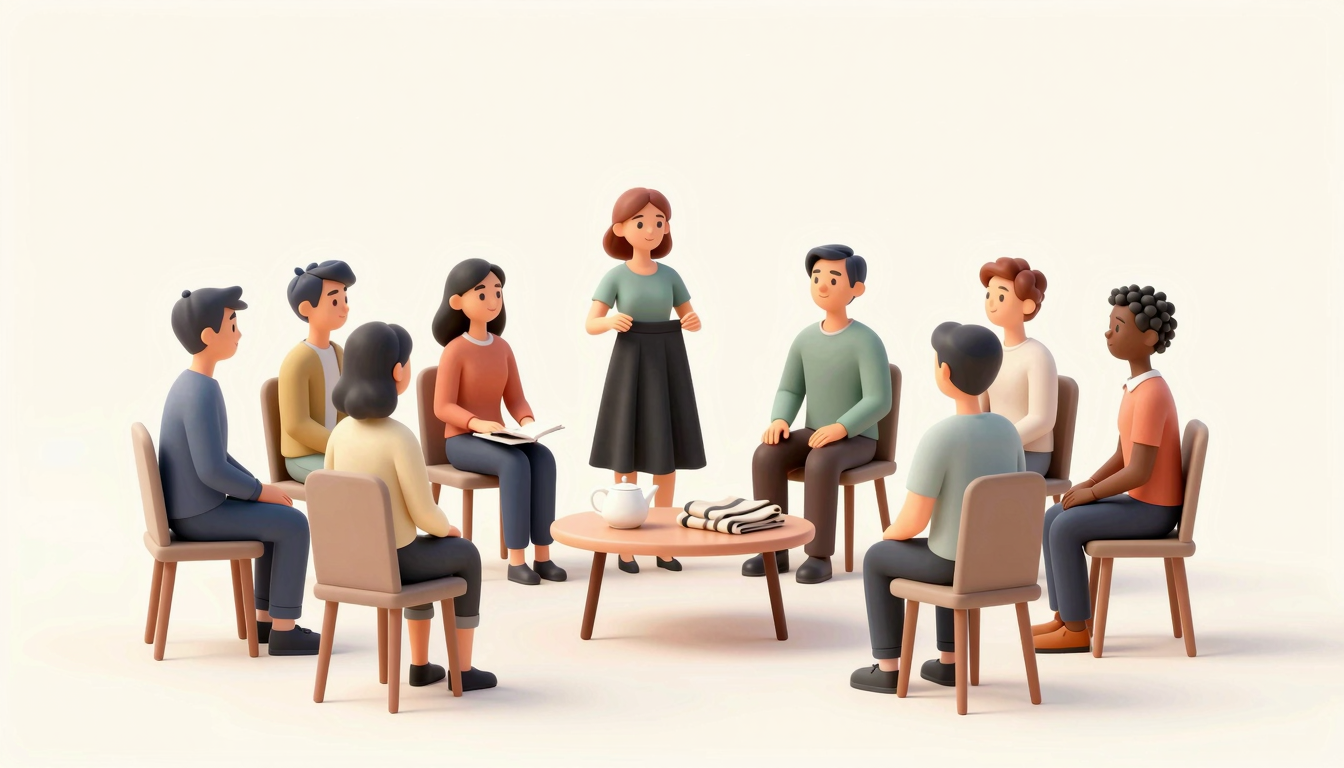
In early July, Friends of Nature and Linghuo Lab jointly organized a reuse event at a low-carbon exhibition venue, inviting more people to take an interest in nature, environmental protection and sustainable living. This gathering began a little differently from previous events. Before everyone was free to exchange belongings or choose something to take home, Wandou invited participants to sit down, pick an item they had brought and share its story. Here are their voices.
Wandou, co-creation organizer for Linghuo Lab's Light Team and one-day director of Friends of Nature's low-carbon exhibition venue.
“A skirt for 400 yuan? However much I loved it, I was a student abroad, working to pay my tuition. I couldn't afford that! But what if it cost 100 yuan?” What she had treasured all those years was more than a skirt: it held some of the brightest memories of her youth.
“I used to buy clothes whenever I was angry. I don't do that anymore, but my husband doesn't understand. He thinks I've become a different person…” Her voice caught before she could finish.
“It was an international debate competition, and the other contestants were so strong that I thought I had no chance. But I worked hard to prepare—and ended up winning an award.” Uncertainty, nerves, anticipation, surprise: perhaps this is what growing up feels like. As people spoke, the individual lives behind their belongings began to emerge.
Some Possessions Hold Our Memories
A Skirt Bought at the Mistaken Price
“I brought a black short skirt with sculptural tailoring. I still remember buying it in Kyoto, Japan, 20 years ago. At the checkout, the assistant scanned it and asked for 400 yuan. I was startled: the shelf label had said 100 yuan. I explained, and she scanned it again, but the price still came up as 400. Those amounts are the equivalents in Chinese yuan. For me, working my way through my studies abroad, 400 yuan was an enormous sum. I put the skirt down and was about to leave.”
“Instead, the assistant put up a sign closing the checkout and asked me to show her the shelf. When she saw that it really was marked 100 yuan, she gave me a deep bow. She apologized for the trouble caused by the store's mistake, thanked me for giving them the chance to correct it, and said I could buy the skirt at the price I had originally seen.”
“My disappointment turned to surprise, gratitude and then admiration. That skirt became more than a piece of clothing: it held the feelings and memories of my student years abroad. That is why I kept it, even though I hadn't worn it for a long time. Sharing its story today has let me share those memories, too. Now I feel ready to find it a new owner.”
A Hat and Scarf Knitted for a New Baby
“I brought a wool hat and scarf, both knitted by hand and wonderfully soft. When a friend's mother heard that I'd had a baby, she spent a long time making them. They feel particularly special to me. I think our generation is quite different from our parents' generation, who often made things like hats, scarves and even socks themselves. I'd like this set to go to someone who needs it.”
Trousers That Climbed the Great Wall
“I'm quite sentimental about old belongings. I moved last year, and some things are still at my old home; I've been too busy these past few days to collect them. Today I brought a scarf and a pair of trousers my child has only just outgrown. My child wore those trousers to climb the Great Wall, so they carry a special memory. I'd like to give them to someone who can use them.”
A Little Dress That Traveled Between Germany and China
“I used to work for a German organization. After I had a daughter, a German colleague gave me all her twins' clothes. This thick dress was among them, though I didn't pay it much attention at first. In 2018, I took it along when I traveled to Germany with my younger daughter. To my surprise, she looked wonderful in every photograph wearing it. Its colors were so vivid, and one of those pictures became my favorite photograph of her ever taken. I love that the dress came to China with my colleague's children and then went back to Germany with my daughter. It's been sitting in my office for three months, waiting for today's exchange. I hope it finds the right person.”
From Shopping When Angry to a Goal of a Year Without New Clothes
“This white T-shirt says ‘Nature's Grace,’ which feels fitting for today's Friends of Nature event. It came from an activity of that name that my daughter and I joined in 2018. I wore it through Gobi terrain and desert as we covered 108 kilometers, planting trees along the way. So many stories came out of that journey. I used to buy clothes whenever I was angry, but in 2020 I set myself the goal of buying no new clothes. My husband came with me today. He often offers to buy me something new, and I keep saying, ‘No, no.’ He doesn't understand; he feels I've become a different person.”
A Beloved Sweater, Too Precious to Throw Away
“I once had a photograph taken in this sweater that I really love. That's a memory we share, this sweater and I. It's started to pill, but I haven't been able to bring myself to throw it away. I brought it today to see what kind of new life it might have. Could someone unravel it, wind the yarn into balls and make something else?”
Some Possessions Record Our Growth
A Boxful of Hair Accessories from an Older Sister
“I've just finished my senior high school entrance exams. Today I brought a box of hair ties and clips, most of which I ‘inherited’ from my older sister. I remember her offering me a big bag and telling me to choose the ones I liked. Somehow, as I kept choosing, I ended up taking the whole bag home. Three years later, these are the ones left. I don't use them anymore, so I brought them all along.”
A Prize Earned Through Hard Work
“In high school, I entered an international debate competition. My teammates and I were nervous, but we worked hard to prepare. The other contestants seemed so strong that we didn't think we had any hope of advancing. Yet we ended up winning an award. This canvas bag was the prize. I've never had an occasion to use it, so I brought it today to give to someone who needs it.”
Passing Reference Books to Younger Students
“I've just cycled here from Shaanxi and haven't brought any unused belongings, but I'd like to share a reuse project from my university days. Every year, I saw older students' reference books being sold off in bundles at prices of just two or three jiao, while the next intake bought new copies for 20–30 yuan each. In my final year, I decided to try to keep those books circulating within the university. I thought it could help younger students spend less on books while reducing wasted resources and pollution.”
“I asked a few classmates to help. Starting with our own class, we went from class to class across our college, collecting reference books, and gave them all to first-year students. A small proportion of the highly specialized books did stay in use. Unfortunately, many of the books never found the people who needed them. Who needed which books? That information was hard to come by.”
A Hat That Came from Home to Graduate School in Beijing
“I'm a postgraduate student in Beijing. I bought this hat around my hometown of Yueyang and brought it here from home, so it means something to me. Beijing has been especially sunny this year, and the hat hasn't been particularly suitable, so I've left it unused. The sun has faded it a little, but it's still a perfectly wearable hat.”
Choosing Not to Buy New Denim
“We see so much waste in everyday life. I also organize environmental activities in my community. While looking up information once, I came to understand that a water-absorbing process used in making denim was particularly polluting. That led me to stop buying new denim products. I still have two pairs of jeans, and today I've brought a denim skirt I no longer wear, for someone else to use.”
A Volunteer’s Scarf
“During a winter vacation, I went home and joined a project called ‘A Fulfilling Holiday.’ It arranged for university students returning to their hometowns to bring supplies to children who remained there while their parents worked elsewhere. This scarf was given to the student volunteers who took part. I've never used it, but it means something to me, so I brought it along.”
Some Possessions Never Became Part of Our Lives—but Give Us Reason to Reflect
Porcelain That Was Never Used
“My father bought a porcelain set on a business trip. It included lots of spoons and chopstick rests. My younger sister was born soon afterward, and later we got a cat. We were afraid the spoons would get broken, so we never used them. Really, our family wasn't accustomed to using things like that anyway. Now we're donating them.”
A Teapot from an Older Sister
“I have a wonderful older sister—my own sister—and she's incredibly generous to me. As soon as she discovers an interest of mine, she buys me something connected with it. She gave me this white teapot. It came with me through a house move, which is why it still has tape marks on it, but I've never used it. I've never even put water in it. I'd like to give it to someone who actually needs it.”
Unworn Clothes and Jewelry Prompt a Rethink
“This is my first reuse event. I brought three garments and two pieces of jewelry, almost all of them unworn. Bringing them here is a way of taking a closer look at my own life. I feel that when we're young, we girls all get caught up in the appeal of possessions and the traps of shopping, buying things because they're cheap and easy to get. I hope this gives me a chance to reflect and start moving away from unnecessary purchases as soon as I can.”
From Being Captive to Consumerism to Finding New Connections
“I've brought several bags and some kitchen jars and containers, almost all new. I used to feel like a captive of consumerism. I had so many clothes, shoes and bags that I barely recognized them. When had I bought them? Why? I couldn't remember. I had almost no connection with these things. Then, three years ago, I took a huge number of schoolbags and clothes to a secondhand market jointly organized by Beijing Organic Farmers' Market and Linghuo Lab. Selling some things and giving others away, I fancied myself a market-stall superstar. That was when I began to declutter.”
“Over those three years, I've bought no more than five new garments. I've continued donating plenty of unused belongings to Zhong'ai Shop, offering unopened tea and coffee in the market's exchange group, and selling things on Xianyu—more than 80 items so far. Through these different channels, the possessions I no longer use are finding new connections.”
As their owners began to speak, memories, warmth, meaning and moments of growth came tumbling out. The objects themselves seemed a little more alive.
What Happened Next
- The young woman who had come to Beijing alone to study, bringing a hat from her hometown, took home the teapot given by an older sister. She had recently needed just such a pot, which resembled the one used at home. She had been planning to ask her parents to send one from her hometown.
- A volunteer group that works with unused yarn unraveled the long, pilling sweater, just as its owner had hoped. They planned to knit the yarn into several hats and send them to children in Tibetan areas.
- The young man who had cycled to Beijing and arrived empty-handed was given a portable cup. Astonished, he asked how anyone knew that he had left his own cup on the subway that very day.
- Three little girls attending with their parents happily picked out the playful hair ties brought by the older girl who had just finished her senior high school entrance exams.
- The skirt with the mistaken price label, carrying memories of student life, found a new owner: a young woman who had just graduated from university and was about to begin her own studies abroad.
The memories carried by these belongings reach a little further, and our stories continue. Next time, let us hear the stories your old possessions have to tell.
Frequently asked questions
What happened before participants exchanged their belongings?
Wandou invited participants to sit down, choose an item they had brought and share its story before exchanging belongings or selecting something to take home.
What happened to the beloved pilling sweater?
A volunteer group unraveled the sweater into yarn. They planned to knit several hats and send them to children in Tibetan areas; the account does not report those later steps as completed.
Why did many donated university reference books go unused?
Information about who needed which books was difficult to obtain. A small proportion of highly specialized books stayed in use, but many books did not find the people who needed them.