Summary
A rusty bicycle beneath the courtyard eaves recalls a mother's school days and a grandfather's work, giving a worn possession lasting family significance.
At a glance
In this family story, a worn bicycle carries memories of school journeys, earning money and years of shared life. Although it is now hardly useful and ridden only occasionally, it has become deeply important to the narrator. Learning an old object's history may reveal reasons to cherish it.
Old Possessions
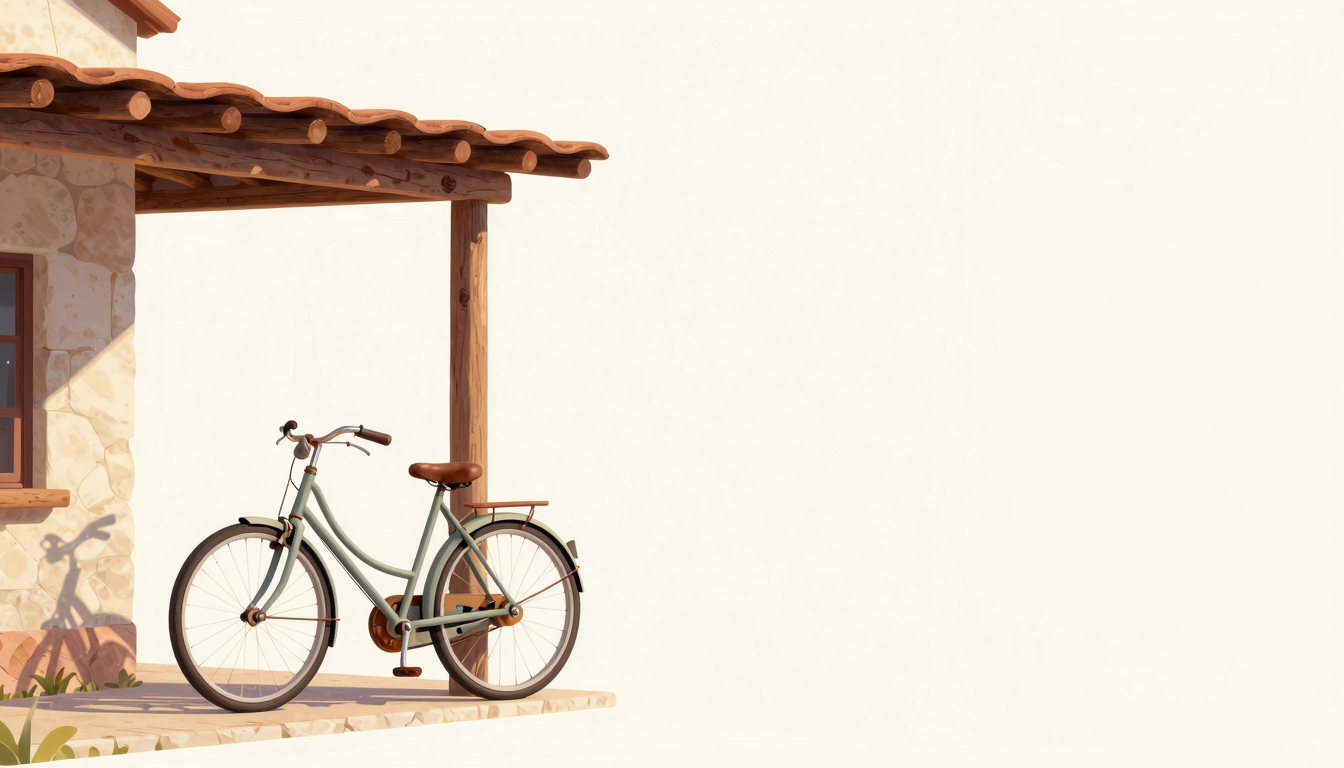
On my visits to the countryside, I often see an old bicycle standing quietly beneath the eaves of the courtyard. It is tall and bulky, with rust covering its bell, brakes and chain, and dents here and there. Its age is plain to see, yet in the sunlight even the patches of rust make it look beautiful. Whenever I see it, I cannot help walking over, wiping away the dust with a tissue, squeezing the brakes and ringing the bell. The bell still has a clear, bright ring. My mother says that sound brings back memories of the years her family spent with the bicycle.
My mother grew up in the countryside, where the roads were dirt and the children walked to school. The journey there and back took a long time each day, and when it rained, they had to pick their way carefully through the mud. When she started junior secondary school, she began cycling instead, riding that same bicycle, which reached almost to her chest. She tells me she struggled with its size at first because she could barely reach. She fell many times and damaged the bicycle several times too, but gradually she learned to ride it confidently.
This routine continued for about a year or two before the family needed to rebuild their home, a considerable expense. My mother and her brother were both still at school, and their school fees also cost a great deal. As she remembers it, the family's savings were nowhere near enough. To raise the money, my grandfather wove items for storing grain every day, loaded them onto the bicycle and rode from Jingjiang to Xinghua to sell them. Once he had sold them, he cycled home again. Making those journeys day after day, the bicycle became his most dependable helper.
Later, when motor-assisted bicycles became popular, the old bicycle was fitted with a gasoline engine. It would rumble loudly whenever it went down the road. Several more years passed, and its parts gradually began to wear out and break. By then, the engine had long since been removed.
Eventually, the bicycle was mostly set aside. My grandfather was getting older and found pedaling too tiring, so he switched to an electric two-wheeler. My mother bought a car to take me to and from school. These days, the old bicycle rattles all over whenever it moves and is hardly useful anymore. Yet it had been part of life for my mother, her brother and both my grandparents for so many years that my grandfather could not bear to throw it away. He kept it carefully beneath the courtyard eaves, where it still stands. Occasionally he rides it out to work in the fields, but only occasionally.
Thinking about all those years, I feel as though the bicycle has lived a human life: a beginning, bumps and setbacks along the way, then years of achievement, followed at last by age and fading usefulness. And yet, to me, it has become the most important thing in the family home.
At first glance, an old, worn possession may seem unappealing. But once we learn its history, we may begin to see it differently—and discover how much there is to cherish.
Frequently asked questions
Why does the grandfather keep the old bicycle?
The bicycle had been part of life for the mother, her brother and both grandparents for many years. Those connections made the grandfather unwilling to throw it away, even though it is now hardly useful.
Is the old bicycle still used?
The grandfather occasionally rides it to work in the fields. It rattles whenever it moves and is hardly useful, but it has not become completely unusable.
Does the story suggest keeping every old possession?
The story suggests that learning an object's history may change how we see it and reveal reasons to cherish it. It does not say that every old possession must be kept.