Summary
When parents ask a child to choose sides, immediate relief can leave the couple's disagreement untouched. Explore Bowen's family triangles, their possible effects, and the boundaries that support independent relationships.
At a glance
Family triangulation occurs when two people draw a third person into unresolved tension, such as parents asking a child to take sides. It may ease anxiety or stabilize a relationship temporarily, while leaving the original conflict unresolved and potentially affecting family relationships and children's development. Parents can work on emotional regulation and their own conduct; children can avoid taking sides or assuming responsibility for resolving the dispute. A healthy group of three allows each pair to interact independently.
Mom and Dad, Please Keep Me Out of Your Arguments
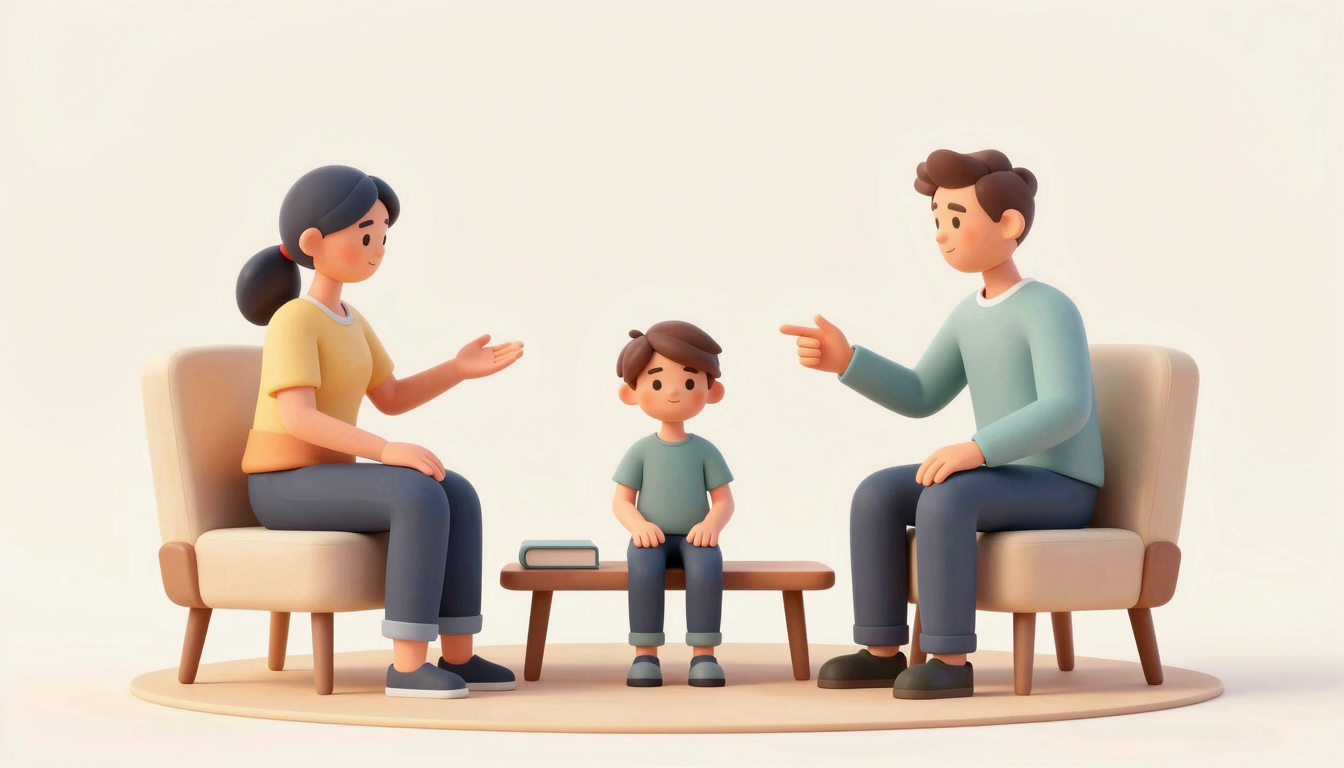
Does this sound familiar? Parents reach an impasse in an argument and bring someone else in to help resolve it: their child, their own parents, or other relatives and friends. In the video accompanying the original article, a couple argue over housework, then ask their son to say who is at fault. In family therapy, this pattern of drawing another person into a conflict is known as triangulation, with the boundaries between relationships becoming blurred.
What Is a Family Triangle?
Psychiatrist Bowen introduced the concept of the triangle after observing a recurring pattern in therapy: when two people become caught in a conflict they cannot resolve, they draw a third person into the tension, forming a triangle (Nichols & Davis, 2018).
The parents in the opening example do this when they ask their son for a verdict, each hoping he will take their side. Their disagreement now involves the child. Many parents may hold back from complaining to their children about a partner. Complaints such as “Your mother is always late!” or “Your father always comes home so late!” nevertheless illustrate how a child can be drawn into tension between parents when those complaints are shared with them. Because a triangle involving parents and a child spans two generations, it is called an intergenerational triangle.
Bowen also observed that triangles can spread (Nichols & Davis, 2018). People outside the household may become involved, creating a more complicated network: each parent and the child might gather supporters, forming three groups. If the conflict keeps escalating beyond what the existing triangle can contain, still more people may be drawn in, creating a chain of interconnected triangles (Xu Hanming et al., 2010).
What Triangles Do
Triangulation is one way couples manage conflict. Anxiety is a driving force behind it: involving someone else can reduce the anxiety and distress felt by the people in conflict (Nichols & Davis, 2018). By turning their attention toward a child, parents may avoid the anxiety of facing each other directly.
Beyond this immediate relief, Bowen described several ways a third person's involvement can affect a relationship. Some bring greater stability; others upset an existing balance (Xu Hanming et al., 2010).
First, bringing someone in can destabilize a previously stable relationship. A couple whose relationship has been relatively steady may draw their child into an argument and find that the child's involvement makes their relationship less stable.
Second, someone's departure can also upset the balance. When a child leaves home for university, conflict between the parents may resurface if the triangle had previously helped keep it in check.
Third, someone's arrival can help stabilize an unsettled relationship. For a couple already in conflict, the birth of a child may ease the tension as their relationship expands to include this third person.
Fourth, someone's departure can reduce instability. If a couple's disagreements concern their child, the child's departure for university may mean fewer conflicts between them.
The Costs of Triangulation
Even when a triangle seems to relieve anxiety and distress for one or both people in a dispute, that relief can leave a series of problems unresolved over the longer term.
The Original Conflict Remains
Having someone take your side can feel like a release, yet leave the original problem untouched. Consider a wife who is upset by her husband's emotional distance. Complaining to their child may improve her mood, but it does not change the distance between her and her husband. The unresolved issue stays with them, ready to set off another round of hurt and complaints whenever she thinks about it.
A triangle can release emotional pressure while leaving the conflict frozen in place. Complaining or seeking comfort is not inherently wrong. The problem arises when triangulation becomes a way to divert attention from the disagreement, allowing it to grow and eventually damage family relationships (Nichols & Davis, 2018).
Family Relationships Suffer
When parents ask a child to take a position in their argument, they may read the child's choice—or even particular words—as support for one parent over the other. The parent who feels unsupported may feel even more hurt and become more distant from their partner. This can make the couple less likely to share interests with each other (Nichols & Davis, 2018). Both the couple's relationship and the relationships between parents and child can suffer.
Children's Development Can Be Affected
#### Independence
Triangulation can interfere with a child's growing independence. A mother may feel closer to a child who supports her, or become more intrusive when the child does not. As her attention centers increasingly on the child, she may unwittingly do so much for them that they fail to develop basic life skills. Their resulting immaturity can then encourage her to stay closely involved, keeping the cycle going (Nichols & Davis, 2018).
#### Anxiety and Loneliness
Research cited in the article reports greater self-blame about parental conflict and more emotional problems later on among children drawn into it (Kerig, & Patricia, 1995). Children involved in family disputes are also described as more susceptible to emotional influences when handling problems and more likely to experience chronic anxiety (Nichols & Davis, 2018). Greater loneliness after entering university is another reported finding (Wilson & Rohrbaugh, 1985).
#### Behavior and Academic Performance
Children caught in triangles may show more rebellious behavior and other behavioral difficulties. Research also describes a greater tendency to act out of a desire to please others (Nichols & Davis, 2018). Their thinking may become constrained, making it harder to form independent views and ideas; poorer academic performance at university is also reported (Wilson & Rohrbaugh, 1985).
Building Healthier Family Relationships
For Parents: Manage Anxiety
Because anxiety is a major driver of triangulation, parents can work on their ability to regulate it and manage their emotions (Nichols & Davis, 2018). Small household matters can become flashpoints when parents return from work carrying the day's anxiety and fatigue. Learning to regulate those feelings can reduce some conflicts and improve interactions with both a partner and a child. If their own efforts are not helping, parents can seek professional guidance through family counseling.
For Children: Leave the Dispute With Your Parents
At the heart of detriangulation is avoiding taking sides, while also avoiding attempts to push either person to take on more responsibility to make the situation better (Nichols & Davis, 2018). When asked to decide who is wrong, as in the opening example, a child could say: “This is between the two of you. I hope you can work it out by talking peacefully with each other.”
Build a Relationship With Each Family Member
Developing a relationship with each person in the family supports personal growth and adjustment to one's family role. When talking face to face is difficult, letters or phone calls can help rebuild the relationship, particularly where it is private or intimate (Nichols & Davis, 2018).
Examine Your Own Role
For each family member, recognizing their own role in the family's relationships can open the way to change (Nichols & Davis, 2018). Examining our own conduct can help us address the problem more effectively, with less blame shifting and less reliance on drawing others into it.
For example, a husband's family responsibilities include giving and receiving support with his wife, caring for their child's development, communicating constructively with family members, and working together to coordinate family relationships. If he has become distant from his wife and they are in conflict, he should begin by examining his own behavior and recognizing where he has fallen short in his role as a husband. Looking for other explanations or bringing the child into the disagreement leaves those responsibilities unaddressed.
What a Healthy Group of Three Looks Like
A group of three people does not necessarily form a conflict-driven triangle. In a healthy trio, each pair can interact independently. Each person has their own views about how to act and can maintain their position without trying to change the other two (Nichols & Davis, 2018).
Frequently asked questions
Does triangulation always make a relationship less stable?
No. The article describes a third person's arrival or departure as potentially stabilizing or destabilizing a relationship, depending on the existing conflict. Relief or stability can still leave the original disagreement unresolved.
Is complaining about a partner always triangulation?
Complaining or seeking comfort is not inherently wrong. The concern described in the article is drawing someone into the conflict in a way that diverts attention from the disagreement and leaves the underlying issue unresolved.
What can a child say when parents ask them to choose sides?
The article suggests: “This is between the two of you. I hope you can work it out by talking peacefully with each other.” Detriangulation also involves avoiding attempts to push either parent to take on more responsibility for fixing the situation.
Is every group of three family members a conflict-driven triangle?
No. In a healthy trio, each pair can interact independently, and each person can maintain their own position without trying to change the other two.