Summary
Tragic films may calm some viewers through absorption,emotional distance and recognition of unresolved grief.
At a glance
A sad story can interrupt repetitive thinking and offer room to feel without demanding immediate recovery. Effects vary; a film can also intensify distress and does not replace practical action or treatment.
Imagine coming home after being publicly reprimanded at work. A small mistake has brought a harsh response and a pay deduction. You keep replaying your supervisor's tone, your coworkers' expressions, and the words you could not find at the time. Anger, shame and hurt remain tangled together.
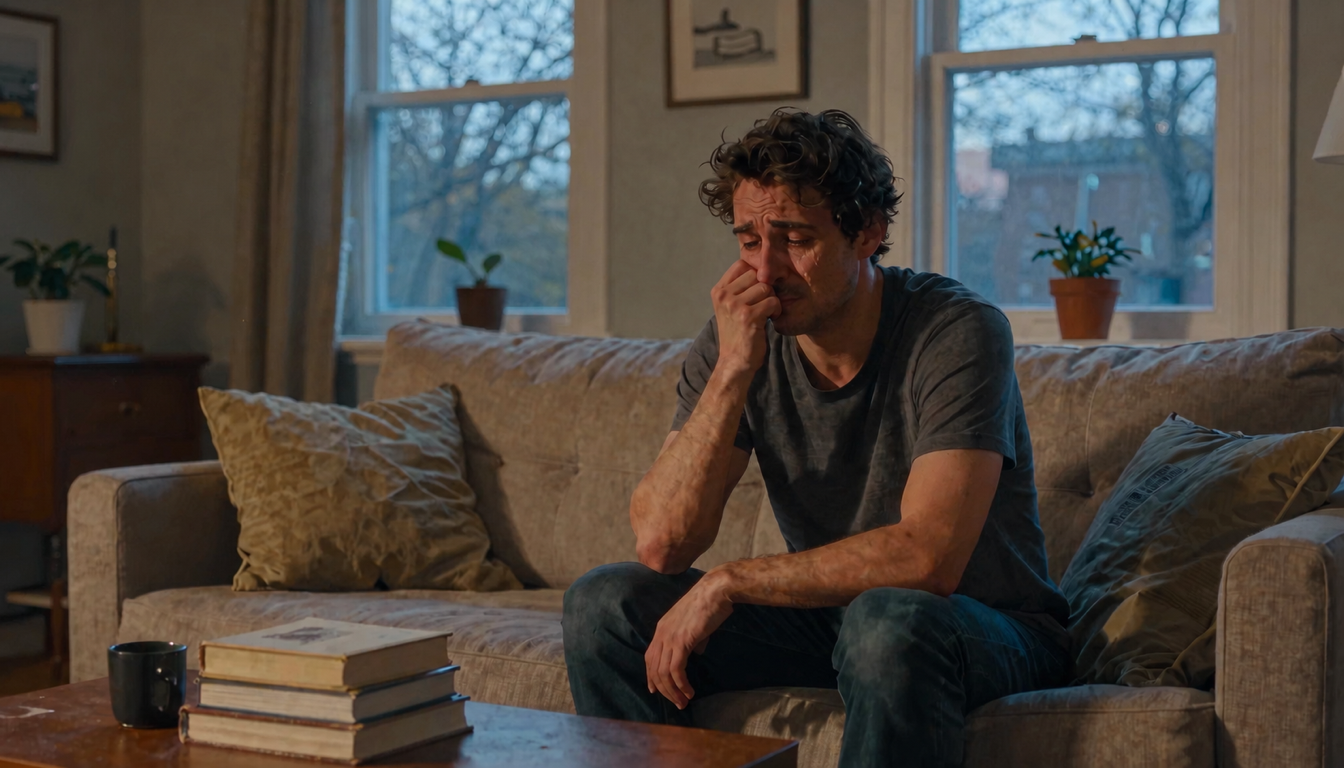
You open a streaming app and choose Manchester by the Sea, mostly to fill the evening. At first, your attention returns to the office. Gradually, the story draws you toward another question: why does Lee seem so numb, and why is returning to Manchester so difficult for him?
As the history behind his grief becomes clear, the film feels increasingly painful. Yet afterward, you notice that your own thoughts have become quieter. How can a sad story sometimes provide comfort rather than simply adding sadness?
This imagined evening illustrates several possibilities. A tragic film can redirect attention, give emotion a different setting, or challenge the demand that every wound must close neatly. None is a guaranteed effect, and comfort from a story is different from treatment.
A story can interrupt the replay
After an upsetting event, thinking about it can be useful if it leads to understanding or action. Rumination is different: the mind circles around distress without finding a workable next step. Questions about why you made a mistake or whether others are laughing at you can keep the event psychologically present.
A review by Susan Nolen-Hoeksema and colleagues describes how rumination relates to depressive thinking, problem-solving difficulties and other consequences. That does not mean the original event is unimportant. A humiliating workplace encounter may still require practical attention.
An absorbing story offers another focus. You follow a character's decisions, try to understand their history, and anticipate what will happen. For a while, your attention has something to do besides revisit your own painful scene.
The interruption may help even though the story is tragic. It is a change in the organization of attention, rather than a simple replacement of a negative feeling with a positive one. You can return to the real problem later with a little more distance.
Distraction also has limits. If watching becomes the only way to avoid a recurring issue, the issue may remain unaddressed. A pause is useful when it gives you room to reengage, not when it has to carry the entire burden of coping.
Sadness can feel different inside a story
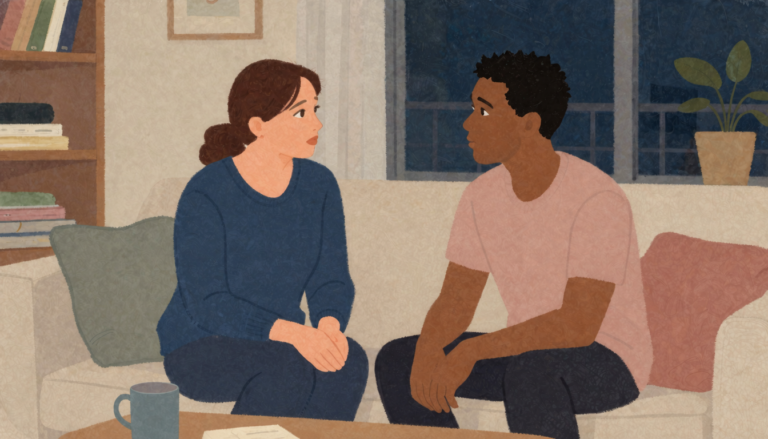
At work, you may have felt obliged to remain composed. At home with a film, you may feel less watched and less responsible for managing everyone else's response. Sadness that was difficult to acknowledge earlier can become easier to recognize.
You might cry, feel moved, or simply sit quietly. Feelings that were held back can become easier to acknowledge, but they do not have to emerge dramatically for the experience to matter. There is no requirement to produce tears or experience a cathartic release.
Fiction also provides a particular kind of distance. You can care about Lee's losses while knowing that you are watching a character's story. Understanding another person's pain differs from treating it as identical to your own. That distinction can leave room for sympathy, curiosity and reflection.
The boundary is not an automatic shield. A scene may resemble your own experience closely enough to feel overwhelming, or the film may deepen a low mood. You remain free to pause, stop or choose something else. Not finding tragedy comforting says nothing about the quality of your empathy.
For some viewers, the story offers a bounded encounter with loss: it begins, develops and ends, after which they can return to their surroundings. The feeling may be real while its context is different. That combination helps explain how sadness and a sense of safety can coexist, without assuming that the same film works the same way for everyone.
An unfinished grief can challenge the pressure to recover
Manchester by the Sea does not offer a conventional transformation in which insight makes the past bearable and life resumes without difficulty. Lee's inability to move beyond what happened is central to the film's emotional force.
That can be unsettling, but it may also feel honest. Social expectations often favor progress, resilience and a return to normal. A person who remains sad can begin to struggle with a second layer of distress: why am I not better yet, and why can I not respond the way I am supposed to?
A story that leaves grief unresolved can loosen that demand. It does not establish that all trauma is permanent or that help is pointless. It recognizes that a life can continue while pain remains, and that recovery need not resemble an uplifting plot.
Viktor Frankl's idea of tragic optimism offers a related philosophical perspective: meaning need not require the absence of suffering, guilt or mortality. The Viktor Frankl Institute's account emphasizes the possibility of a stance and meaningful action within the limits of a person's circumstances. This is not an instruction to celebrate pain or blame yourself for struggling.
There is also a useful parallel with acceptance and commitment therapy. The Association for Contextual Behavioral Science describes ACT as combining acceptance and mindfulness with commitment and behavior change, in the service of psychological flexibility. Acceptance is therefore not simply allowing everything to continue unchanged.
A person may make room for sadness while seeking care, changing a harmful situation or moving toward an important relationship. They do not have to win a battle against every unwanted feeling before taking a valued step. Equally, they do not need to preserve guilt or deny themselves forgiveness to honor what happened.
Comfort is not the same as solving the problem
When the credits finish, work, relationships and practical pressures remain. The supervisor's behavior does not become acceptable because another character has suffered more. A tragic film should not be used to minimize your own experience through comparison.
What may have changed is the pressure surrounding the feeling. You have spent time attending to a different story, felt something without having to justify it, or encountered a portrayal that does not demand immediate recovery. That can be enough to make the next moment more manageable.
Notice your own response rather than expecting the film to heal you. If it leaves you more distressed, another activity or a supportive conversation may fit better. Persistent, intrusive distress or difficulty functioning deserves professional attention.
Tragedy can sometimes comfort us because it gives sadness a recognizable place in human life. We may leave the story without a solution, yet with a little less urgency to treat vulnerability as something that should never have existed.
Frequently asked questions
Why can sadness feel calming?
Attention,context and permission to feel may change the experience even when the emotion remains sad.
Does crying during a film guarantee relief?
No. Responses differ and catharsis is not required.
Is acceptance the same as giving up?
No. ACT pairs acceptance with values-guided commitment and behavior change.
What if a tragic film makes me feel worse?
Pause or stop and choose support or another activity; persistent distress may need professional care.