Summary
Cherished belongings can connect older adults with relationships, achievements and home. Their value depends on the owner’s meaning and can include painful reminders.
At a glance
Meaningful possessions may support continuity, identity and familiarity, particularly during change. Let the older person choose what to keep and display; objects are not always comforting, and practical needs still matter.
A photograph, a certificate or a handmade object can say something that an unfamiliar room cannot: this is part of my life. Its importance may have little to do with resale value. It holds a relationship, an achievement or a story the owner still recognizes as their own.
These objects of psychological significance can become especially noticeable during change. Moving home, losing someone or adjusting to a physical limitation can disrupt familiar routines. A possession may provide continuity between the life a person remembers and the one they are living now.
That does not mean every older person is housebound or looks mainly to the past. It means that the immediate surroundings can hold resources for identity and comfort, alongside their practical functions.
Objects belong to the present as well as the past
Tara Coleman and Janine Wiles explored this relationship in Being With Objects of Meaning, published online in 2018 and in The Gerontologist in 2020. Their qualitative work used interviews, participatory photography and journaling to examine the meaning of cherished possessions in daily life.
The central finding was conditional. Objects could help people connect with past selves and cope with present challenges, but for some participants they disrupted identity, attachment to place or daily life. The research concerned lived meanings rather than a trial proving that displaying keepsakes improves everyone’s well-being.
The accounts summarized below come from the supplied article’s discussion of that research. They are paraphrased stories, not verified direct quotations. Together, they show several different jobs a possession can do.
Familiar things can make a room feel like home
One woman, identified as R, describes family objects as bringing people and earlier versions of herself into the same space. Their presence helps her feel less alone and less separated from family life. The room is furnished with recognition as well as furniture.
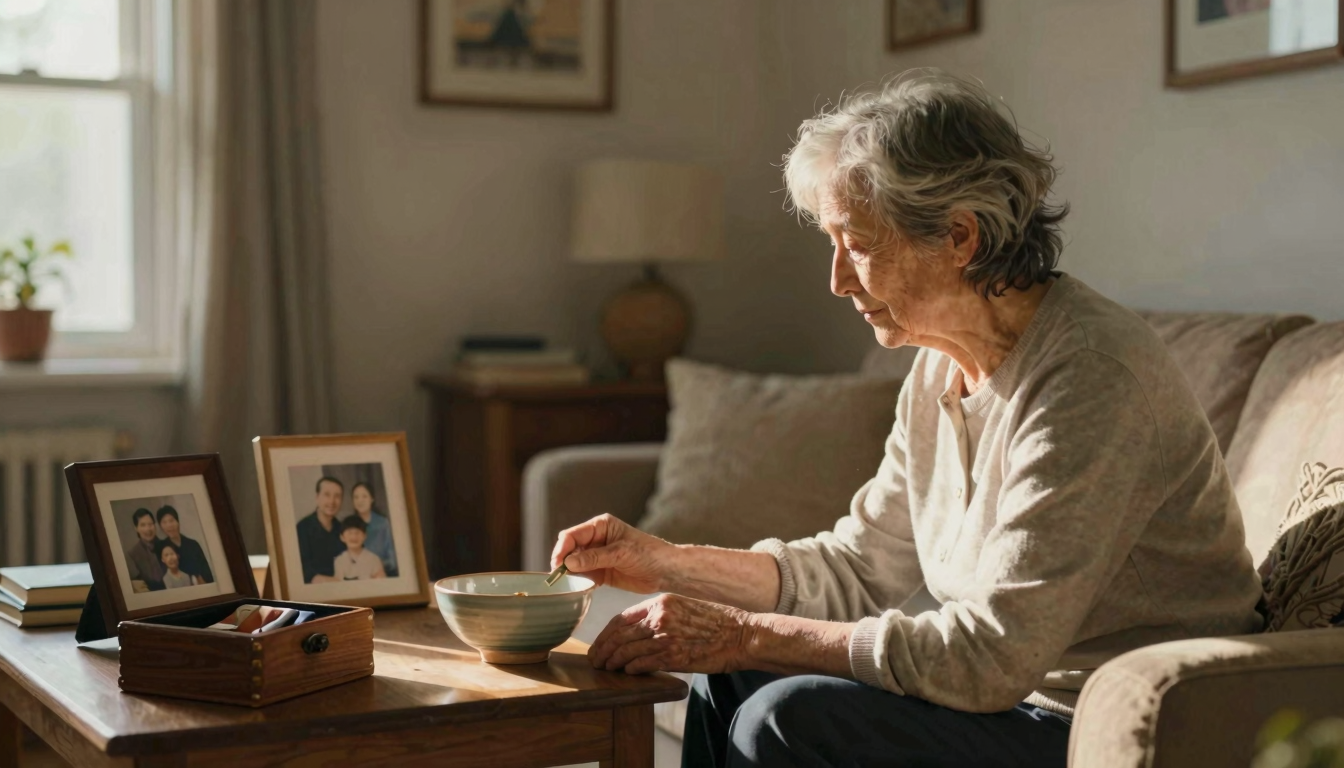
This is part of what makes a keepsake different from a generic decoration. Someone else may see a photograph or a small ornament; the owner sees the person and occasion attached to it. A display can make those relationships visible without requiring a visitor to know the whole history.
Another woman, P, keeps a chair and table acquired during a financially difficult time. Finding usable secondhand things had required effort. The furniture therefore recalls more than hardship: it represents the work of keeping a life going.
Remembering that effort can make a difficult period meaningful in the present. The person who struggled then and the person living now remain connected. A modest object becomes evidence of continuity rather than a reminder that the former life has vanished.
A possession can bear witness to achievement
A sailor, S, keeps logbooks, photographs of large fish and newspaper clippings from his voyages. With physical limitations now affecting his life, these objects help communicate experiences that other people may find hard to imagine.
They also offer something to him. A present limitation can narrow the way a person sees themselves if it becomes the only story receiving attention. The records show that the adventurous earlier life was real, even when the body no longer makes the same activities possible.
Remembering achievement need not require a flawless past. The account also allows regret and the recognition that some choices might have been different. A life can contain imperfection, accomplishment and possibilities still ahead.
That combination matters. Keepsakes can affirm a person without demanding constant nostalgia or denying present difficulty. They provide another part of the picture when illness, assistance needs or other changes threaten to dominate it.
The same reminder can comfort or hurt
A woman identified as A has lost two sons. Years later, she places photographs and objects connected with them in a corner of her living room. In the account, the arrangement offers a way to continue living with the reality of their deaths while keeping a connection with them.
There is no universal timetable for when such a display becomes welcome. An object may offer comfort one day and sharpen grief on another. Recent loss can make a reminder particularly painful, but elapsed time alone cannot tell a relative what someone is ready to see.
The important response is to ask. Do they want the photograph nearby, stored safely or moved for now? A family member’s wish to honor a person should not override the wishes of the person living with the display. Allowing choice protects the meaning of the object as well as the relationship around it.
Make room for the belongings the person chooses
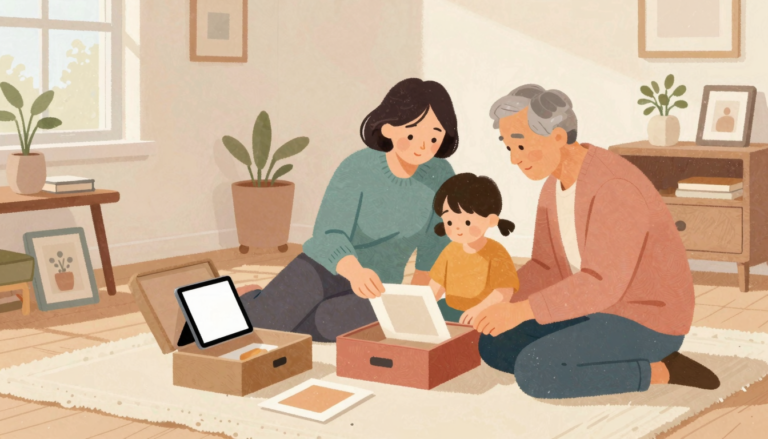
After a move, cherished possessions kept at home may provide familiar points in a new setting. A few chosen objects can make an unfamiliar room feel connected with the person’s life. The most helpful arrangement is not necessarily the largest collection or the one relatives consider most impressive.
Ask which things matter, where the person would like them and whether they want to share the stories. An old piece of clothing, an album, books or small ornaments may carry a significance no one else has noticed. Listening can be as useful as rearranging.
Practical needs still matter. Objects should fit the space and remain accessible in ways that work for the resident. Preserving identity does not require ignoring a difficult layout, and making a home manageable does not require dismissing everything old as clutter.
Think of the chosen possession as a bridge between place and identity. It connects the room to the person, while leaving that person free to decide how much of the past to display. The aim is not to make someone live inside their memories. It is to let their present surroundings acknowledge the life that belongs to them.
Frequently asked questions
Why can an ordinary object matter so much?
It may represent a relationship, achievement or period of effort that remains part of the owner’s identity.
Can keepsakes be painful?
Yes. Their meaning can include grief, regret or disruption as well as comfort.
Should families display belongings after a move?
Ask the person which objects and arrangements they want rather than deciding for them.
Does the study prove a treatment effect?
No. It explored lived meanings through qualitative methods.