Summary
Keepsakes can make a continuing bond with someone who died tangible. Primate responses to infant death raise questions about attachment and evolution, while human remembrance remains shaped by personal meaning and culture.
At a glance
Belongings may preserve a valued connection through memories, identity and continuing bonds. Keeping is not required for healthy remembrance, and relinquishing an object does not measure love. Animal research suggests possible shared foundations in attachment, not a proven origin of human keepsake practices.
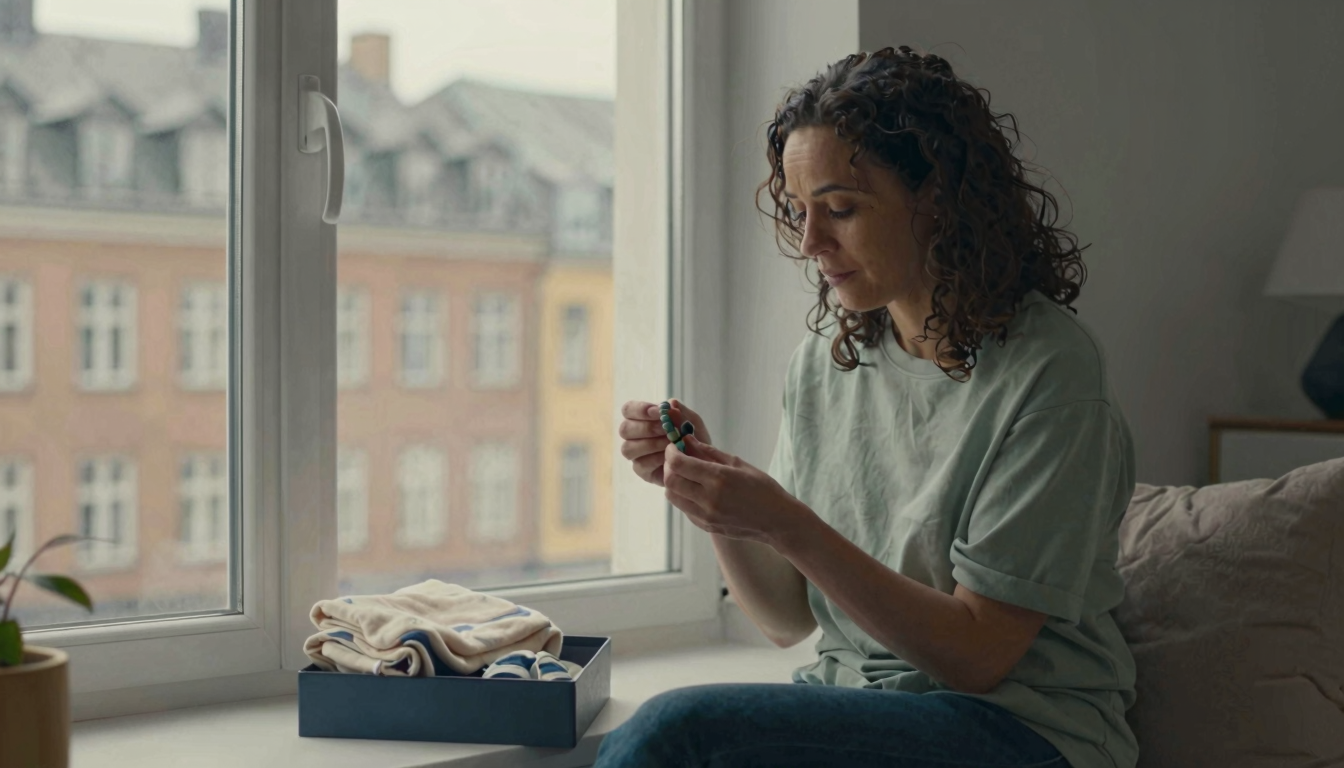
An old green bracelet can look unremarkable to someone who does not know its history. In the source’s account, a woman called H wore hers almost constantly, removing it only to wash. It had belonged to her mother, who died when H was twenty, more than two decades before the conversation described.
When H’s husband nearly discarded it with old elastic bands and string, she became furious. The mistake was about more than the loss of a useful accessory. He had almost thrown away something through which her mother remained present in everyday life.
That helps explain why “They are gone, so why keep it?” can hurt. The object does not reverse death. It holds a connection that the bereaved person may still value.
Belongings can help a relationship continue in another form
The idea of continuing bonds describes ways people maintain a connection with someone who has died. The relationship changes, but memories, values and familiar objects can remain part of the survivor’s life.
For some people, keeping the person's belongings is one expression. Others include dreaming about the person, remembering their advice or making a decision with their hopes in mind. A person may also experience imagined guidance or protection through a religious or personal belief. Describing that experience does not establish a literal intervention by the dead.
A systematic review of continuing bonds examines a varied set of experiences and outcomes. The concept should not become a prescription to hold on to every object. What matters includes how the bond is experienced, the person’s circumstances and whether it helps or hinders ongoing life.
A keepsake can therefore be comforting without proving that keeping is always better than letting go. Equally, discarding something does not measure how much a person loved its owner. People can remember through stories, habits and relationships as well as possessions.
What animal mothers do after an infant dies
Responses to death are not confined to humans. In some primates, mothers carry a dead infant for a period after the death. Researchers call this infant corpse carrying, or ICC. Comparative thanatology studies such responses to death across species.
The behavior raises difficult questions. Does a mother recognize that the infant’s condition has changed? How does attachment influence continued care? What can observers reasonably infer about grief?
Carrying or grooming can be observed. A human-like understanding of death cannot simply be read from the behavior. Unusual handling of a body may suggest that the mother distinguishes it from a living infant, but no single act gives direct access to her experience.
This is why the comparison is informative and limited at the same time. It asks how social attachment persists after death, without assuming that every animal has the same thoughts or that a human keepsake is equivalent to carrying a body.
The circumstances affect what researchers observe
A 2021 comparative study compiled 409 published cases across 50 primate species. Carrying was more likely after non-traumatic deaths than traumatic ones, and among younger mothers. Where carrying occurred, younger infants were carried for longer. These are different outcomes: a greater likelihood of carrying is not the same as a longer duration.
The authors considered death-detection cues and maternal attachment among the explanations. An illness-related death may provide different visible or contextual information from a violent death. That does not establish that the mother is consciously hoping the infant will wake.
Published observations also have limits. Different species and communities are not equally studied, and a case that researchers happen to witness may not represent every response. Comparative patterns help test hypotheses; they do not turn each mother’s behavior into a simple rule.
Why attachment is part of the question
Carrying a body can have costs. It may make movement or foraging harder and require continued effort. Those costs make the persistence of the behavior scientifically interesting, rather than showing that it must have one hidden benefit.
Strong maternal attachment is one possible part of the explanation. Caregiving does not necessarily stop at the moment a dependent infant dies. Processes that maintain closeness during life may continue to influence behavior afterward.
Separation stress is another possible consideration, but it should not be treated as a demonstrated reason for every case. Physiological stress after losing a companion and the act of carrying an infant are related research questions, not interchangeable evidence.
The careful conclusion is that attachment, death-related cues and circumstances may help explain variation. Researchers continue to investigate how they work together.
What the comparison means for human remembrance
Human mourning involves language, belief, family relationships and cultural practices as well as attachment. Funerary customs differ widely, including within the same country or religion. Neither preservation of a body nor cremation supplies a simple measure of love.
Animal research invites the possibility that some foundations of our responses to loss have a long evolutionary history. It does not establish a direct line from primate corpse carrying to wearing a bracelet or saving a photograph. Similarities can guide questions without settling origins.
For a bereaved person, the practical meaning may be more immediate. A possession can make a relationship tangible. Someone else may see an old object while its owner remembers a hand, a voice or a particular period of life.
The film Coco uses remembrance as a way of imagining a further loss when no one recalls the dead. That is a moving metaphor, not a duty to preserve every trace forever. You can honor someone without making yourself responsible for preventing a second death.
H’s bracelet matters because of the relationship it carries for her. Respect begins by recognizing that meaning before deciding what an object is worth. The person is gone; the love and the place they hold in a life need not disappear on the same day.
Frequently asked questions
What is a continuing bond?
A connection maintained after death through memory, values, objects or other experiences.
Must I keep belongings to remember someone?
No. Stories, habits and relationships can preserve meaning, and discarding an object does not measure love.
What is infant corpse carrying?
A behavior in which a primate mother carries a dead infant for a period after death.
Does this prove humans learned keepsakes from monkeys?
No. Comparative similarities raise evolutionary questions but do not establish a direct origin.