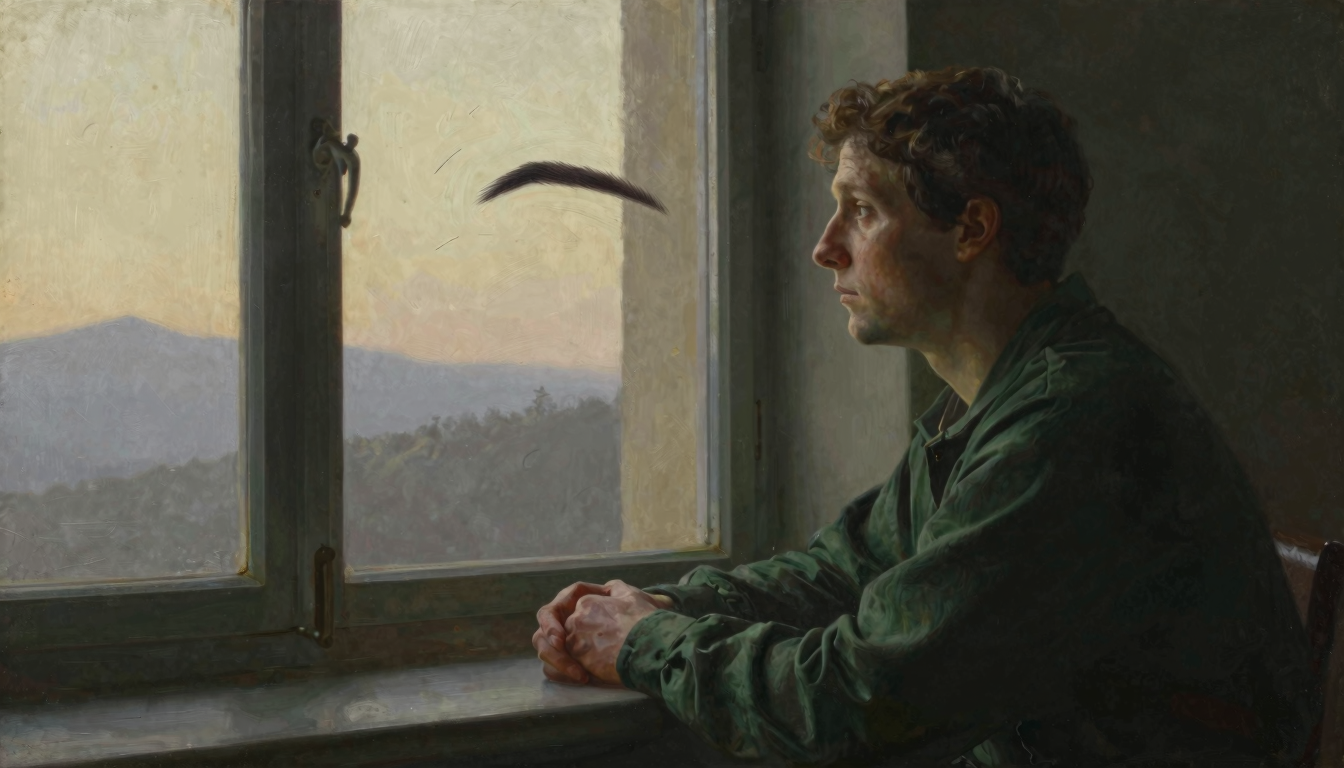
Summary
Eyebrows falling out form an inauspicious loss omen. The result concerns what is dearest for an ordinary person and the dynasty for a ruler.
At a glance
Dreaming about eyebrows falling out is traditionally inauspicious. For an ordinary person, plucked or fallen eyebrows signify losing what is dearest. For a ruler or king, the same dream signifies dynastic loss.
Identity changes the object of loss, while plucking versus falling, left versus right, quantity, setting, and surrounding details do not create supported sub-branches in this rule.
Confirm object, action, ownership, and dreamer identity; remove unsupported modifiers; then carry one complete dream sentence through the checks to the exact supported verdict.
The short answer
| Exact dream condition | Traditional result | Verdict |
|---|---|---|
| An ordinary person's eyebrows are plucked or fall out | Loss of what is dearest | Inauspicious |
| A ruler or king's eyebrows are plucked or fall out | Dynastic loss | Inauspicious |
| A different eyebrow detail with no plucking or falling | No result is assigned by this rule | Undetermined |
Why the dreamer's identity changes the meaning
The traditional rule separates people into two conditions. An ordinary person means a dreamer outside the stated ruler-or-king category; it is a classification of social position, not a judgment of personal worth.
The ruler branch is narrower. The rule does not say that every manager, business owner, parent, or influential person should be treated as a king. Expanding the royal condition that far would create a result the tradition does not provide.
This identity test is the article's most useful distinction. The visible event remains the same in both branches, but the object of loss changes completely.
How the verdict works for an ordinary person
A woman preparing to move dreams that her right eyebrow falls onto a towel while she is washing her face. She has recently been dividing her attention between the move, strained contact with a family member, and several valuable documents that still need to be packed securely.
The judgment path begins with the dream itself: the affected hair is her eyebrow, the eyebrow falls out, and she is an ordinary person. Those facts select the traditional verdict of loss of what is dearest. The right side, towel, and bathroom make the dream memorable, but this rule gives none of them a separate result. Her move, family contact, and documents do not prove what the dream predicts; they simply identify the real areas in which something precious may currently be exposed to separation, neglect, or avoidable loss.
The rule does not name the beloved person, bond, position, place, or possession in advance. Its practical use is to make the dreamer identify what presently counts as dearest, then examine where it is vulnerable. The warning should remain at that level rather than being converted into a specific event without another documented condition.
How the verdict works for a ruler or king
If a ruling monarch dreams that the eyebrows are plucked or fall away, the same action enters the ruler branch. The judgment moves from private dearness to the continuity of the dynasty.
The resulting verdict is dynastic loss. This is an inauspicious warning concerning the ruling house, but the rule does not specify the mechanism. It does not say whether the loss occurs through succession, defeat, death, division, or another event. Those more detailed outcomes should not be invented.
For this branch, the practical application is to examine the continuity and stability of the ruling house rather than substituting an ordinary personal-loss reading. The ruler condition must be present before that dynastic verdict is used.
Plucked eyebrows and fallen eyebrows share one result
This traditional rule groups eyebrows that are plucked with eyebrows that fall out and assigns both actions the same result within each identity branch. Deliberate removal and spontaneous loss therefore do not create different verdicts here.
The supported test is simple: did the eyebrows come away by plucking or falling, and was the dreamer an ordinary person or a ruler? Intention, speed, and the amount lost cannot change the result unless another verified rule specifically assigns them a meaning.
Does one eyebrow, the left side, or the right side change the result?
No separate verdict is given for the left eyebrow, right eyebrow, one eyebrow, both eyebrows, a small patch, or complete loss. If the remembered event is still that the eyebrows were plucked or fell out, the documented warning remains the applicable result. The side and extent should not be used to invent a new prediction.
The same restraint applies to color, thickness, pain, blood, mirrors, rooms, and other surrounding details. Unless a separate traditional rule assigns an outcome to one of those conditions, it cannot replace the identity distinction that controls this interpretation.
What if someone else's eyebrows fell out?
The two supported branches classify the dreamer as an ordinary person or a ruler. They do not provide a separate result for watching another person's eyebrows fall out.
First determine whose eyebrows were affected. If they were the dreamer's, use the identity test. If they belonged to someone else, this particular rule does not establish whether the loss concerns the observer or the other person. Leave that result undetermined rather than borrowing the ordinary-person verdict automatically.
How to judge your own eyebrow-loss dream
Reduce the dream to one exact sentence before interpreting it. For example, “My eyebrows fell out while I touched them” preserves the supported action, while “I had a strange face dream” does not.
Then use this process:
- Confirm the object. The affected hair must be the eyebrows, not eyelashes, scalp hair, or facial hair.
- Confirm the action. The eyebrows must be plucked or must fall out. Seeing unusually thin, pale, long, or beautiful eyebrows is a different condition.
- Identify whose eyebrows were affected. Apply this rule directly only when the dream concerns the dreamer's eyebrows.
- Classify the dreamer accurately. An ordinary person receives the loss-of-what-is-dearest verdict. A ruler or king receives the dynastic-loss verdict.
- Keep the outcome at its documented precision. Do not turn “what is dearest” into a named person or event, and do not invent the mechanism of dynastic loss.
- Use the warning concretely. Identify what is most precious and review any present weakness that could allow it to be lost.
For example: “I am an ordinary person. My left eyebrow fell out while I looked in a mirror.” The object, action, ownership, and identity match the ordinary-person branch, so the result is loss of what is dearest. “Left” and “mirror” do not alter that verdict because this rule assigns no separate result to either detail.
If the dream cannot pass the object, action, ownership, and identity checks, it does not yet match either supported branch.
Frequently asked questions
Does an eyebrow-loss dream predict death?
No. Neither branch specifically identifies death as the mechanism, so the dream should not be converted into a death prediction.
What if I saw someone else's eyebrows fall out?
This rule does not assign a separate outcome to another person's eyebrows falling out. Do not transfer the dreamer's personal verdict to that scene without a matching condition.
What if the eyebrows grew back in the dream?
Regrowth is not assigned a separate result by this rule. A different verdict would require another verified interpretation that specifically covers eyebrows growing back.