Summary
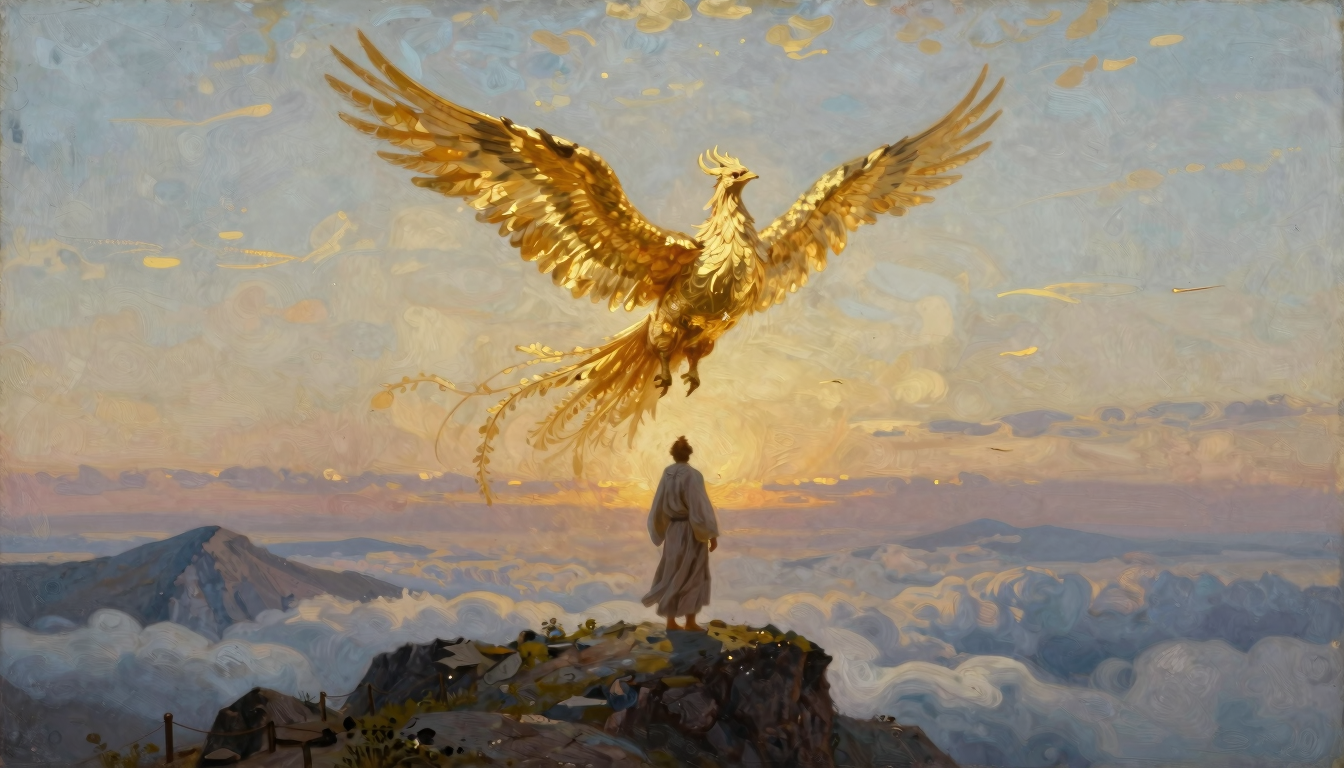
Flying to heaven and becoming a phoenix is greatly auspicious in this traditional reading, with a distinct result for each stated context.
At a glance
Flying to heaven and becoming a phoenix is greatly auspicious. Apply the result by context: ministerial rank for a man, marriage to a lord for a woman, and first place plus literary fame for an examination scholar.
The decisive boundary is the complete action of flying to heaven and becoming a phoenix, not the mere presence of a phoenix.
Confirm ascent and completed transformation; state each applicable context's verdict separately without inventing priority for overlapping identities; carry the examination application through the checks and a concrete submission action.
The direct meaning
For a man, the traditional verdict is ministerial rank: office in service of a ruler's government. For a woman, it is marriage to a lord, a high-status marriage. For an examination scholar, it is first place together with lasting literary fame, distinction through writing. These are separate outcomes, not interchangeable descriptions of success.
The detail that changes the reading
The decisive question is not, “Was there a phoenix?” Ask instead: “Did I fly to heaven and become a phoenix?” Only that complete dream action carries the stated verdict.
A phoenix that appears at a distance, a phoenix one rides, or a bird that merely resembles a phoenix does not meet this condition. No separate outcome is assigned here to those tempting modifiers. Keeping that boundary prevents an attractive symbol from being stretched beyond the actual dream.
How to judge the dream
Use this short process:
- Reconstruct the action in one sentence: “I flew to heaven and became a phoenix.”
- Check that both parts are present: ascent to heaven and transformation into a phoenix.
- Identify the relevant context: man, woman, or examination scholar.
- Apply only the result attached to that context.
The application below carries one dream sentence through these checks.
A worked application
A scholar preparing for an examination dreams of leaving the ground, rising into heaven, and becoming a phoenix. The dream sentence is “I flew to heaven and became a phoenix.” Both ascent and transformation are present, so the action checks pass. The examination-specific branch gives the auspicious verdict of first place and literary fame; it does not erase any male or female branch that also applies.
The scholar's follow-through is to complete revisions, organize the materials needed for submission, and meet the next deadline. These are concrete responsibilities within the examination situation, not a claim that the dream has already produced a result.
Reading the three outcomes without mixing them
Gender and examination status can overlap. The branches give no instruction that an examination result overrides ministerial rank or marriage, or that one identity must win. Keep each applicable verdict tied to its own condition rather than choosing according to the dreamer's preferred outcome.
The historical titles should not be replaced with a specific modern job offer or relationship. The three verdicts also give no date, money amount, or examination score.
Frequently asked questions
Must I still recognize my own face after becoming the phoenix?
No facial detail is required for this interpretation. The relevant memory is that you became the phoenix, rather than watching another being become one.
What if the transformation began but never finished?
Beginning to change is not the same as becoming a phoenix. Keep an unfinished transformation distinct from the completed action instead of assigning it the same verdict.